Ala Wai Harbor and the DOBOR
This page was machine-translated. Read the original (Nederlands)
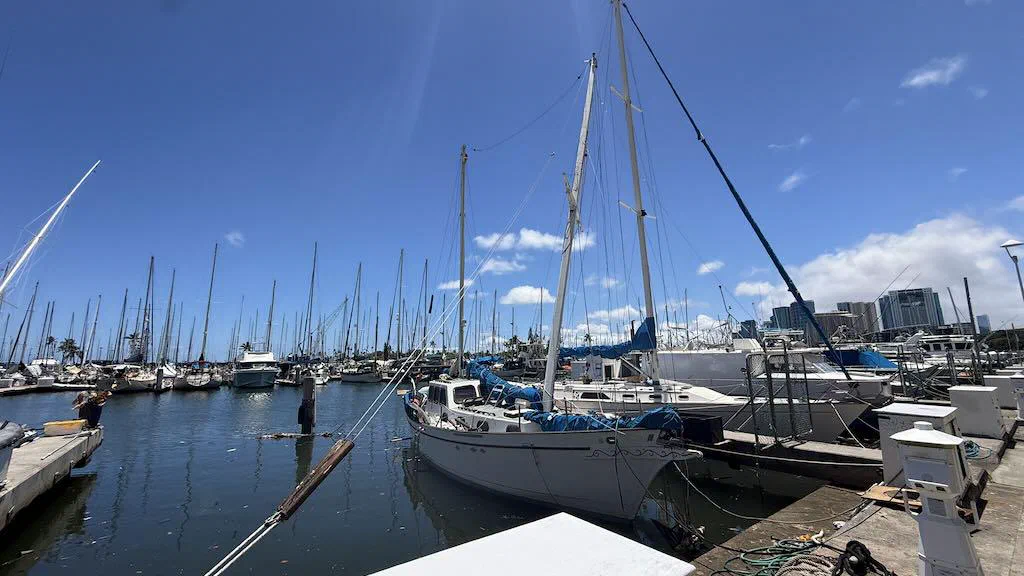
Once we’d arrived, clearing in was a piece of cake. When you arrive in Hawaii by boat you have to do three things: report to Customs & Border Protection (CBP), get an agricultural declaration and, of course, check in with the harbour master. Contrary to what I’d expected, the CBP procedure was no problem at all, and the last one very much was.
The easiest way to clear in is online, using the “CBP Roam” app on your phone. That way they can have a little chat with you over video call. Within a quarter of an hour of registering I was asked to open the video chat. The odd thing is that you can’t see the officer. He or she can see you, though. Fine: show our faces to match the passport photos and give a quick tour of the boat. Joey was professional, super friendly and very thoughtful. He went through the entire CBP 1300 form with me, because that form is clearly meant for cargo ships rather than sailing yachts. Within an hour everything was sorted, and in a really pleasant way. I got his direct number and if anything comes up I can always call. Brilliantly done.
But a colleague of his still had to come round to deal with the agricultural side. From what I’d read online, I pictured her inspecting the whole boat and taking away all the rubbish we’d so neatly collected, in exchange for $200. But when was she actually going to turn up? Only on the third day did she get in touch, saying we’d be her third visit. We really wanted to go to Pearl Harbor that day, though, so I called once more, and by then she was literally 20 metres from the boat. No, she didn’t need to come aboard. She could just fill it in on the pontoon. In no time at all the form said that no inspection had been carried out, and that everything was in order anyway. As for the rubbish, we’d be better off getting rid of it somewhere else, because on Oahu that could only be done commercially and in her view it was far too expensive. After that I got all sorts of tips on which Chinese restaurants were good, where I could get a haircut (apparently she felt that was called for, and she had a point!) and plenty more local advice. A strange conversation, then, but a very friendly one.
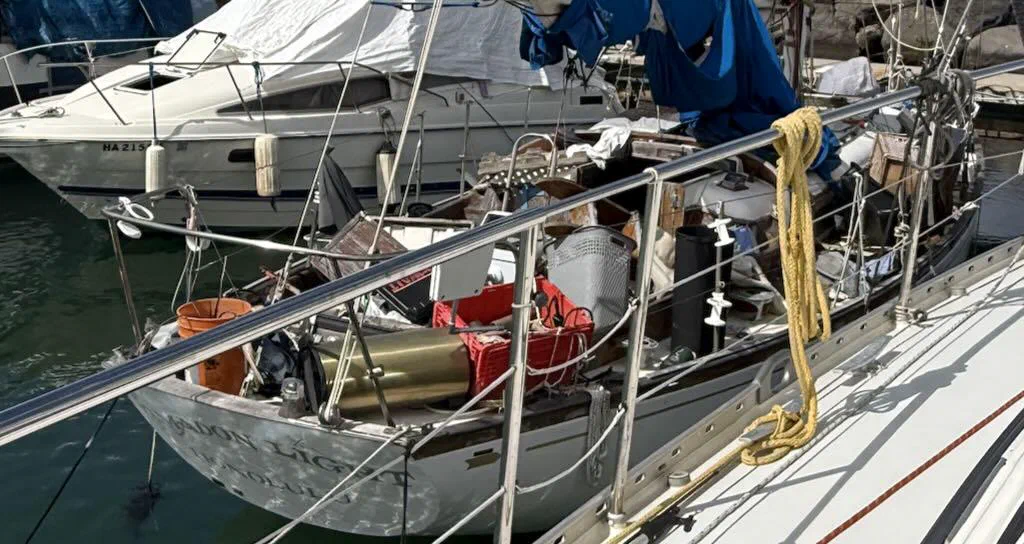
The harbour master was a different story. I found myself facing a lady who clearly took great pleasure in being a civil servant. The DOBOR she works for is, after all, a state agency. Picture the matryoshka behind the counter at the Russian state telephone company in 1970 and you’re getting close. Everything came with a sigh and was difficult. Which it is, of course, because no, we’re not from the USA. And yes, the boat’s papers are a mix of Dutch and English. Sigh. And the insurance didn’t say when it was valid. It does, madam: first sentence, third paragraph. And I had to have a survey done and I had to do a “buoy run”, i.e. motor out to the first channel buoy and back into the marina, watched (from the shore, I assume?) by someone from DOBOR, so they could see that the engine worked and that we know how to handle the boat. Madam, I have a port clearance from Panama here, 5,000 miles in a month, shouldn’t that be enough? Implacable. Even though I was sure I’d read somewhere that things were different. Fobbed off with a list of surveyors, because theirs couldn’t come until the 10th, and an insurance certificate that was rejected because it didn’t state the cruising area, I found myself back outside after three quarters of an hour. There I ran into a Californian lady whose boat had come in a few days earlier and who’d had the same experience: she’d just been turned down for the third time and was hoping to wrap things up sometime that week. According to her, as long as your paperwork hasn’t been approved you pay a 50% penalty on the boat’s mooring fee. How much that would come to, they couldn’t say, because first the boat had to be measured. Maddening. Still, with a normal mooring fee of $20 a day for the boat, I wasn’t doing too badly. Aha, so we’re talking about $10 a day. “Illegal” it is, then. On top of that there’s another $10 per person per day for sleeping aboard.
By Friday afternoon I’d sorted out a new insurance certificate and had Claude AI dig into how things actually worked. Well, if you stay for less than 30 days you can in fact get a temporary permit, and then you don’t need a survey or a buoy run. But the harbour office is closed at the weekend, of course… So on Monday, with a heavy heart, I gave it another go. A different lady, who once again insisted it really was required. After I’d had her read the copies from their own harbour regulations stating that it wasn’t, she disappeared into the office. 20 minutes later she came back out and yes, indeed, I could get a temporary mooring permit, but only once they’d carried out an inspection under §13-231-8, and that would be $40. Mind you, the way I read it, they’re entitled to carry out an inspection for a temporary mooring permit but it isn’t mandatory, and as far as I’m concerned they needn’t bother. And again, I’ve just covered 5,000 miles, so the boat can’t be in that bad a state. On top of that, my insurance papers now did say I was covered for the passage Panama - Hawaii - Japan, but they didn’t say that this also applied to Ala Wai Harbor. When I objected that when I’m cruising I’m hardly going to agree with the insurer a year in advance which marinas I’ll be calling at, the answer was: yes, sorry, but those are the rules. There I stood, fuming and seething. Yes, she thought the rules were strict too, but there was nothing she could do about it. And then the truth came out: if I was leaving the coming weekend anyway, I’d better just stay illegal until then, that would be easiest. Well, I never.
I’ve looked into it a bit more since, and if they acknowledge that you have permission to moor (so the berth is fine) but no inspection has been done yet, that’s their problem. But if you stay less than a month and therefore want to pay by the day, there’s a 30% surcharge. In which case I might as well pay the 50%.
In short, there will be people who don’t mind any of this, but I think it’s truly beyond the pale. Apparently few if any visiting boats from overseas come here (yet)?
So my advice to any sailors coming after us: either be very flexible or pick a different harbour.
Comments