Through the Panama Canal
This page was machine-translated. Read the original (Nederlands)
This is our second day at sea and things are finally starting to calm down. It was pretty hectic here and there, as you’ll read below.
But let’s start at the beginning, as one should. Marion and I bought three shopping trolleys’ worth of food in Colón at the “Rey”, a decent supermarket. The next day Rudolf arrived and he and I did the whole thing all over again, so that all the usual lockers were properly stuffed with food. On Thursday Arnold arrived and I picked him up from the airport. Rudolf had come the day before in a rental car, so we returned that straight away. An hour later he got a message that the registration papers for his Dutch car had been found in the rental car. Remarkable, because he’d lost them months ago.
On Friday Marion, Arnold and Rudolf went off on a “tour” and had a look at the locks in advance.
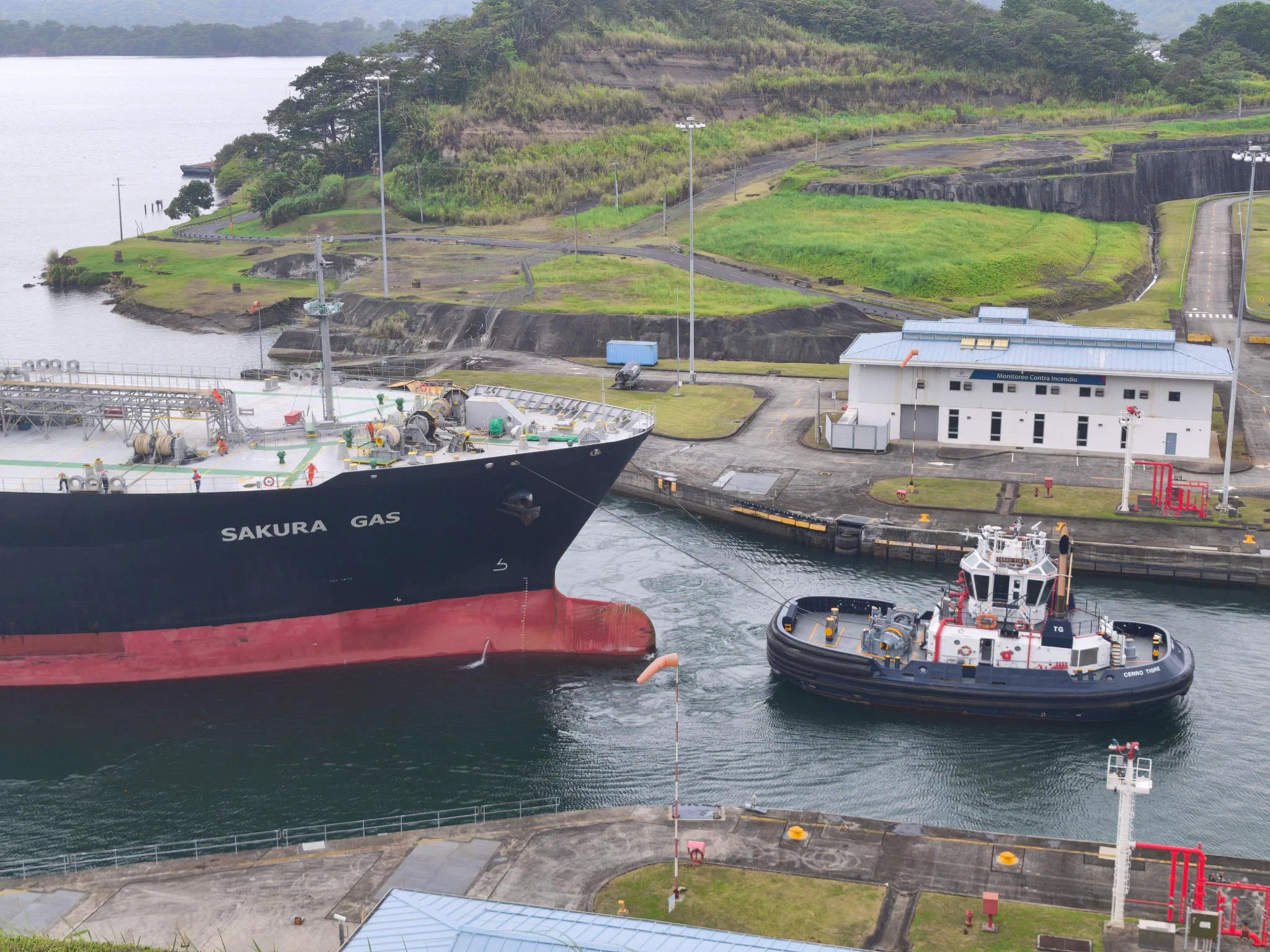
Impressive, but not something we Dutch have never seen or done before.
Over the past year we’ve only motored about 150 hours, but it was still time to give the engine a service (no fun in this heat) so that all the oils and lubricants are 100% again. We’ll be clocking up plenty of engine hours on the Pacific, so it wasn’t wasted effort. That took care of my day, anyway.
The next day, Saturday, we were due to start our transit of the canal. But during the night it started bucketing down like crazy; I’d never experienced rain that hard. Neither had our Bimini. The front tube bent about 40 cm under all the water on the canvas, and all that water found its way inside. The entire floor was flooded, the bins by the companionway too, the mattresses in the aft cabin got soaked through the little porthole — everything was absolutely sopping wet. At least it was nice clean rainwater!
In the morning we looked at each other somewhat bewildered. Water turned out to be standing in all sorts of places. So the guys and I detached the tube and had a look at it. Couldn’t we just bend it back? We took it ashore, and with a few tables and Arnold’s knee it was actually a doddle to bend it back into some sort of shape. It’ll never be 100% again, and the canvas maker from Grou clearly underestimated the design; it may be fine for the Netherlands, but for here it’s far too flat.
Around 10 o’clock our hired line handler turned up with the four long lines we’d also rented. You see, you need at least four people on board who can handle lines, plus the skipper, plus an “advisor”. Lots of people advised us to ask around in Shelter Bay, but it’s the end of the season and everyone who qualified (= was actually on their boat and not a weirdo) was going through themselves that weekend. In hindsight it was really great to have Mario with us; he’s been doing this job for fourteen years and knows almost more than the advisors. In Panama’s hierarchical society you could tell he didn’t let the advisors know that, but it was very reassuring. Besides, this way you support the local community a little; the canal is the source of a large part of the prosperity here. Around two in the afternoon we motored out of the marina and dropped anchor in the anchorage (Mario knew exactly where). Report to the port authority, Cristobal Signal Station. The advisor will arrive at 1600. OK.
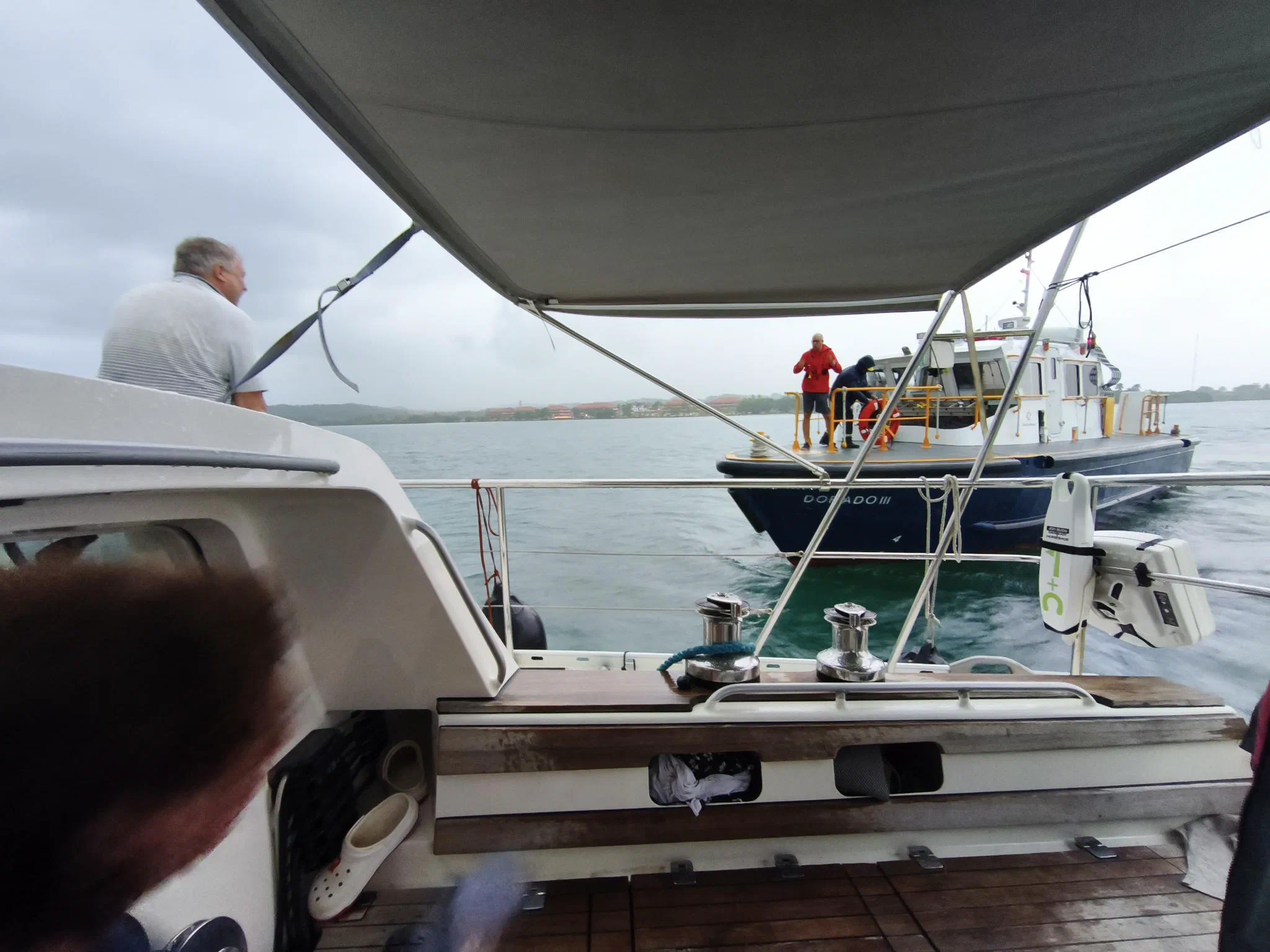
Around 1615 the advisor, Moi (short for Moises), showed up. A nice, open, middle-aged man who has worked for the canal for 30 years. He’s now head of training for the tugs and so on (if I remember correctly), so all the tugboats got his special attention as to whether they were following the rules. Since his current job is an office job, he moonlights as an advisor at weekends. That’s also why there’s more room to take yachts through at weekends — more advisors available.
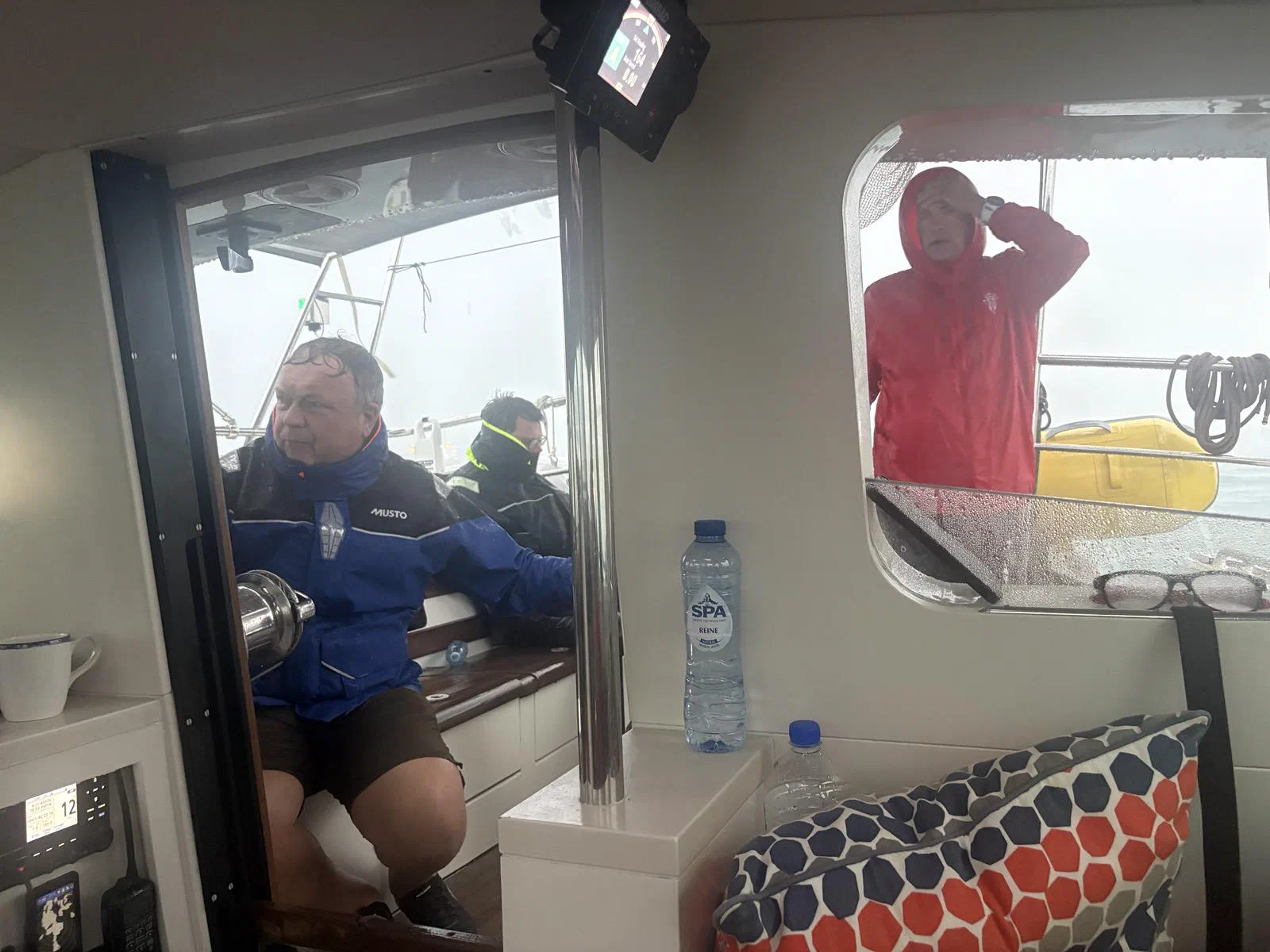
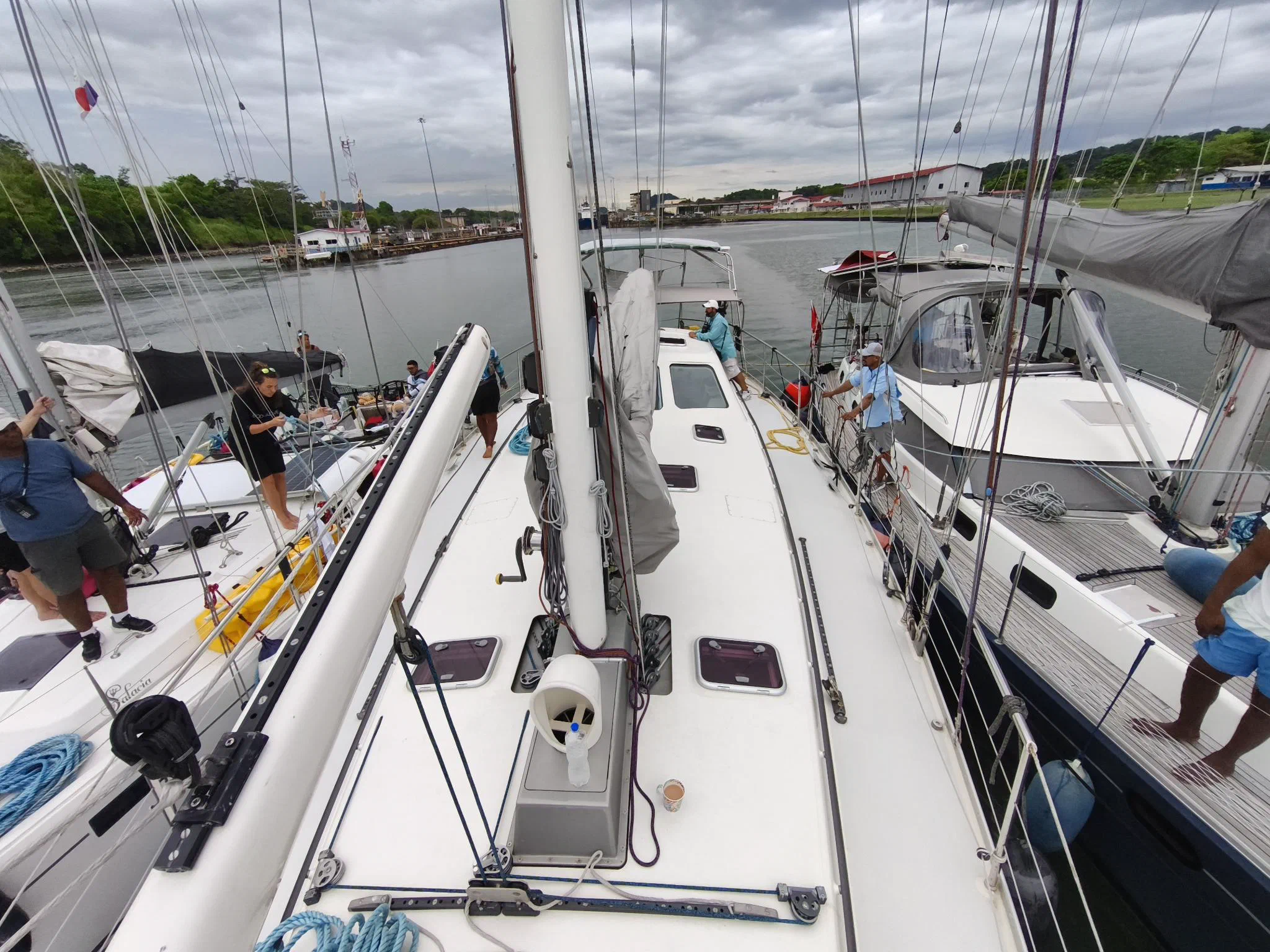
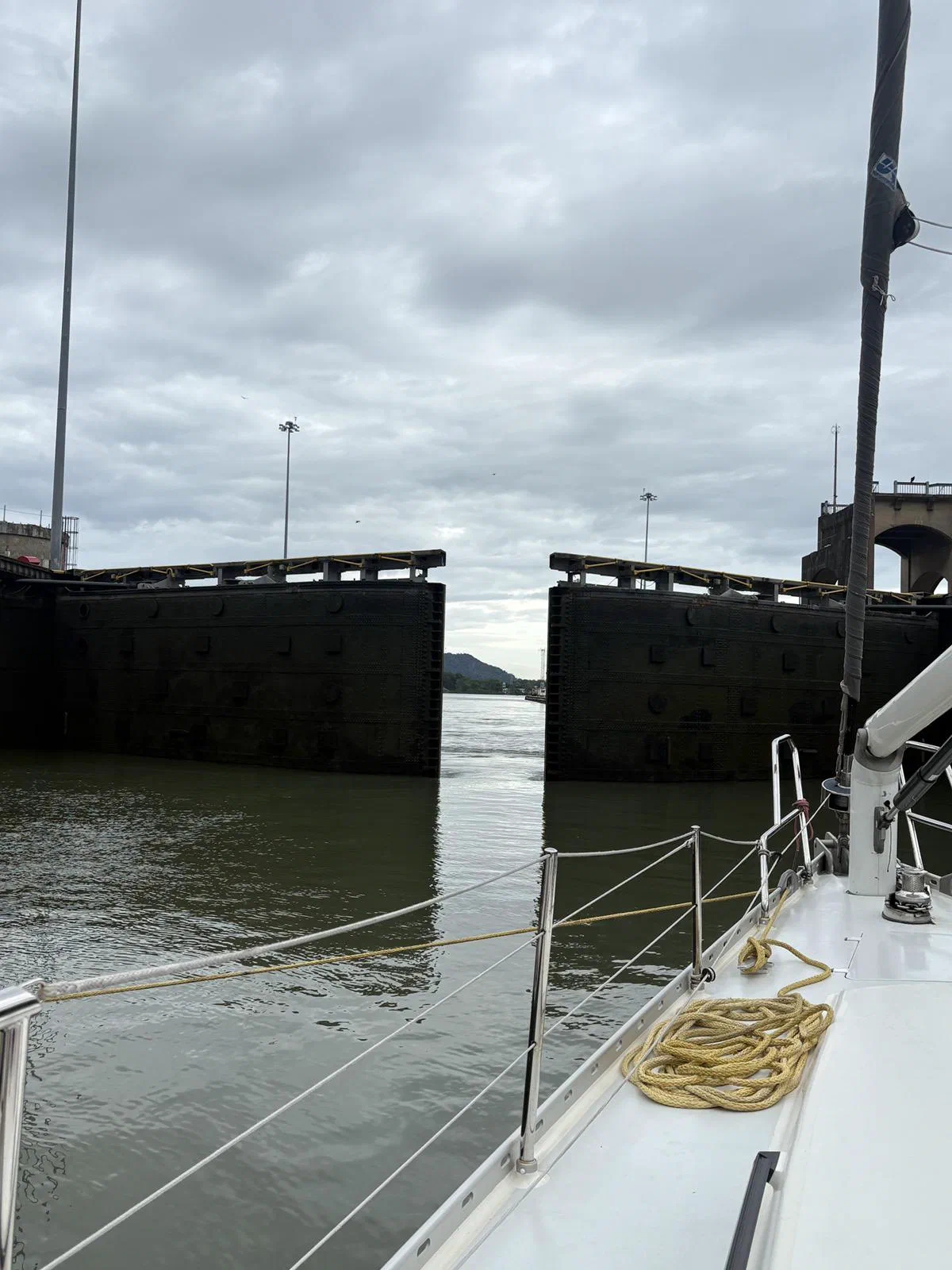
Moi had barely stepped aboard when it started pouring again. He put on a very thin rain jacket, but Mario hadn’t brought anything. No worries, we had a perfectly good Decathlon rain jacket in his size. He was delighted with it. Quickly switched on the radar as well, because visibility was less than 30 m. Helped by the electronics we soon arrived near the ship we’d be following into the lock. We were allowed to go ahead a bit because we can’t go as fast as the big ships. Since four yachts were going through that day, we were rafted up two by two. We got a Turkish boat, the Sal, alongside. That’s very handy, because you only have half the lines to deal with. It turned out to be less tricky than I’d expected anyway: you first motor with the raft of boats along the port side and tie up for a while until we’re allowed in, so those two lines are already ashore. Then you move over a bit to starboard, and from the wall they throw two “monkey’s fists” (a ball of rope) on a long line over the boat. They do that onto the foredeck so they don’t hit the solar panels. The two line handlers then quickly tie that thin line to the heavy mooring line, which is hauled up onto the wall. Then you motor to your assigned spot in the lock, slow down, and the lines are taken up. That’s all there is to it. Compared with a Dutch lock, where you have to do everything yourself, it’s actually a lot easier. While we waited, Marion served a lovely late lunch / snack of pasta salad with tuna for everyone. We’d been told you can’t fob the line handlers and advisor off with a peanut butter sandwich, but they seemed impressed.
What is different from the Netherlands is that once the chamber has filled, we motor on to the next chamber with the lines still ashore, and then once more. On the Atlantic side you go up about 8-9 metres three times, and on the Pacific side you go down 8-9 metres twice and then half that once (because of the tide).
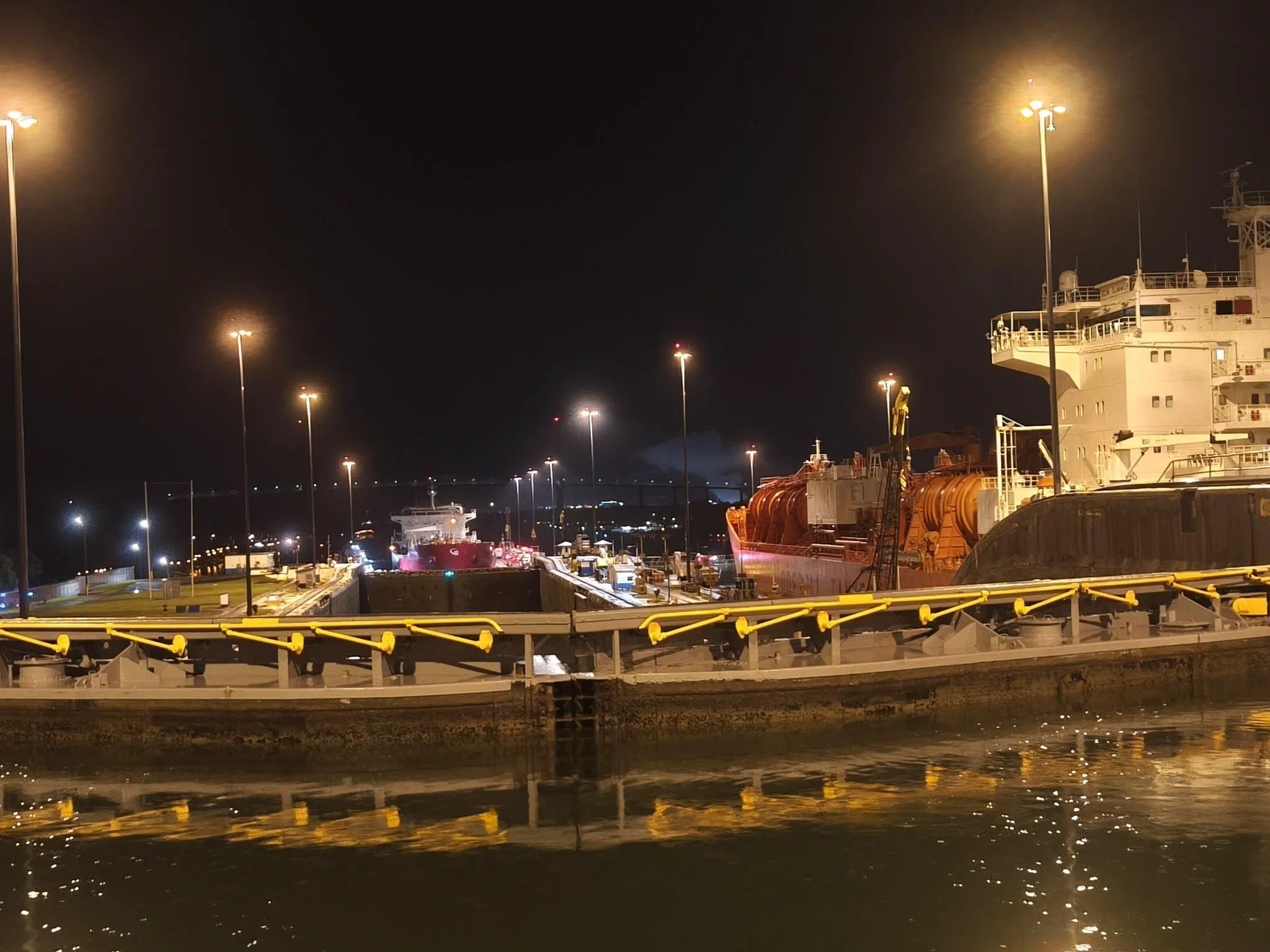
In the photo above you can clearly see us already in the second chamber, and the first chamber emptying again to collect the ship waiting against the wall in front of the lock. The old locks work entirely by gravity as far as the water goes; no pumps are involved. In the old days even the locomotives that tow the ships through ran on hydroelectric power. So while we’re walked through by men (well, actually by Merrimac’s engine), the big ships are pulled by locomotives. Clever idea, but in the new locks they just use tugs again like everywhere else in the world.
After the three locks — by now it’s nine in the evening — we still have to motor a mile or so to a mooring buoy. We have to tie up there, because the lake isn’t only some 20-30 metres deep but is also full of old trees and junk. So it’s poor holding for our small anchors. The big ships do anchor. Why they don’t just put in a bit of jetty is a mystery to us, but Mario quickly sorts everything out again and after 10 minutes we’re moored. Moi is picked up; his day is done. We eat a delicious rendang that Marion had also made — no mean feat in the stifling heat below. A beer and a glass of rum are allowed too, we reckon.
The next morning around 08:30 the next advisor is dropped off by a launch. Luiz, this time. Also experienced, but not as experienced as Moi, we think. Great guy. First we have to cross the lake and then go through the “Culebra Cut”, the hardest section, where they had to carve through the mountain.
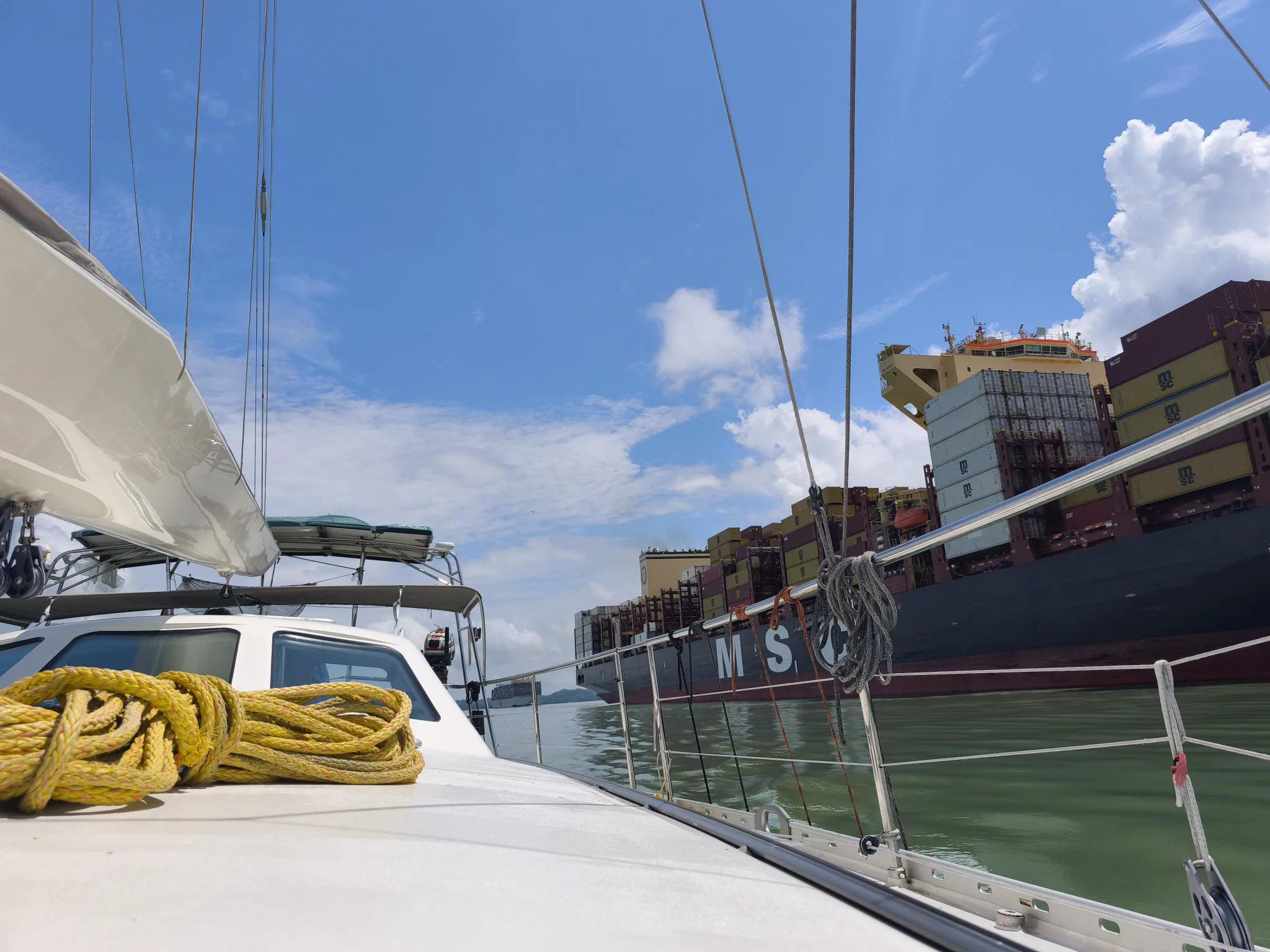
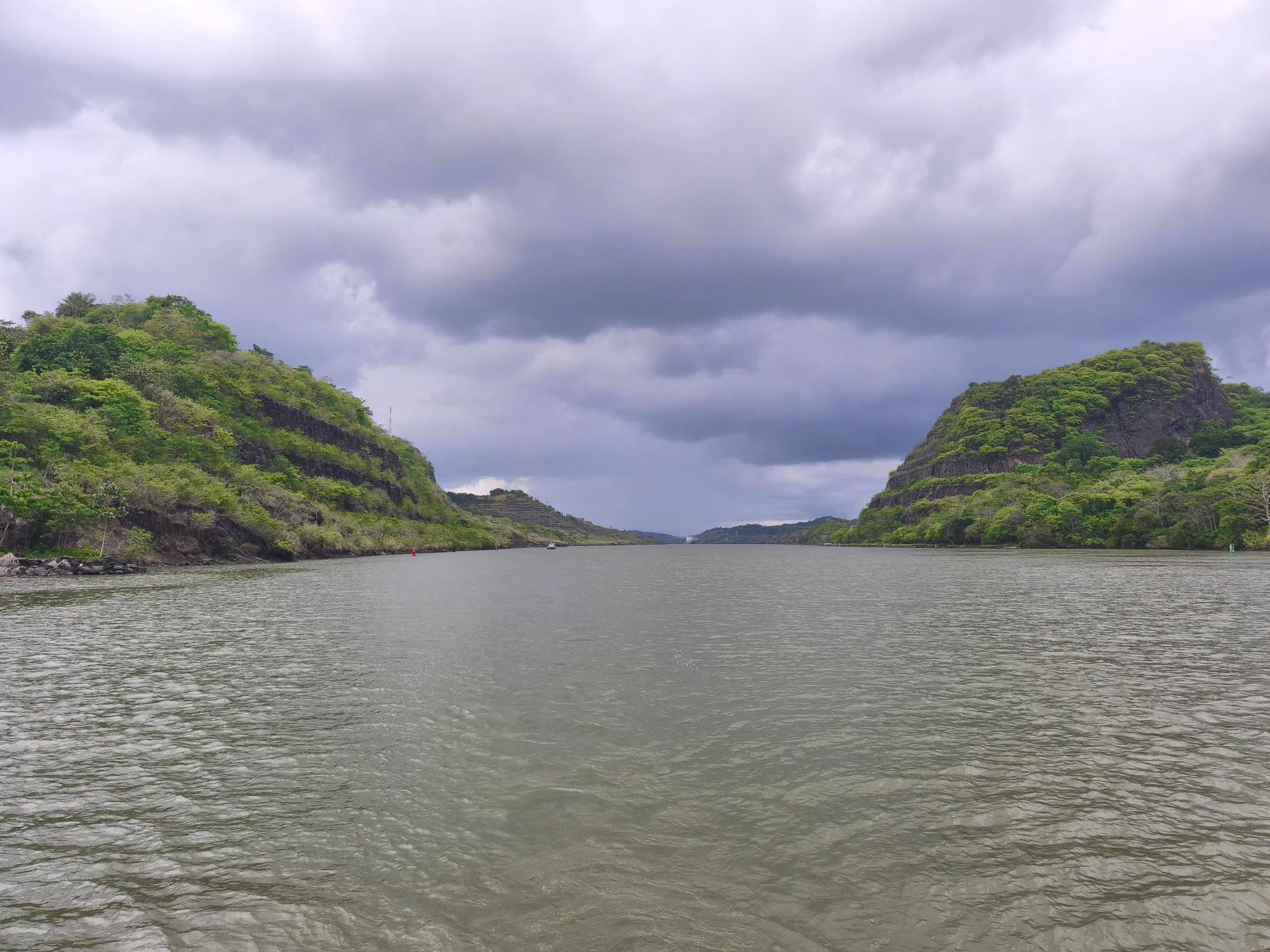
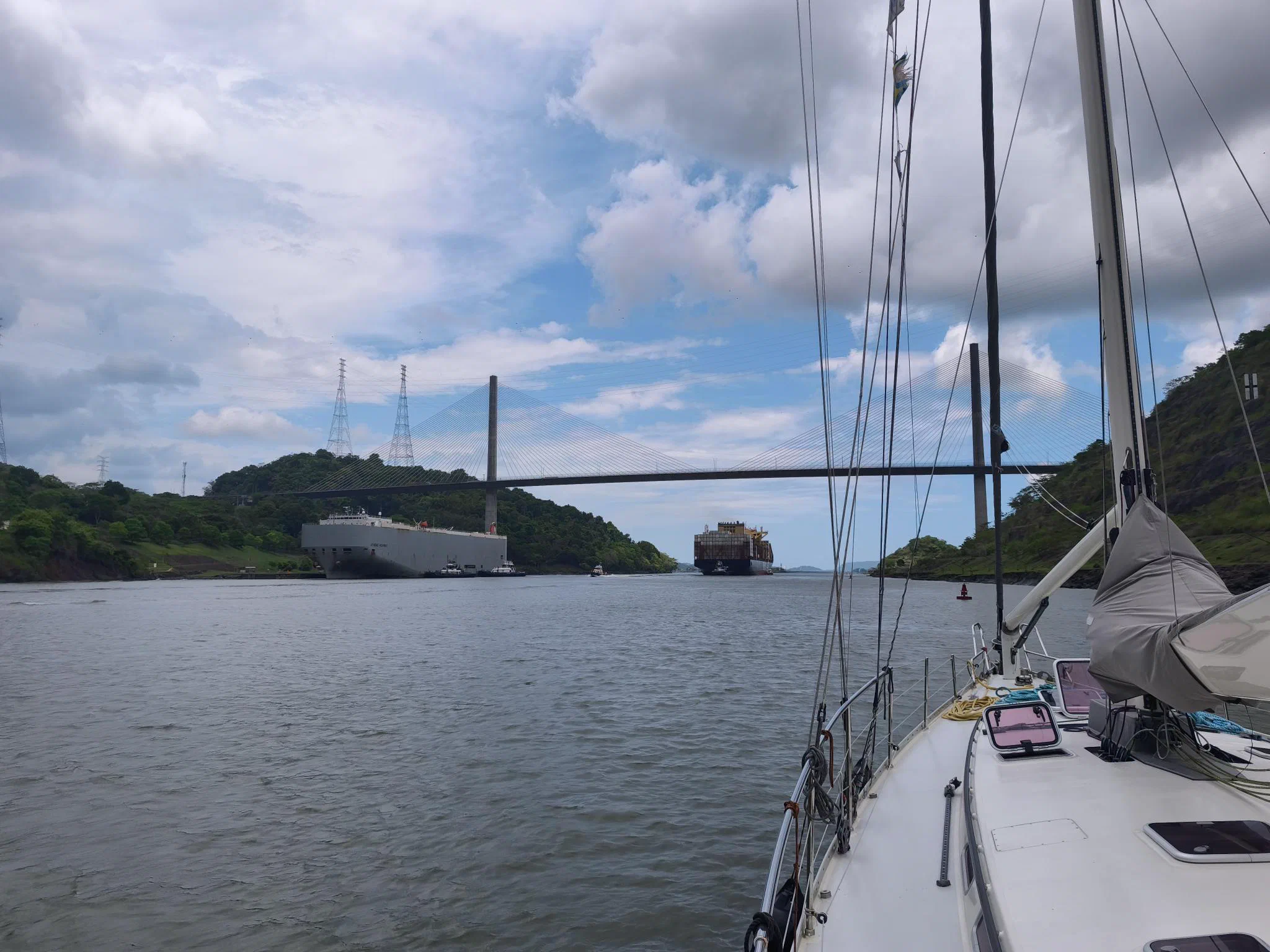
This time he has us go through the locks as a single boat and a raft of three. We’re the one in the middle. With two extra boats, steering is a lot harder because of all the extra inertia. But everything goes well and the advisor keeps complimenting me. At one point I say “I bet you say that to all your clients”, but he insists he doesn’t. Still, where Moi strategically had the other boat use its engine as well, now Merrimac has to do all the work. The other two have lashed their rudders and put their engines in neutral. This time we go to the front of the chamber, because there’s less turbulence there. Especially in the last chamber, where salt water mixes with fresh again, we have to be careful, but before the nasty water reaches us we’re already well secured again.
Around 1600 we motor out of the last lock, under the last bridge, and the advisor leaves the boat. So the canal itself was no problem at all. I do understand why people make such a fuss about it: our Turkish neighbour had never even been near a lock. Then it’s a different kettle of fish, of course! It was quite funny: on our boat everyone was relaxed, enjoying the whole thing and taking in the sights. Catching, securing and releasing lines, and only by two people at that (Rudolf and Mario). On the other boats it was considerably more hectic, partly because the owners wanted to record everything with multiple cameras.
But something else was going on in the background. Back in March the agent had sent his son-in-law to Shelter Bay and discussed a few things there. Stupidly, I didn’t write them down. I thought he’d arrange for us to go straight on to a marina and that a “Cruising Permit” had been sorted. That permit is nothing more than a tax on every pleasure craft visiting Panama. Fine. But during the week it already turned out that I had to arrange the marina myself. And they weren’t cheap either ($360 for three nights). We also weren’t allowed to just pop in with the boat to drop off Mario and the lines. So, stress again: launch the dinghy, mount the outboard, load Mario + lines, drop them off at the marina, come back, and meanwhile find a spot in the pitch dark. Discussion about whether or not to anchor while the drop-off was happening. In short, a lot of hassle. The next morning, after anchoring, I called the slightly friendlier marina: sure, come on in. Took on 400+ litres of diesel and stayed 1 night. Quickly emailed the agent: we want to leave tomorrow. Yes, that’s only possible at 10:30 and costs $125.70. And bring a copy of your cruising permit. Yes, you were going to sort that out, mate! No, I know nothing about it, how am I supposed to guess whether people don’t have one already? How so, you helped us check in. Well then, go to the Port Captain without me early tomorrow morning; without me there’s a chance it can be sorted quickly. Sigh…
In the end we had a lovely dinner at a real tourist trap, which did serve absolutely fantastic steaks, and the Irish coffee was good too. Early the next morning Marion (who was staying behind and so didn’t need to clear out with us) took a taxi to the biggest mall here, Albrook, to pick up the last bits like fruit and vegetables. We headed off to the port captain. Rudolf and Arnold came along, because if it worked out we’d have to go straight to immigration, and they want to see everyone to take their photo. Luckily it was very quiet at the port captain’s office and I found a twenty-five-year-old young man with excellent English. He totally got it and did his best. His part was done in 10 minutes, and then he went and leaned on the three (!) ladies from another department to issue the Cruising Permit. That normally takes a few days, but after the necessary phone calls to/from the finance department I was back outside after 40 minutes with all the paperwork. Hooray! Quickly on to immigration and we were free to go.
A friend of Rudolf’s dropped by briefly to have a look at the boat, then we had a quick lunch, dropped Marion off on the dock, and off we went! Marion is staying in Panama City until Saturday, enjoying the city on her own for a bit and doing nothing at all.
// Day 0, 14:06 / 21:06 Z, log 7573, engine 628.
We’ve now been motoring through the calms for about 28 hours. Every now and then we can unroll the jib. The engine is humming along nicely at 1584 rpm, which gives us 6.3 knots. There’ll be little wind until the weekend. Then it should hopefully pick up and we can sail most of the way. I must say it’s not even that bad once you’ve accepted it (and we’ve known about this for weeks). The new engine is super quiet and you can talk at normal volume. Rendang again yesterday and Marion’s chicken curry tonight. Tomorrow we’ll start on the big pile of vegetables.
// Day 1, 16:39 / 23:39 Z, log 7707, engine 654.
Comments