3,200 miles from Bonaire to Faial (Horta)
This page was machine-translated. Read the original (Nederlands)
I had been looking forward to crossing the Atlantic from west to east for a long time. Sure, we had done east to west, but that turned out to be very easy: point the bow west with plenty of wind from behind! Ten days is very fast, though; it’s actually a bit too short for the real experience. Since I was on Bonaire on my own, I had plenty of time to go through the route planning properly. If you try to sail the rhumb line from Bonaire, you have to sail hard on the wind for a long time, and after that you (often) end up in a large area of calms and light winds. On Merrimac we have a PredictWind subscription, which lets you set up a polar diagram describing how fast the boat sails in which wind. It’s never quite right, but it’s reasonably close. At sea you can fine-tune things a bit more: you can enter a percentage of your polars, which winds you want to avoid, and whether you want to sail fast or comfortably. The Bonaire - Faial route is actually too long, some 17 to 25 days, to be routed in full: the forecasts don’t look that far ahead. But on Bonaire it’s pretty clear: there’s a huge area of high pressure and little wind. So we opt for the “classic route” after all: try to go around that area; along its northern edge there’s westerly wind. You sail north first, and then east. That takes you almost to Bermuda, or even past it. That’s handy too: if anything goes wrong you can divert there. In normal times you’d drop in there anyway, but in Covid times that’s all a hassle again with quarantine and so on.
After Marion and Els have unwound and shaken off their jet lag, as well as you can when you go straight from a busy work environment to a tropical island, we spend three days shopping. Bags of fruit, vegetables, eggs, long-life milk, beer, meat, fish, flour and so on come on board. In the evenings there’s plenty of socialising, and Els and I do our last few dives with Martijn. Marion and I eat at Jonnie Boer’s satellite restaurant, sleep in a luxurious air-conditioned hotel, have dinner with the whole group of Dutchies on the east side, and so on.
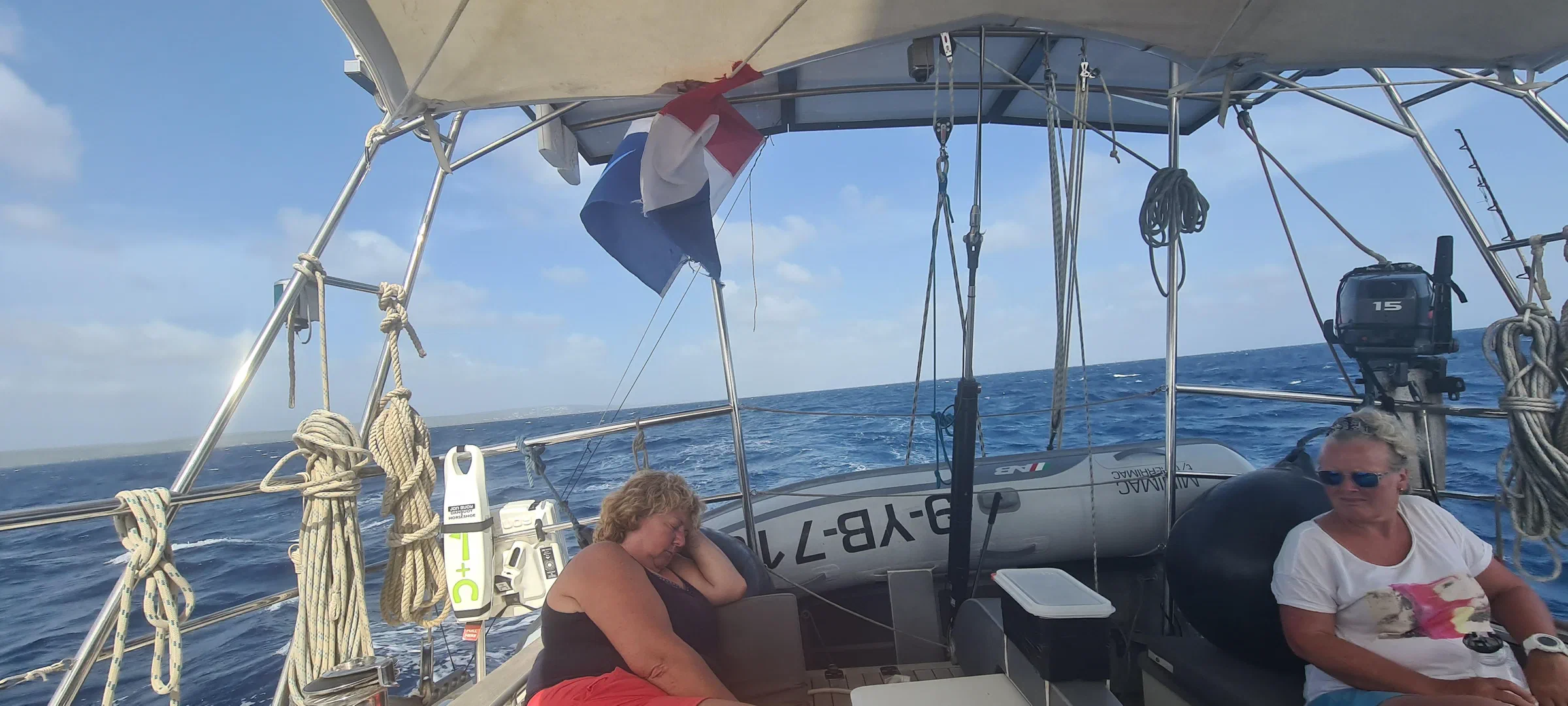
On 19 May we finally leave Bonaire. We’re waved off by our new friends from Baradal, Eight and Fidelis, but also by other boats I’ve been chatting with – Yndeleau, Beethoven and Intrepid C all come by to say goodbye! We’ll miss you all!
From Bonaire you could head straight north-east towards the BVI or St Maarten, but why would you? We don’t need to be there at all! So first we head north, towards the passage between the Dominican Republic and Puerto Rico. That puts the wind on the beam and spares us pounding into the waves. The planning is spot on: it does indeed take two days to get there. We’re going fast, because the trade wind is blowing hard from the south-east at 20 to 25 knots. On off-wind courses in a lot of wind, Marion always needs two or three days to get her sea legs, but that’s exactly why we have a third person along. So Els and I stand three-hour watches, and that actually works out fine. It’s so quiet out here in terms of shipping and fishermen that there’s really nothing to do. After three days Marion has perked up and we switch to two hours on, four hours off, which in my experience is a lovely watch schedule. A first for the ladies, but I think I’ve won them over. You get enough sleep, the two-hour watches are over before you know it, and you don’t end up snacking too much at night either.
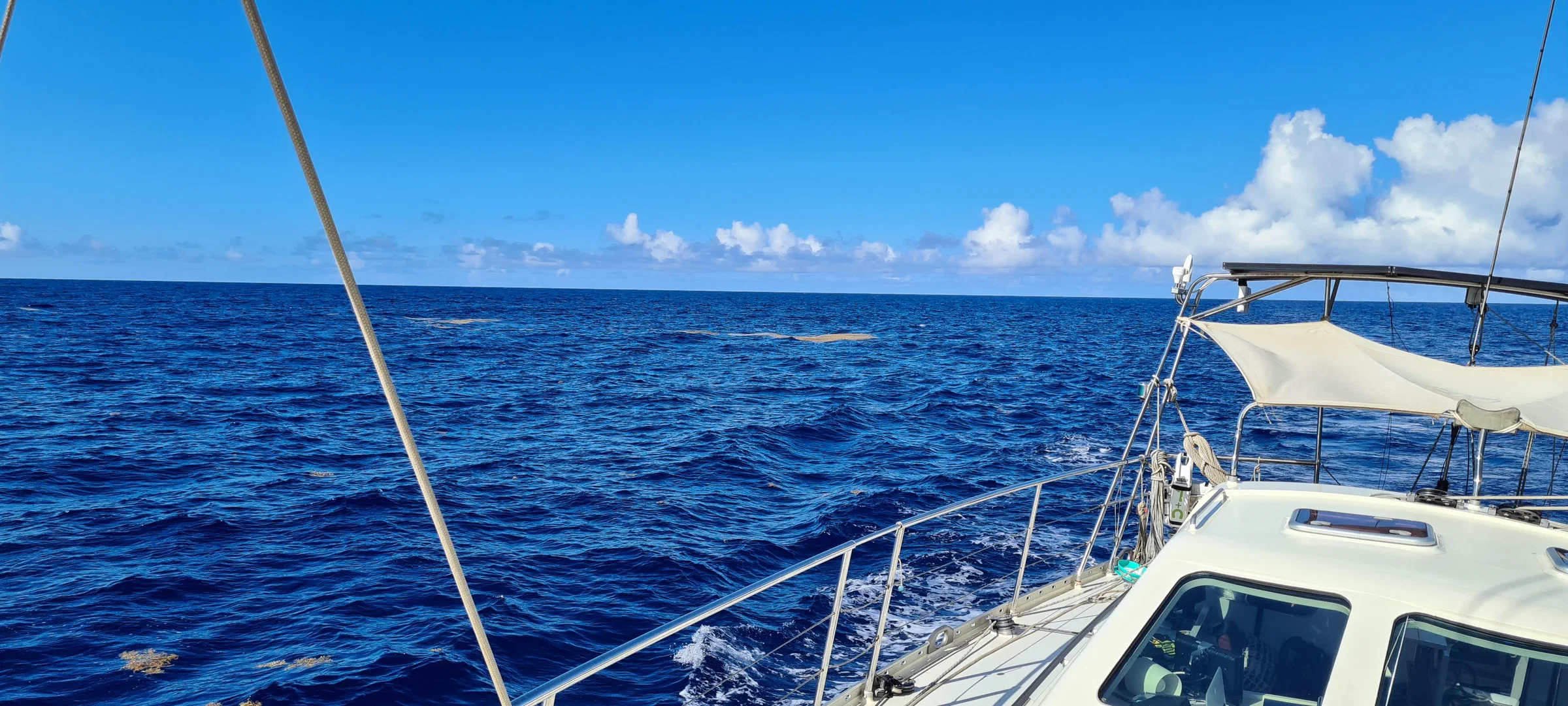
In the “Mona Passage” between PR and DR the wind dies completely for a while, and although some of it comes back afterwards, we’re clearly going a lot slower. And another day later the engine has to come on. In the end we motor for about 4.5 days before the wind returns. From then on it’s routing three times a day via the Iridium Go and PredictWind. Sometimes we fall short of the forecast, sometimes we match it, and sometimes we go a lot faster. It all depends on whether the wind and waves stick to the forecast.
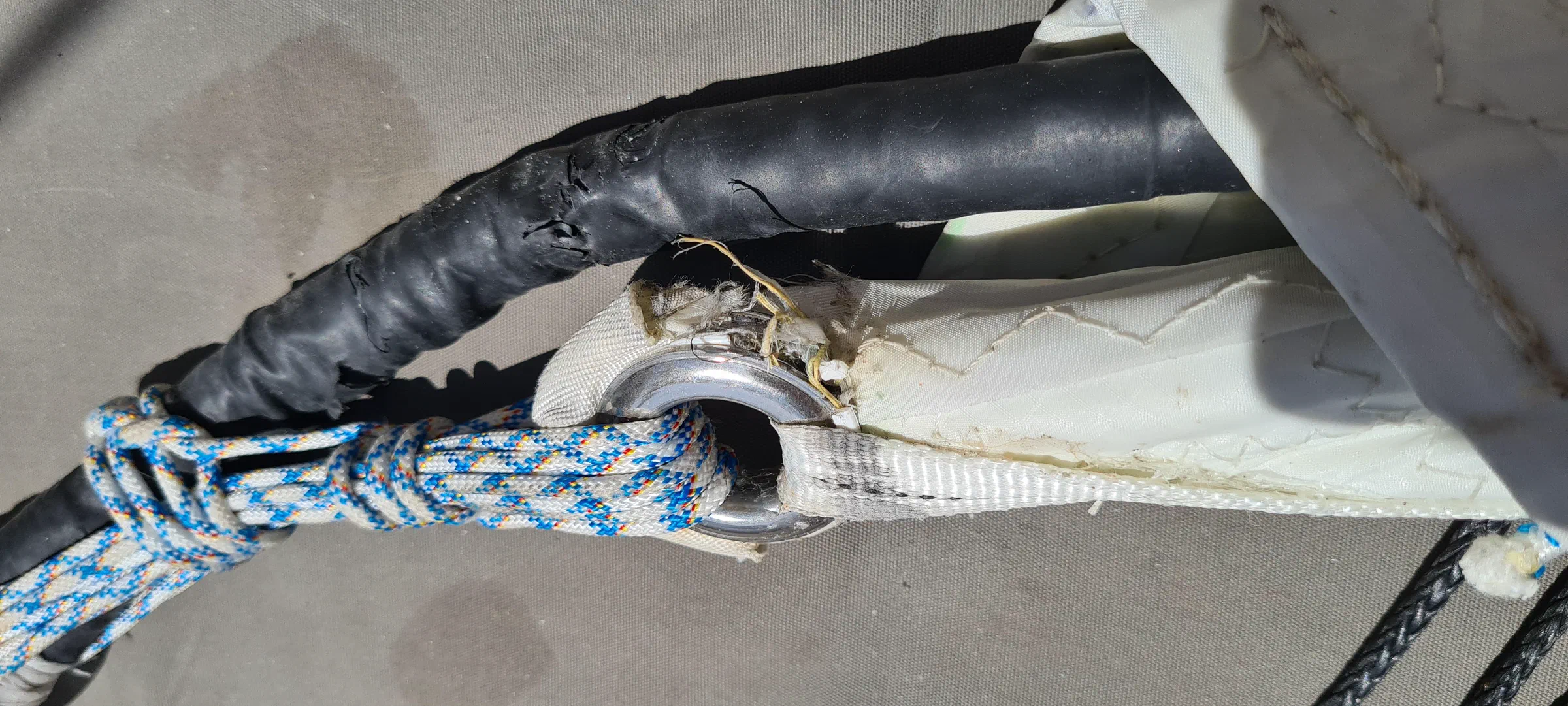
During the calm I decide to get the Code Zero out. Unfortunately it turns out to be damaged already, even though we haven’t used it much (maybe 20 days). The eye at the tack has torn out. It also looks a bit flimsy for a 150 square metre sail. Using the “Easy Stitcher”, I sew on two extra Dyneema lines that should stop the corner from tearing out. Sadly, only a few hours after hoisting, the whole sail rips clean in two in about 14 knots of wind. Maybe I put too much tension on the luff? Hopefully the folks at UK de Vries in Makkum can still do something with it. I do want to have a word with them about those eyes; in my view the construction there isn’t strong enough. The sail sits furled on a torsion line the whole time, and that creates extra stress that has nowhere to go. In general, most of my problems are with the corners of our sails: the jib (2015) and the mainsail (2021) have also had problems with the webbing at the corners. That needs to be better, and it can be.
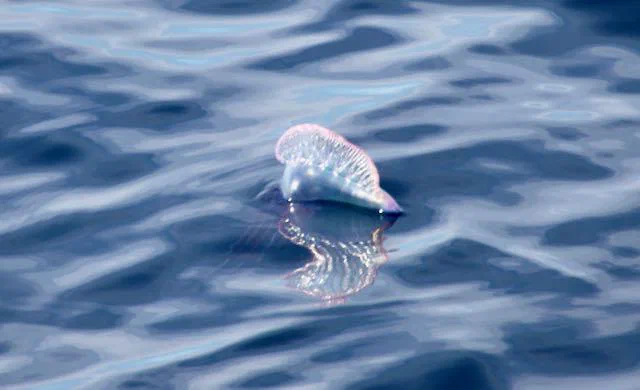
Meanwhile we see very little wildlife, but fortunately no plastic either. After a week we start fishing, but thanks to all the sargassum we only catch stinking weed and no fish will bite. We don’t see any fishing boats either…. The only thing we do see thousands of is Portuguese men o’ war. They’re not jellyfish but a symbiosis of four kinds of polyps, and seriously dangerous to swimmers. They get their name because they’re propelled by one of those kinds, which inflates above the water like a sort of pinkish-purple sail. The shape of that part looks just like the big helmets Portuguese soldiers wore in the 15th century. They’re much smaller than I expected: the sail is 10-15 cm long. Good thing we don’t have to go in the water now! For days on end we sometimes see as many as one per second drifting past.
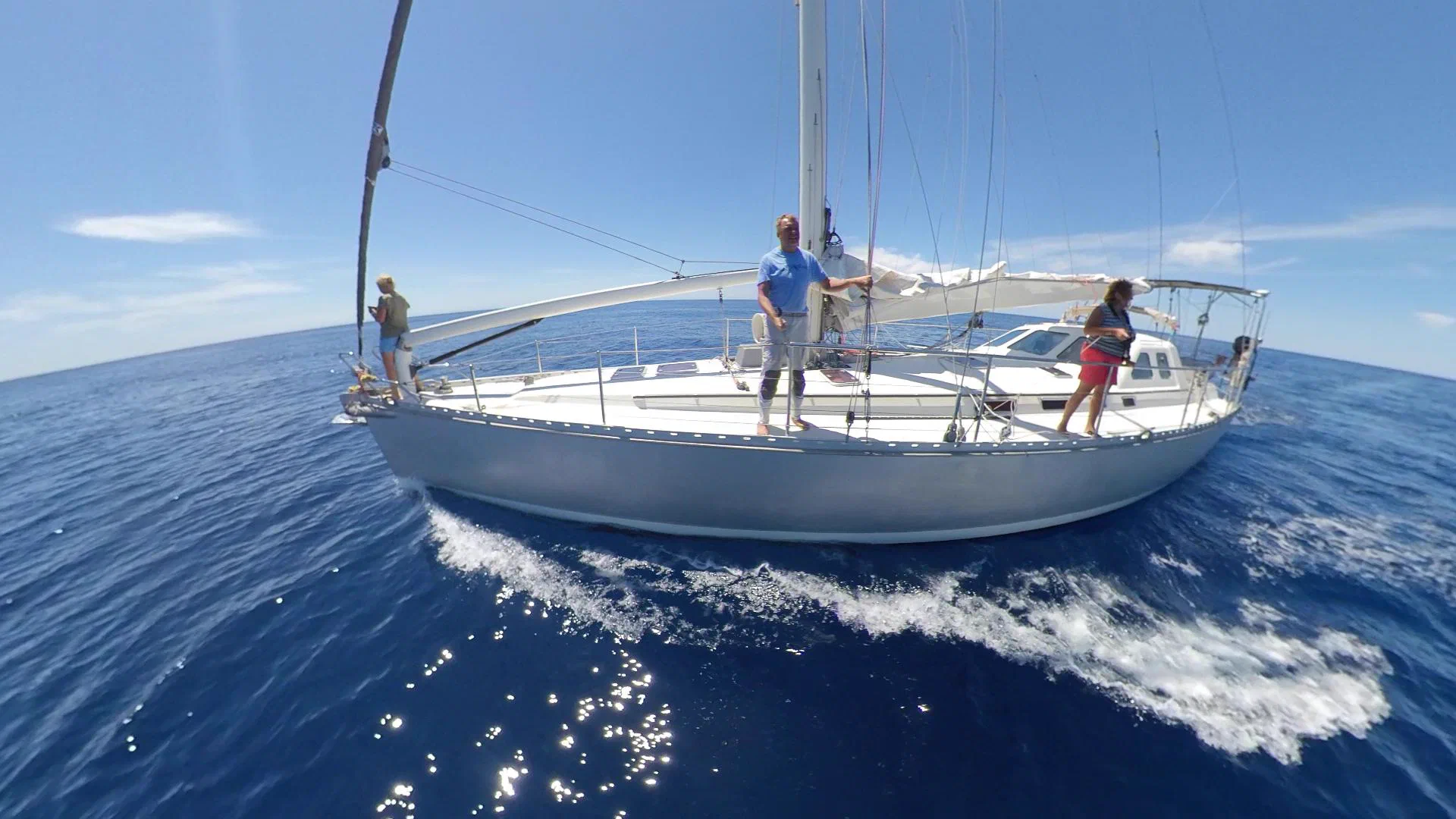
The upside of high pressure is that we get weeks of lovely weather: the ladies sunbathe, and my nose keeps peeling in the sun now that the bimini is rolled up. We try out various ways of using the 360 camera, but on passage it’s not easy to do anything beyond the standard shots. By halfway Marion has had enough: “So tomorrow it’s just the same again? Nothing to see but water!”
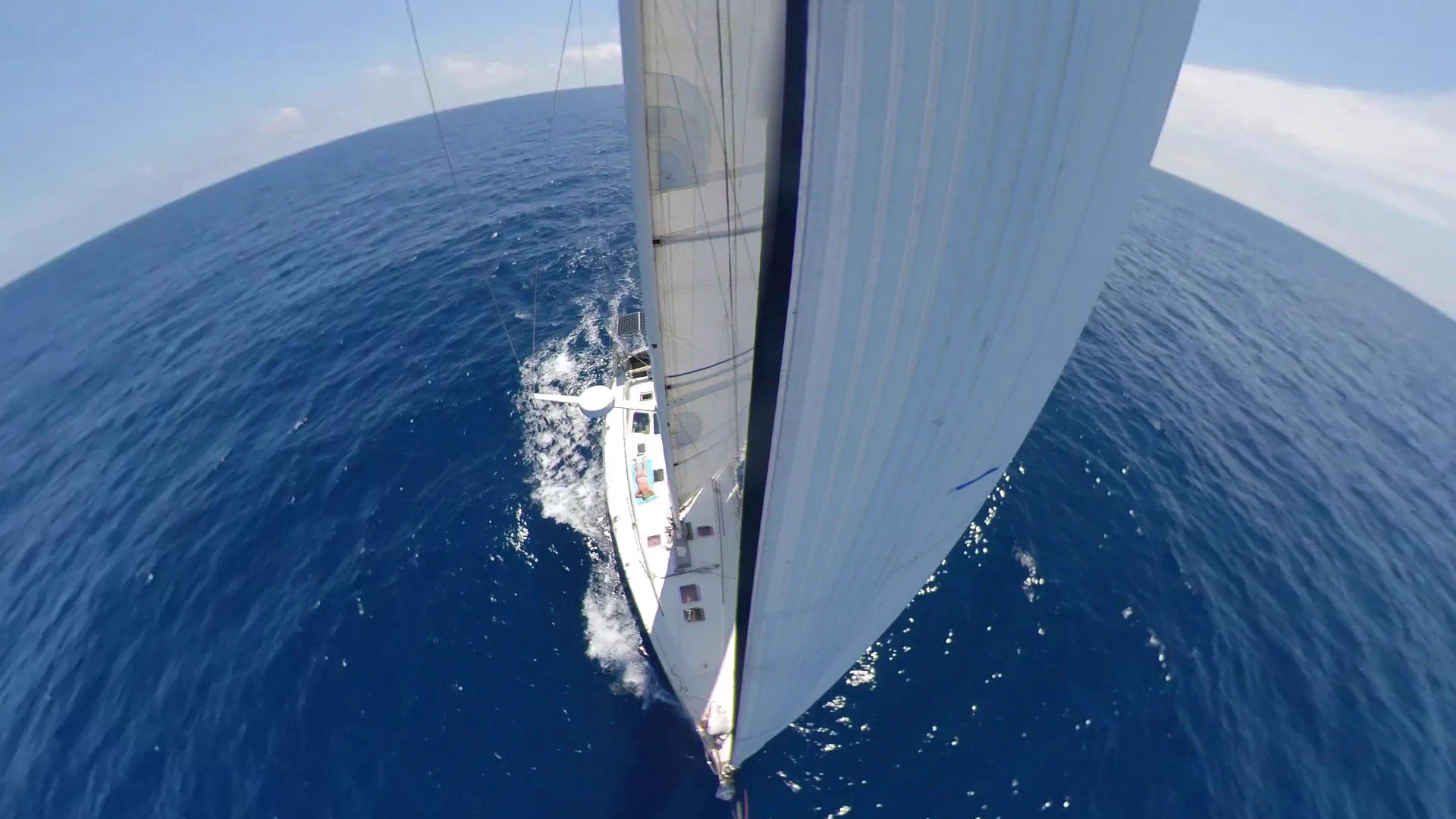
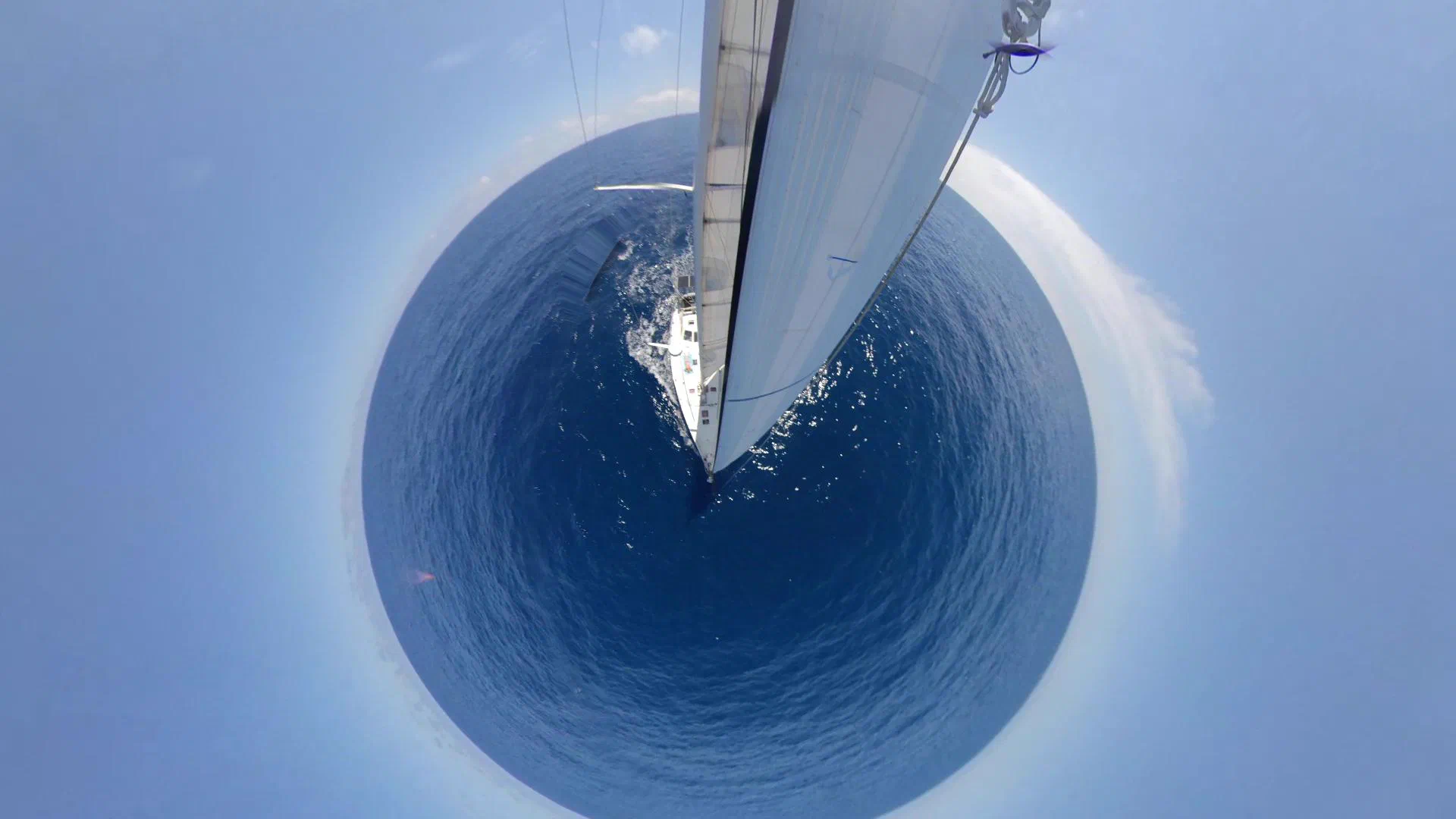
On the evening of 1 June the weather changes. The temperature had been dropping every day, but the weather stayed fine. Suddenly a front comes through with some rain, but more importantly: a lovely dollop of wind. Over the following days it eases off a bit first, but after that the forecast says we’ll have plenty of wind.
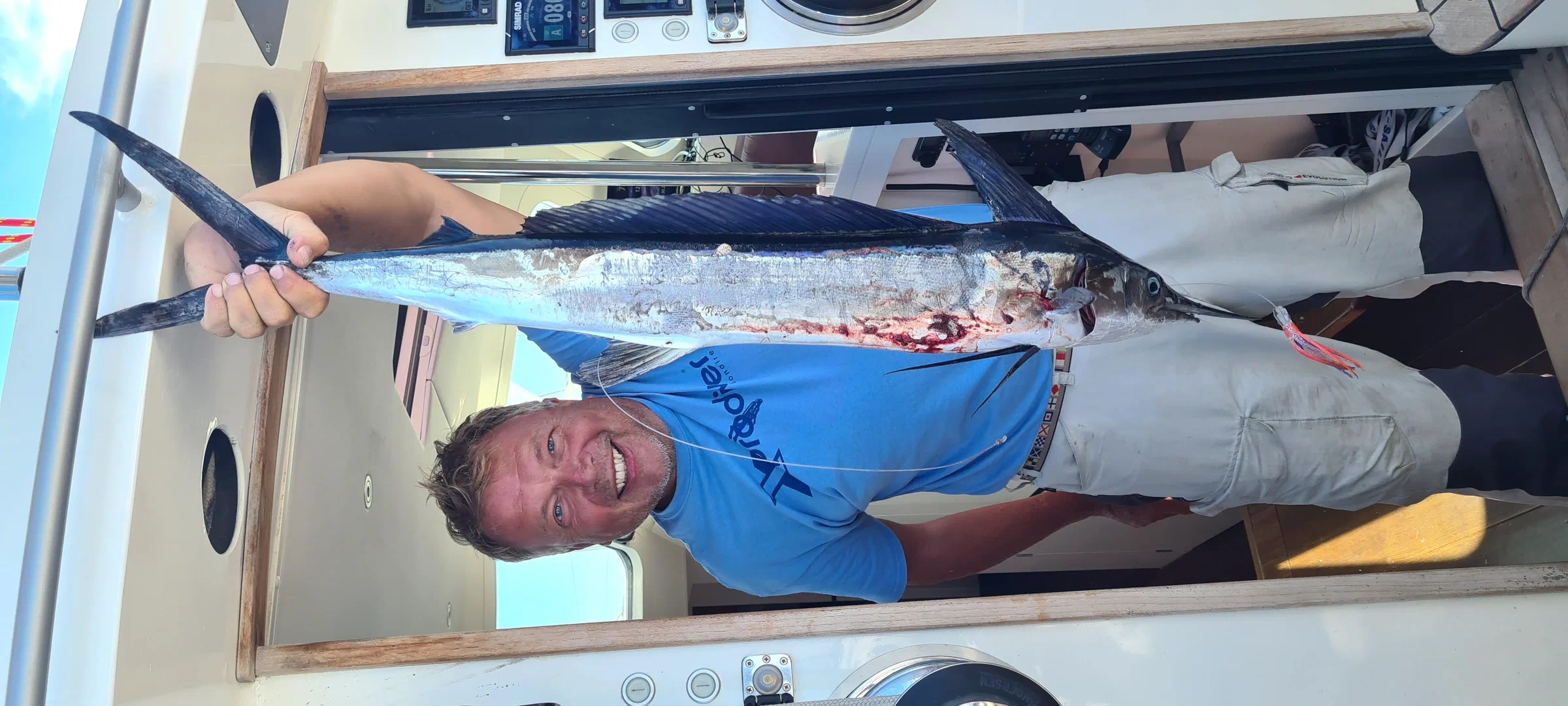
The next day, after more than a week of trying, we finally catch a fish. On the rod this time instead of the handline. Just as well, because by our standards it’s a whopper: over a metre long and 8 kilos. We wonder what it is. Via the Iridium Go there’s some musing back and forth with the Netherlands (André and Peter), but we don’t figure it out until Horta, after a lot more asking around: it was a “longbill spearfish”. So a spearfish, not a swordfish or a sailfish.
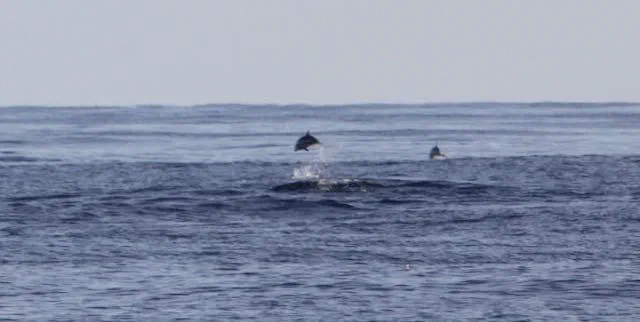
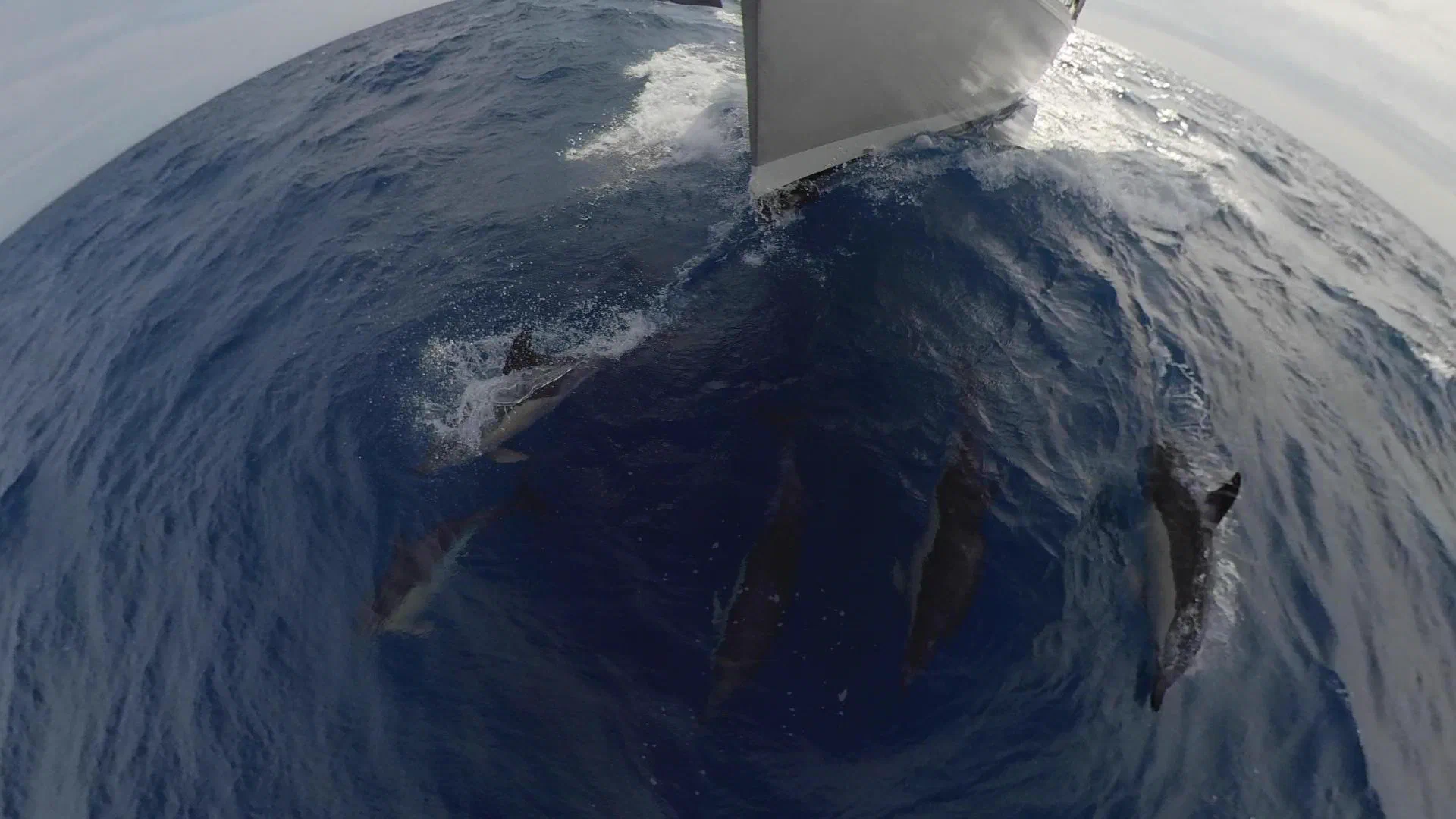
Meanwhile we’re really getting into colder waters, and gradually we start seeing dolphins every day. Where at first we eagerly jump up, by the end we sometimes just let them be. Goes to show how quickly you get used to things!
From 2,000 miles to go we started tracking it on the plotters. Where at first it goes slowly (1,800 miles to go … next evening 1,650 … another day later 1,480 …), it goes faster and faster as we approach the Azores. Your behaviour on board changes when you know there are only four days left. I notice that I’m actually sorry it’s ending; maybe an even longer passage would be a good idea for me. Weeks without social media, email and chat are wonderfully peaceful. We only get a few messages a day from people texting us via the Iridium, and we call the kids twice. That’s not easy: you have to do a sort of “over” because the delay is old-fashioned long. Afterwards it turns out that we did it pretty quickly, in 20 days at an average of 6.9 knots; most people take 23 days from St Maarten. We sailed about 800 miles out of our way.
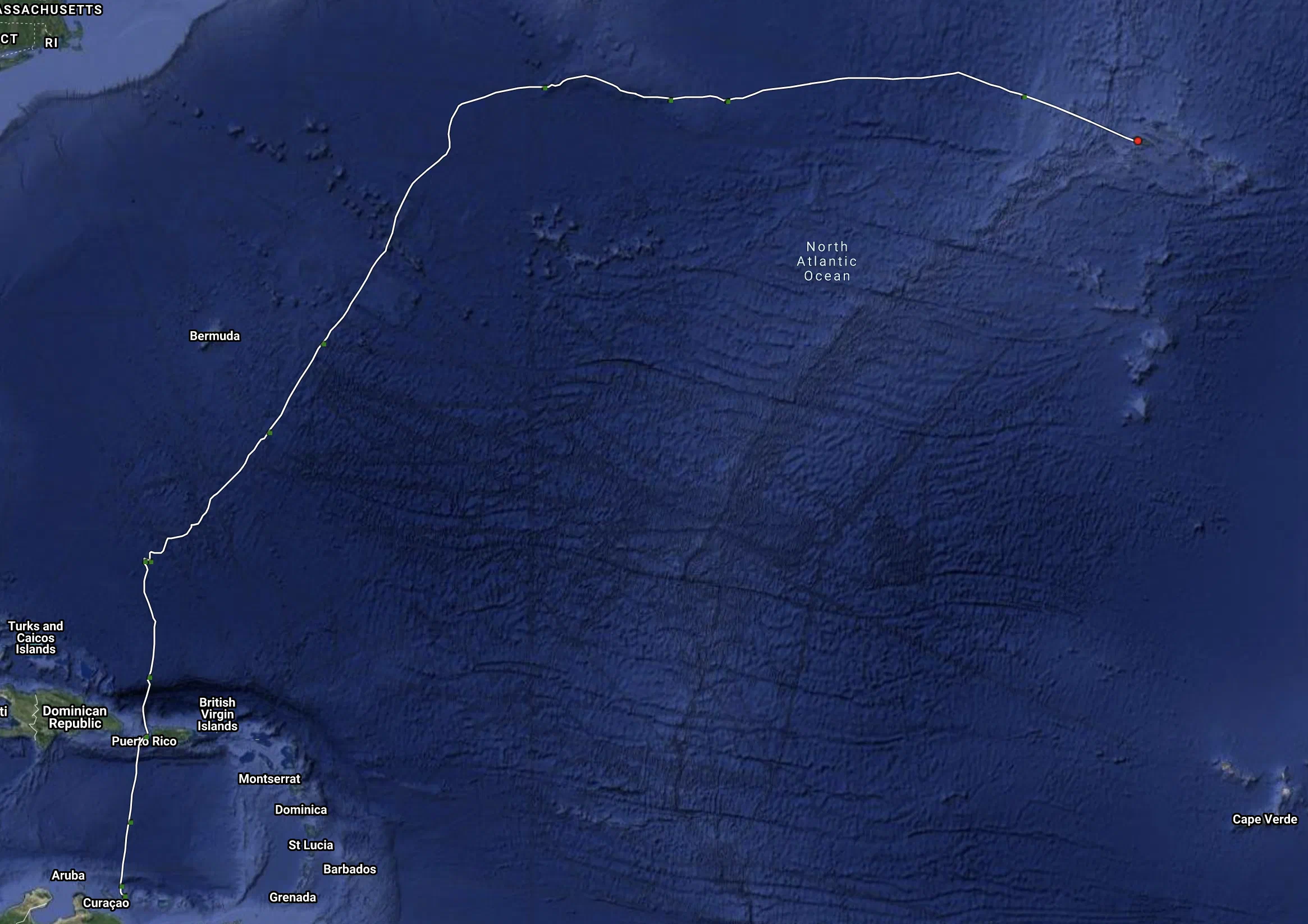
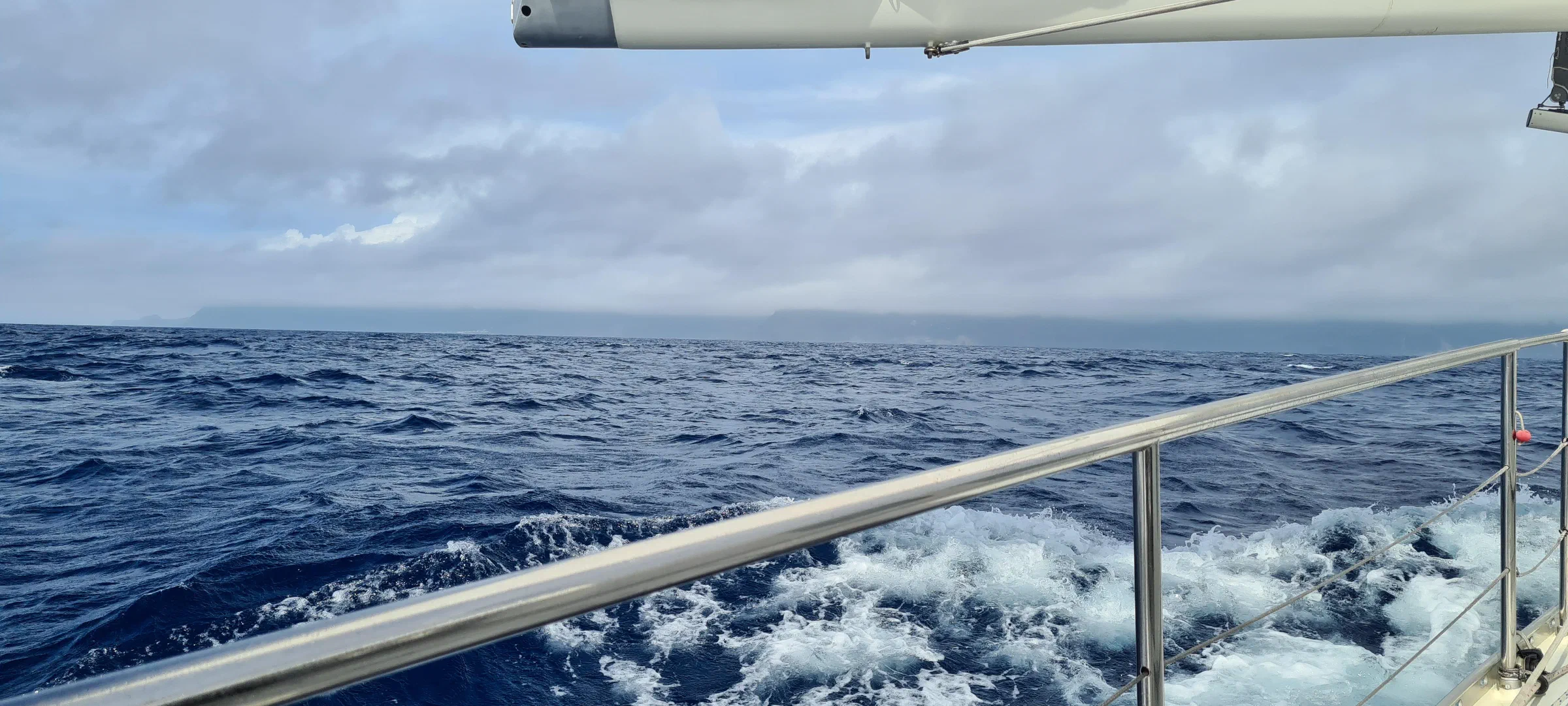
As I said, the last few days go fast, which is nice, because by then you’re ready to arrive. The routing has taken us up to almost 41 degrees north, while Faial lies 120 miles further south! As a result we have the Gulf Stream with us for days, and with the wind on the quarter we blast towards Horta at 220 miles a day. Another nice touch is that on the second-to-last day we pass close by Flores. This is apparently one of the quietest of the nine islands, with lots and lots of flowers (hence the name). The little marina is tiny and was completely destroyed in a storm in 2019. From a distance we see big cranes on lighters busy lifting the containers that were blown into the harbour back then off the seabed. You’re not allowed to go there at the moment anyway; it’s closed. Besides, because of Covid we first have to report to São Miguel or Faial, where they have testing facilities. But what everyone is secretly looking forward to most: mobile coverage! How are things at home, is everything OK? With a better connection the conversations are much more relaxed and you can “read” better what’s going on between the lines.
One of the things the temporary internet makes clear to us is that clearance and Covid testing are still organised the same way as when we left. On MarineTraffic we see that some 30 (!!) boats are due to arrive within 24 hours of us. So it’s going to be packed. And when we arrive in Horta the next morning, 8 June, around 10 o’clock, it is. We report to the marina on channel 9; anchor and then wait for the RIB that comes to collect our details, and then testing. They’ll pick us up for that around 1 o’clock, but we might have to wait one or two days because it’s so busy. We anchor right in front of the marina so that we’re clearly visible to the RIB coming to fetch us for the test. We’re only the second boat to be picked up, so that’s not too bad. Meanwhile it’s indeed incredibly busy around us: we’re at anchor with some 50 other boats, and the marina is completely full as well.
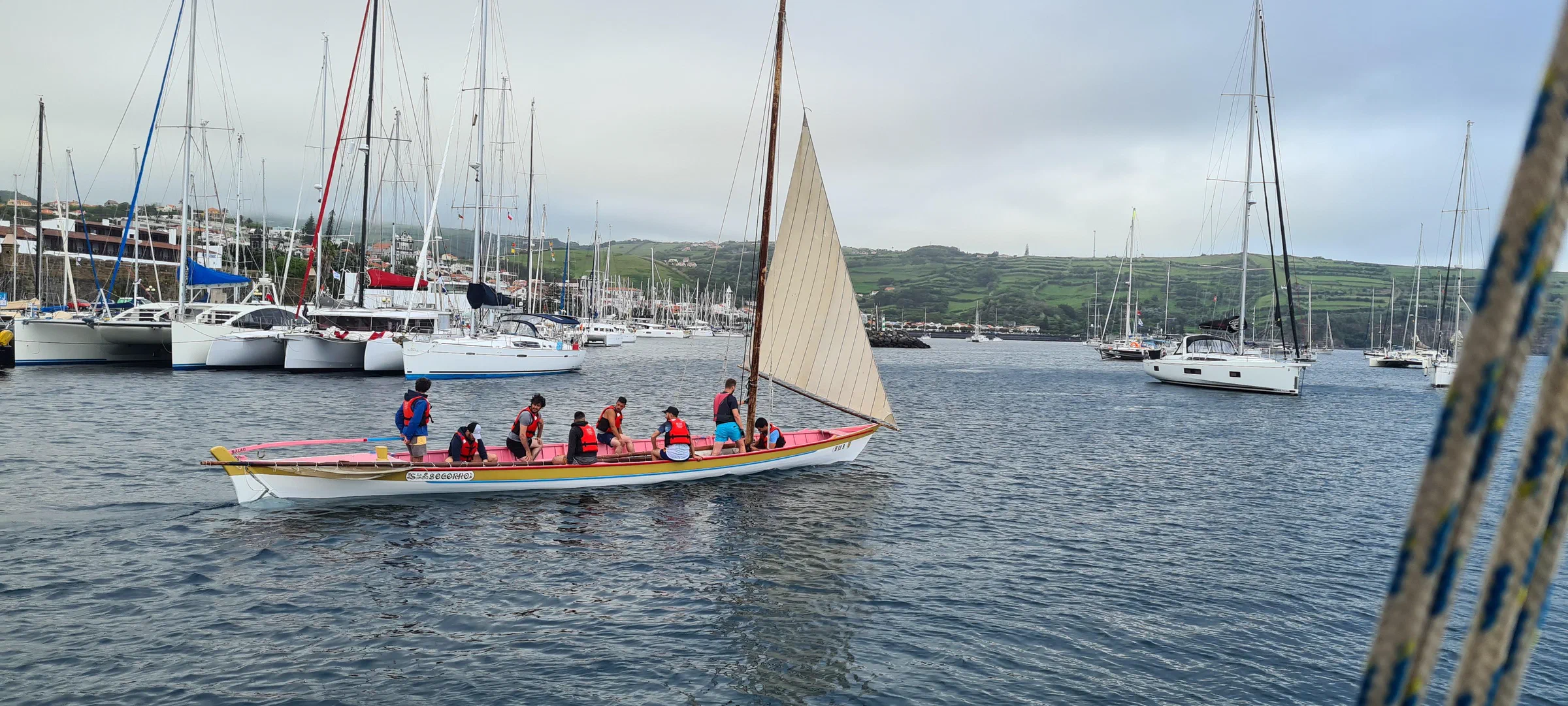
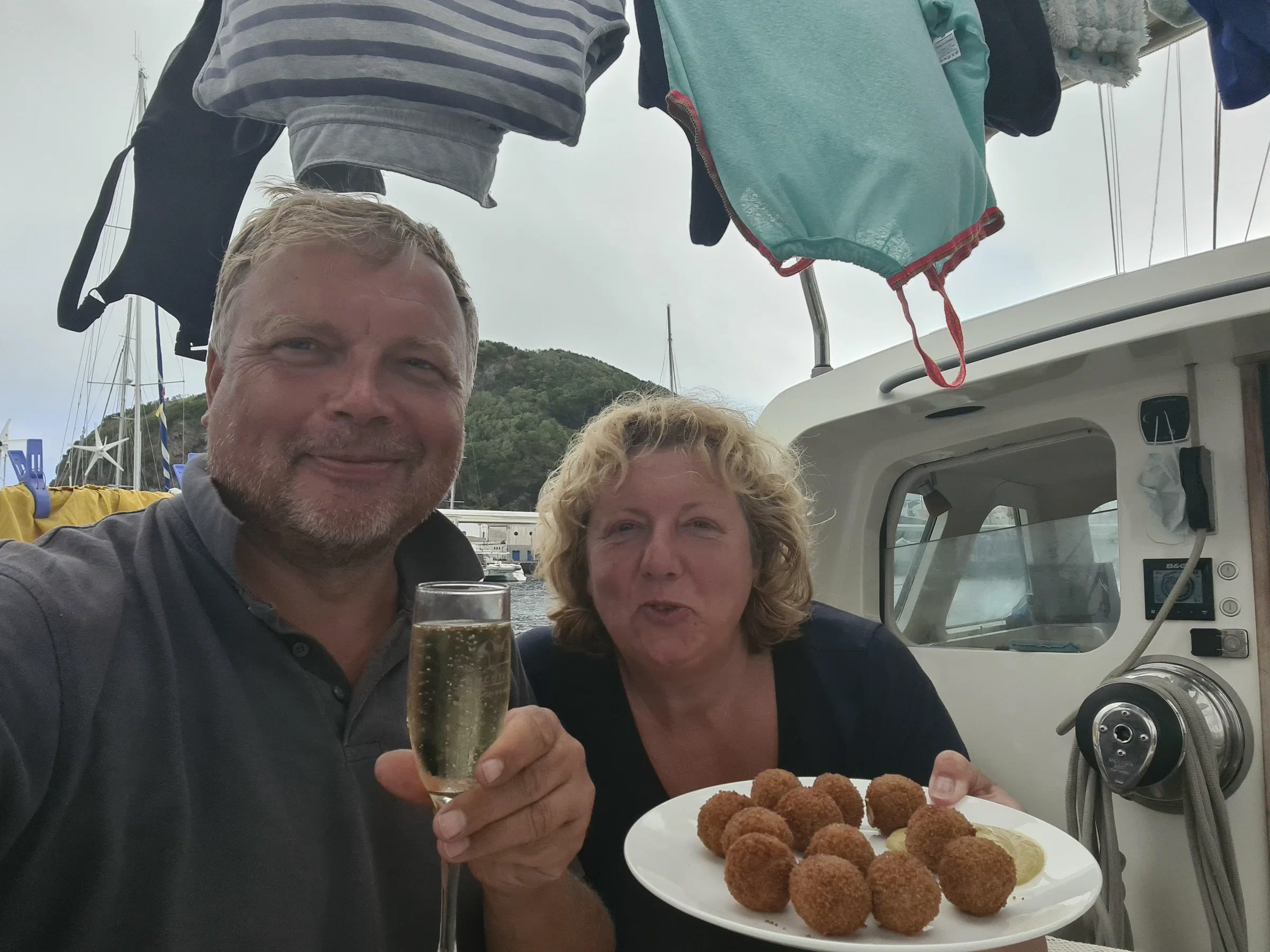
Horta is immediately so different from the Caribbean: green everywhere, fairly chilly with a bit of drizzle. The old whaleboats, now sailed recreationally by the people of Faial, zip around us. We get food delivered by Peter Café Sport, whose crew drive around in Where’s Wally hats. And there’s champagne with bitterballen! We’re here and we pulled it off!
And to round off this fantastic trip, one more video then….
P.S. I backdate the posts. This was uploaded on 1 July, but I set the publication date to the last day described.
Comments