Martinique
This page was machine-translated. Read the original (Nederlands)
We were really looking forward to returning to Europe, or rather France in the Caribbean. Partly so we could use our own phones again, but definitely also for the shopping at Carrefour! And it didn’t disappoint. Not to mention the delicious baguettes and croissants the way only the French can make them!
From St. Vincent we set off for an overnight stop in a beautifully quiet bay on St. Lucia. If you don’t go ashore you don’t have to clear in, so we take everything in from the water. The passage is pretty rough, so I spend a good part of it feeling rather unwell. There’s a fair bit of wind and the waves come rolling in off the ocean with plenty of energy. When we come in to pick up a mooring in the bay, there’s already a guy in a little boat waiting by the buoy to help us, and there’s no getting around him. Naturally he expects to be paid for it. Because we’re a bit vague and ask how much, he says 30 dollars. That’s about 10 euros! For taking a line and handing it back! We pay him anyway, but resolve to haggle better in future, because this is nuts. And that’s not even the mooring fee; they come by for that later as well, but that’s relatively modest by comparison.
(For the non-sailors: a mooring is a concrete block on the seabed with a line attached that you can tie your boat to. To keep the line off the bottom and mark the spot, there’s a buoy on it, usually with an eye you can run your own lines through. On a high-sided boat like ours it can be quite tricky to get hold of the buoy, so a bit of help is welcome, but it’s far from impossible. The moorings here are mainly laid where anchoring is prohibited to protect the seabed, the coral and the sea grass, or simply for convenience.)
(Viewer discretion: suitable for anyone with a strong stomach, although it was still reasonably calm at this point, because I managed to film it)
The next day’s sail to Martinique is lumpy too, but more manageable. When we arrive in the bay of Fort de France, the capital, we pick up a mooring belonging to Marina l’Etang Z’Abricot. It’s an area that was originally industrial and is now being developed. There’s a new marina and all sorts of apartment blocks either just finished or under construction. There’s a bakery and a Carrefour Express nearby, so all good.
We hear people shouting from the shore, and just as we’ve made fast we’re called up on the VHF, but our reply doesn’t get through straight away. After a few rounds back and forth they finally hear us. Have we made a reservation, because this mooring is booked in 4 days’ time… such panic. Since we have to clear in first anyway, we head straight to the office, as that’s easier to sort out face to face. There’s another mooring available, so we take it for a week right away.
For the first week we rent a car to drive around the island. We’ve come up with a few places we want to see, and we’ll play the rest by ear. On the first day with the car we head for a hypermarché and Decathlon for new swimwear. We immediately hit the jackpot with the biggest supermarket on the island, Hyper-U.
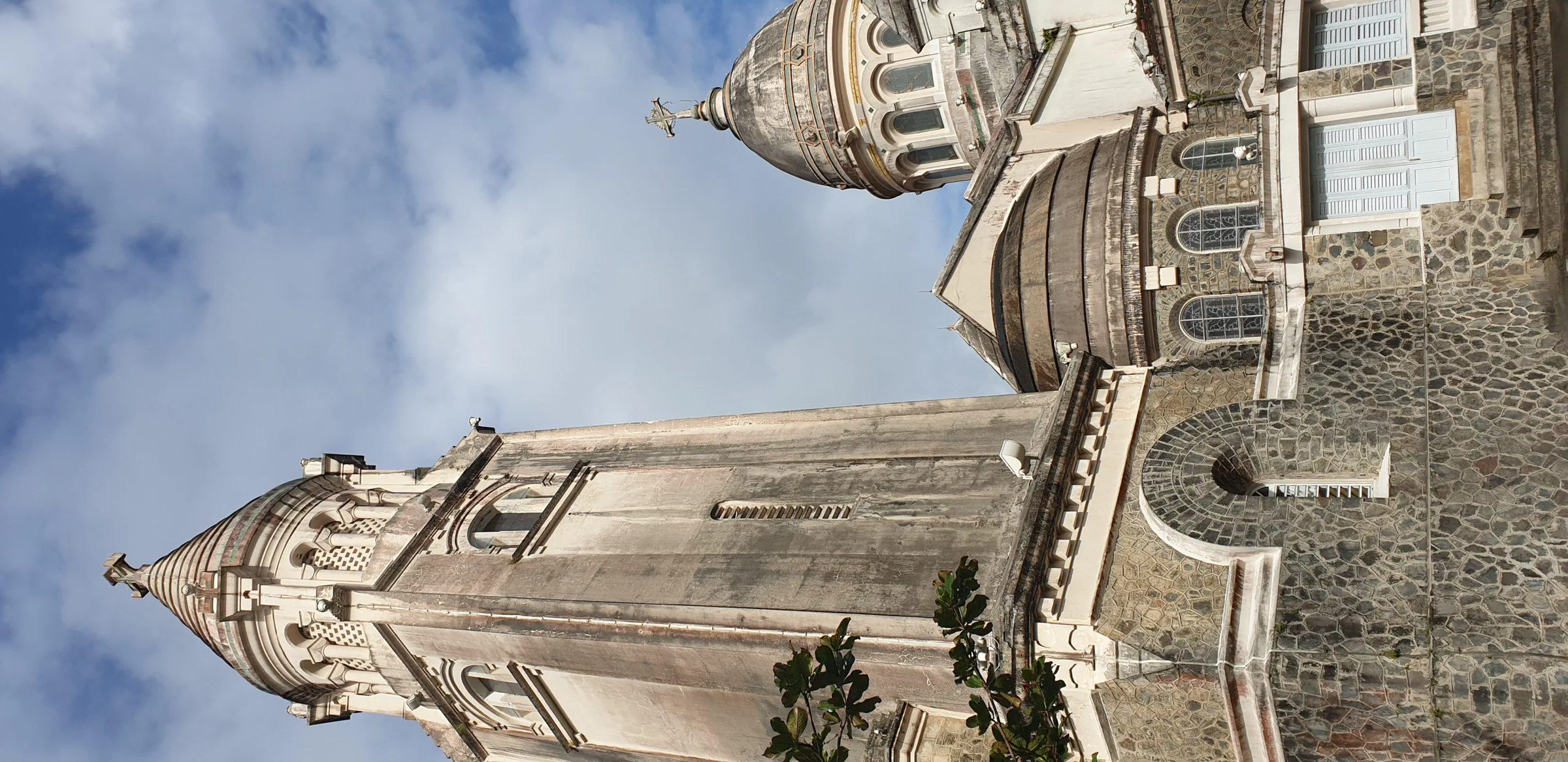
Sacré-Coeur de Balata
Over the next few days we explore the north of the island; we’ve booked a night in a hotel so we can drive around at our leisure. I wanted to visit the Sacré-Coeur in Balata, but we miss the sign and don’t spot the church from the road, even though it’s right next to it, but, as we discover when we visit later, up on a high mound.
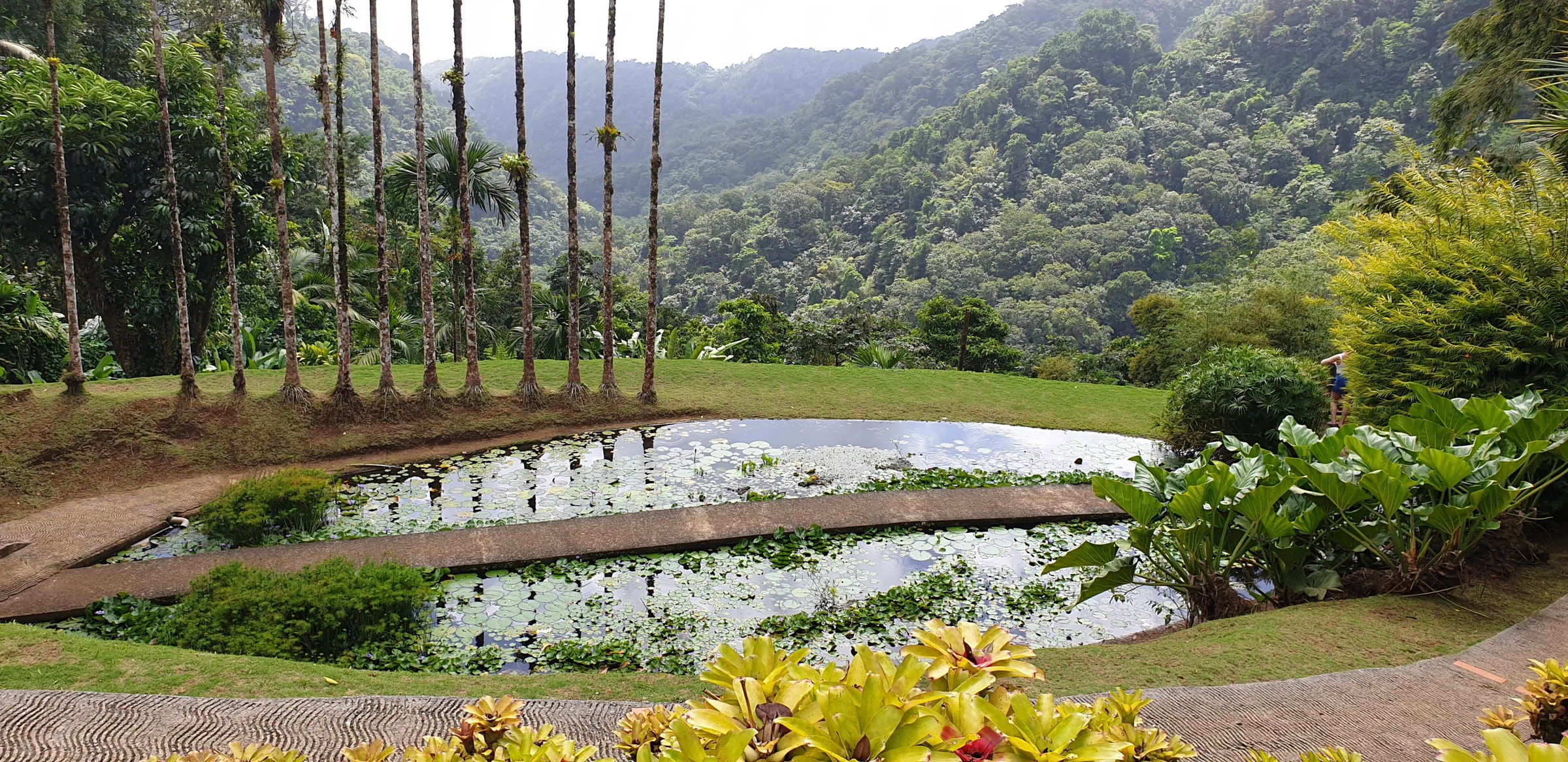
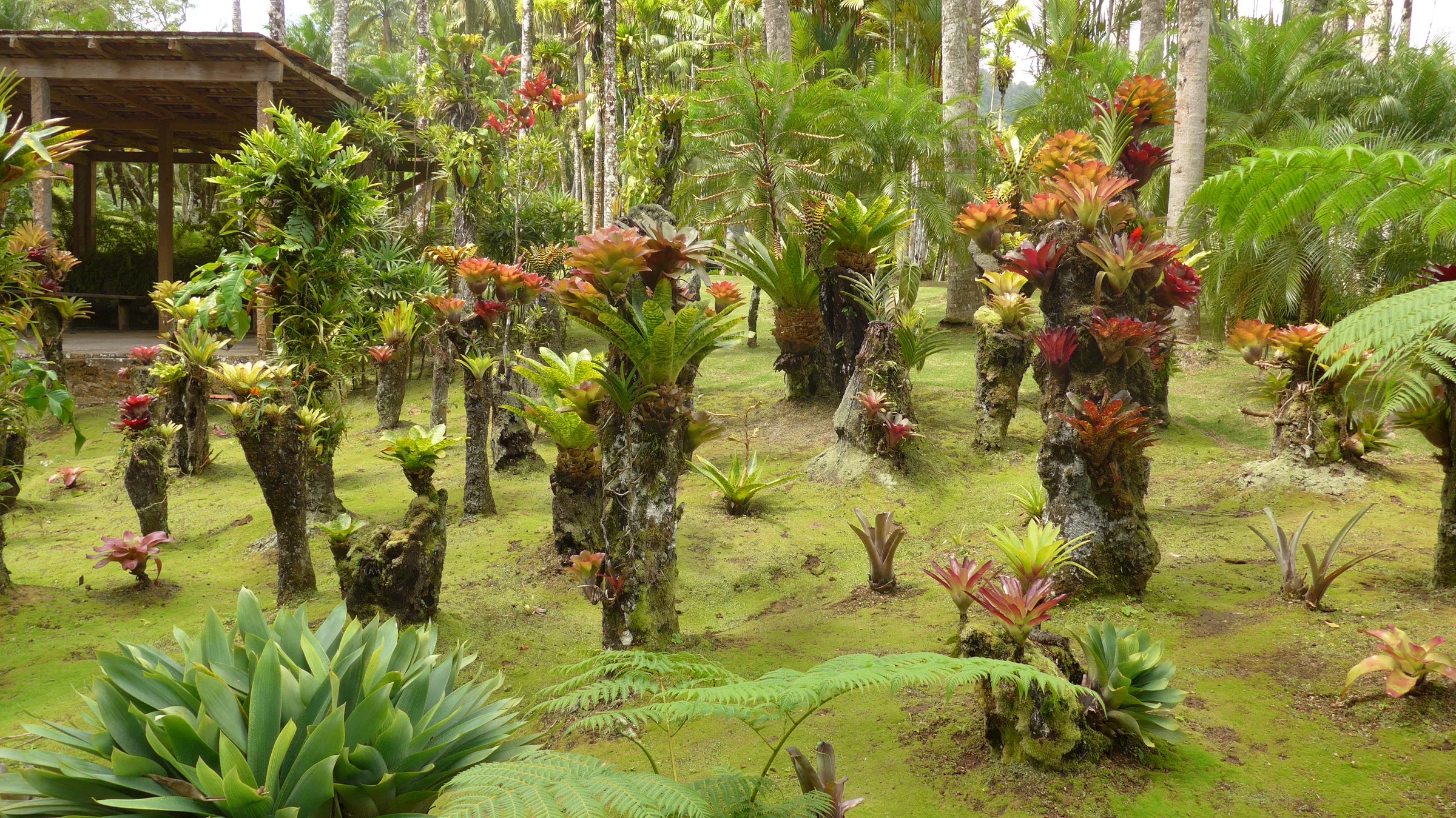
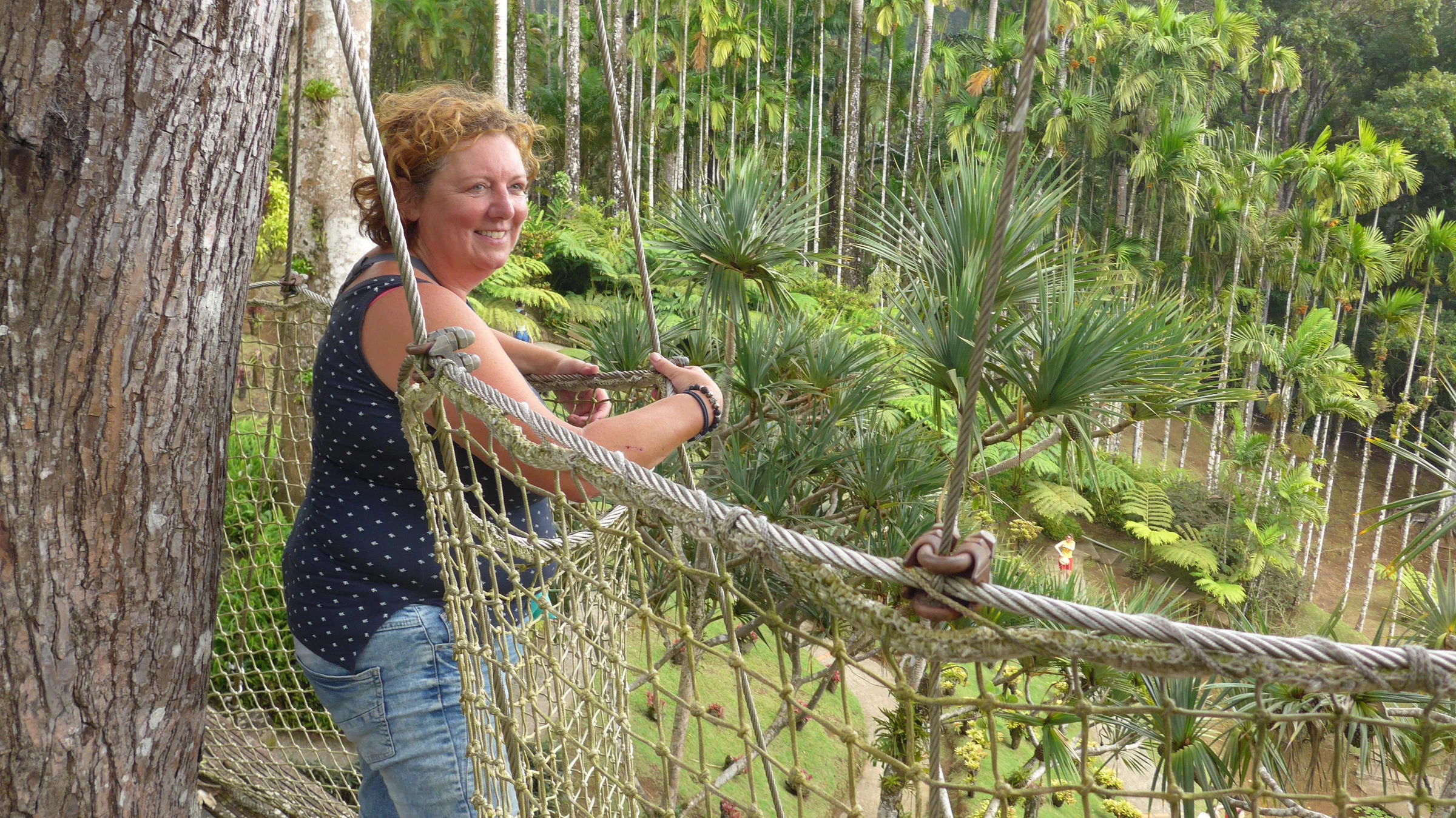
We do come across the Jardin de Balata, a botanical garden with all kinds of plants that are exotic even for the island. Plus three hundred different species of palm tree. It has a lovely view over a valley and is beautifully laid out. At some point you can take a raised path/bridge, so of course we do. We climb the stairs, and when we get to the top and I’m about to cross the first section, I discover it’s a suspension bridge. And there I stand with my fear of heights. Naturally I’m not going to let it show, so I march on, acting all brave. Luckily no more than two people are allowed per span, so I can carry on calmly at my own pace. It’s bizarre how a fear of heights works. Everything is fine, and then suddenly your body takes over and starts trembling, so you feel like you can’t stay upright anymore. And just as suddenly it can be gone again, sometimes halfway across a span. So I even manage to enjoy the gorgeous surroundings.
After the garden we drive on in a north-easterly direction, through and along the mountains, looking for somewhere to eat. It takes a while, but we have a delicious meal with a locally brewed beer, BAM. We then decide to check in first at the hotel on Mont Pelée that I booked, and then drive further north. At some point the road simply ends, so we can go that far and then head back to the hotel. The scenery is stunning and the towns and villages vary enormously. Some are run-down, others are spick and span, full of beautiful flowers, plants, trees and landscaped little parks. And lots of sugar cane and banana plantations.
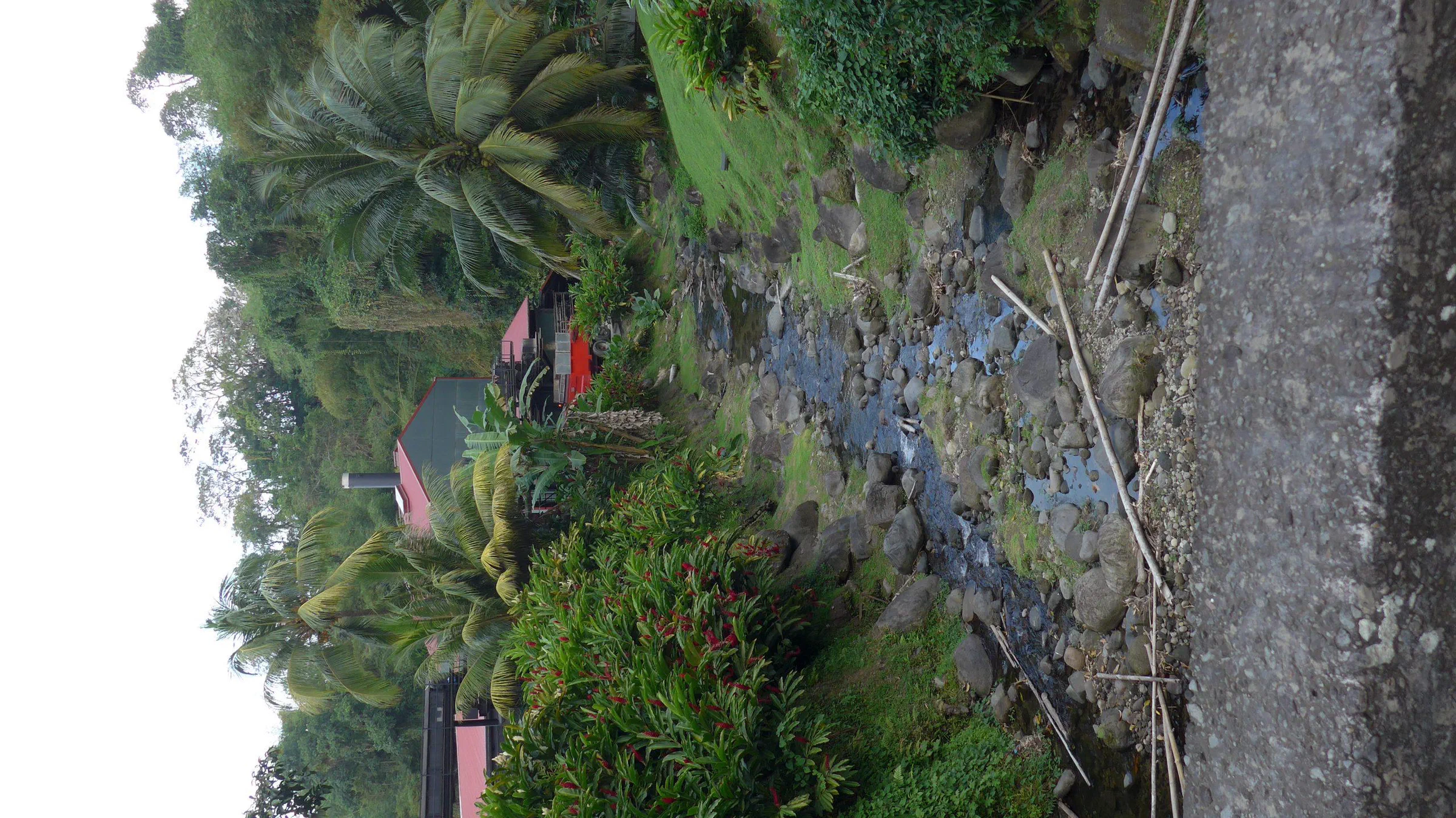
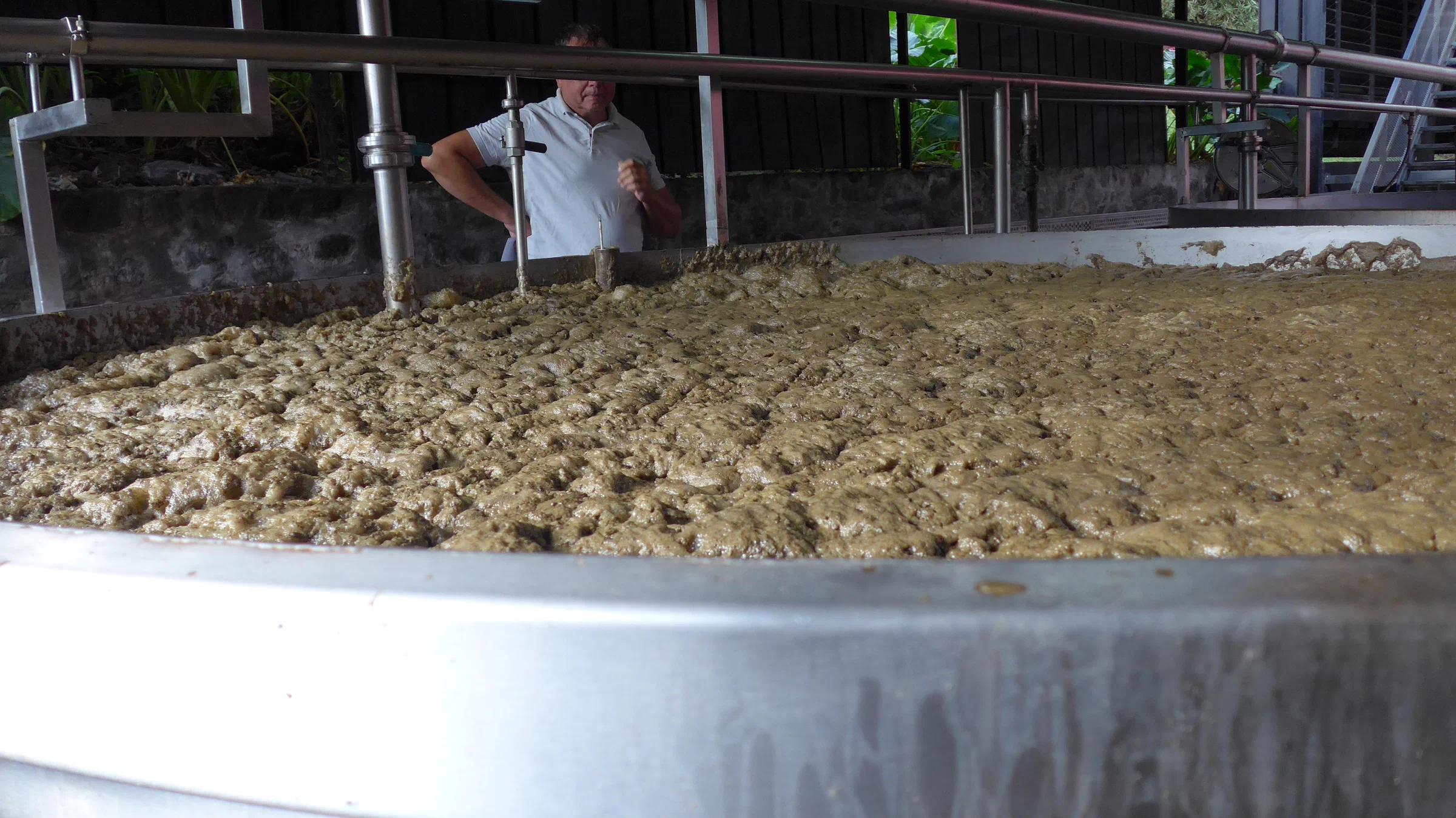
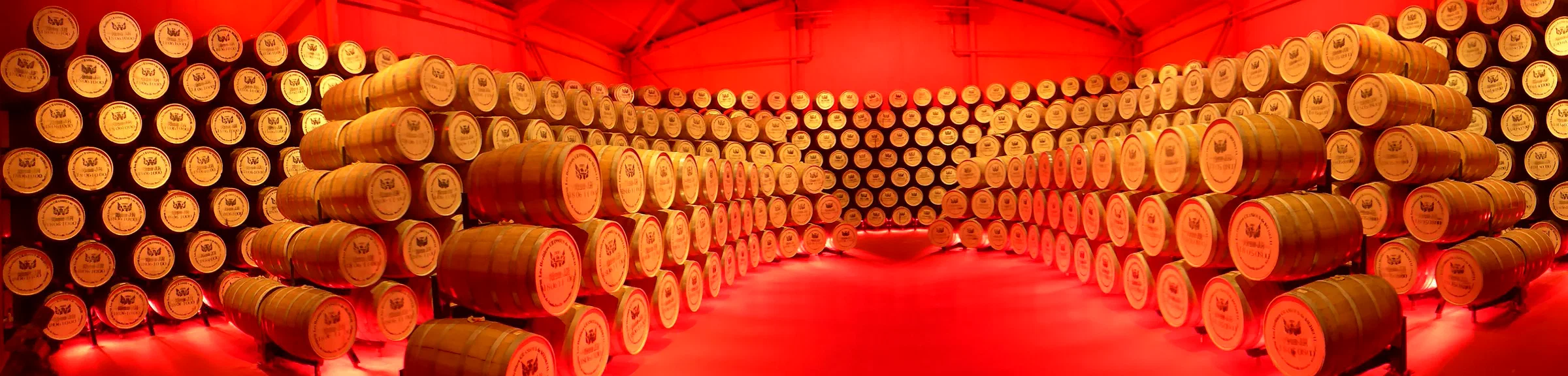
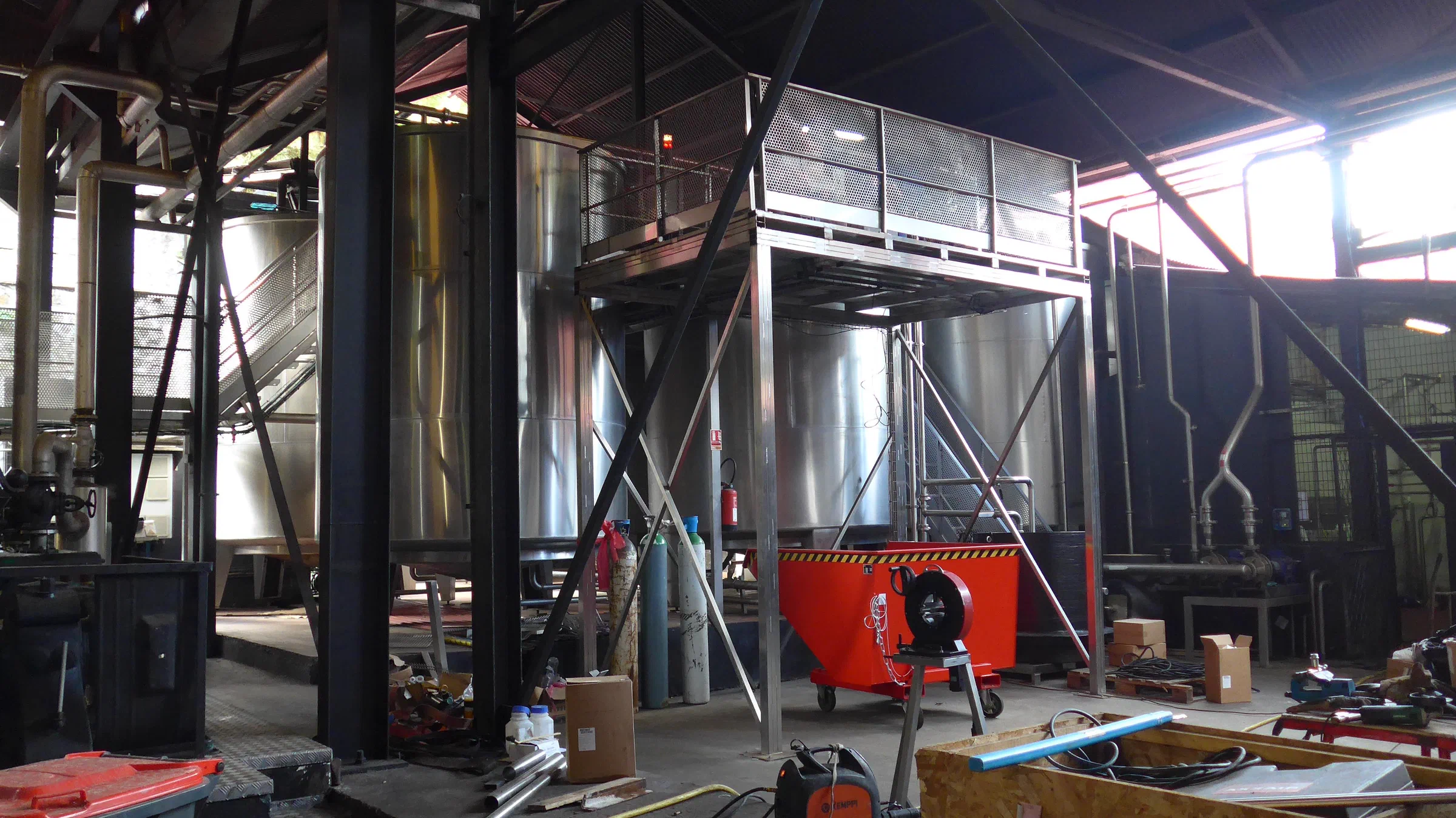
We pass the JM rum distillery, where we can take a look around. It’s interesting to see, with enormous vats, and we’re lucky that it’s the season and they’re in full production. But we don’t actually like the stuff, so the factory shop is wasted on us.
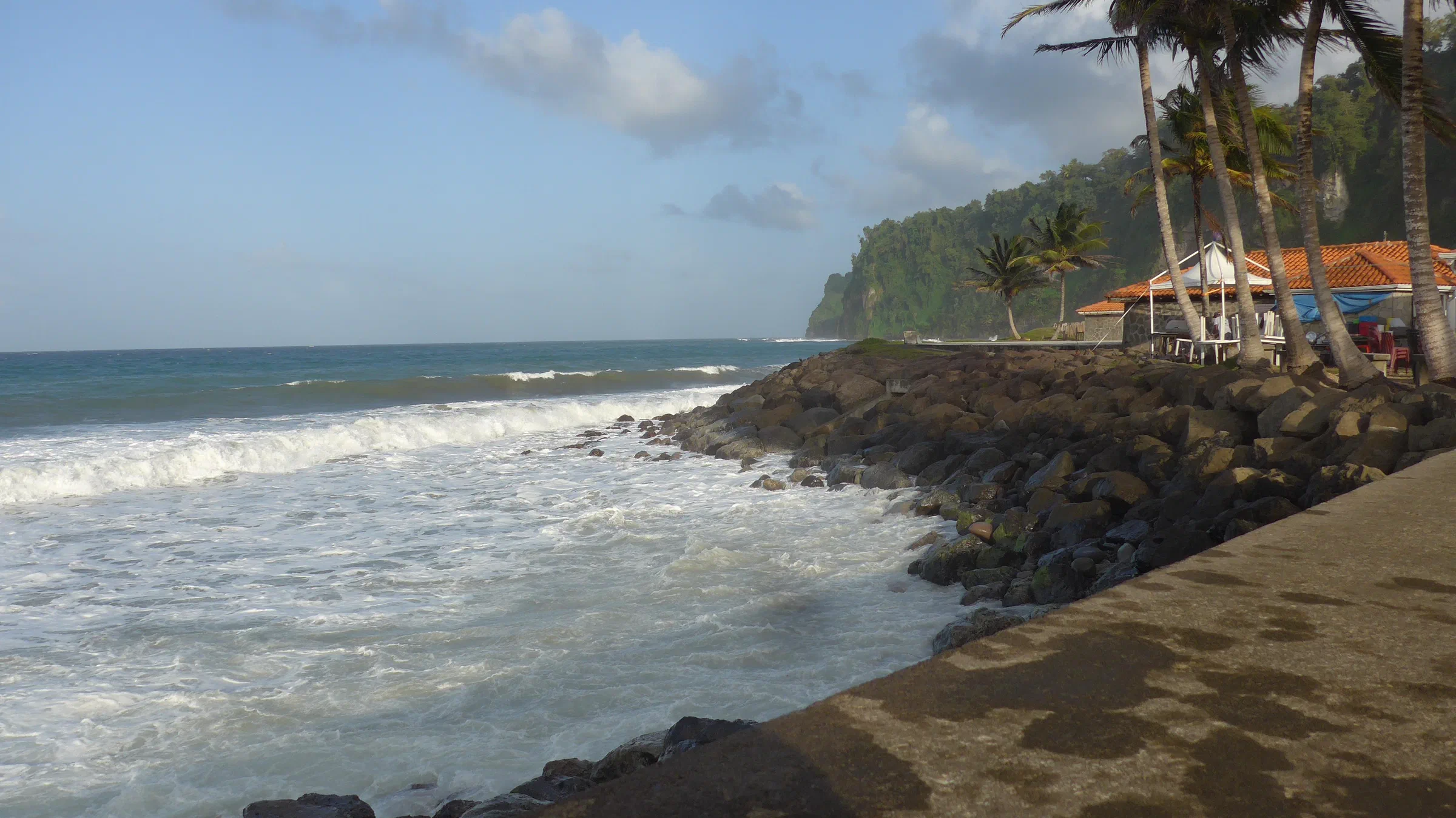
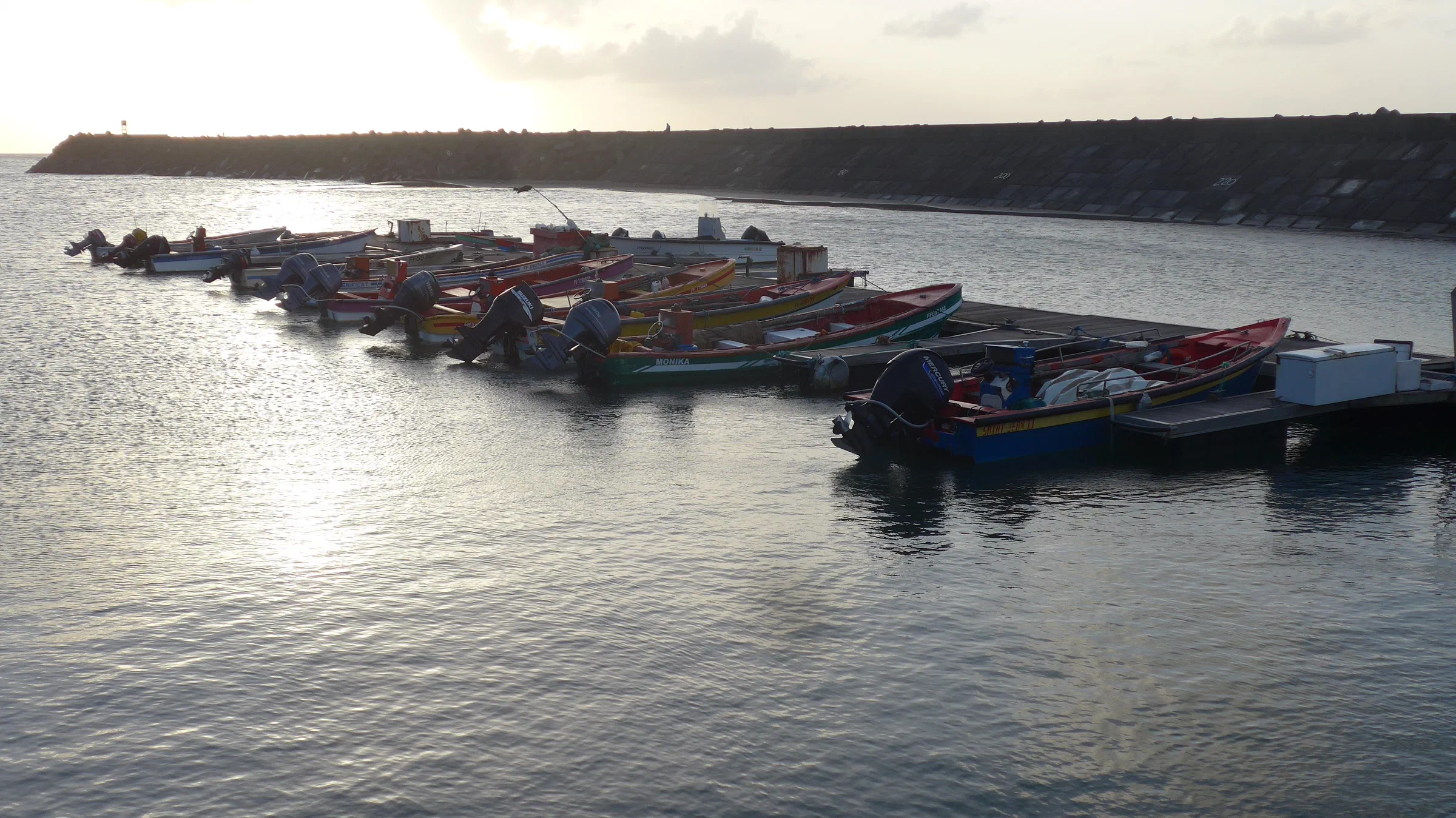
At the end of the road in the north there’s a small fishing harbour, tucked behind a big breakwater built with EU money. The northern coast is fairly wild: rocky, with the ocean swell pounding in. Sailing there isn’t recommended, and we can see why. But it looks magnificent!
We’re expected at the hotel at 7 pm for dinner, which we had to choose when we checked in. There really aren’t many guests, so we get it. The food is delicious. The hotel consists of little cottages in different colours dotted around the grounds on the mountainside. It looks very cosy, but the weather isn’t: we’re pretty much in the clouds and it rains regularly.
The next day it’s raining on the mountain. We wanted to hike to a waterfall, but the waterfall coming down from the sky puts a stop to that. We drive back to the east coast, but this time turn right, onto the coast road heading south. Halfway down the east coast there’s a peninsula with the ruins of an old sugar, coffee and rum plantation, Château Dubuc.
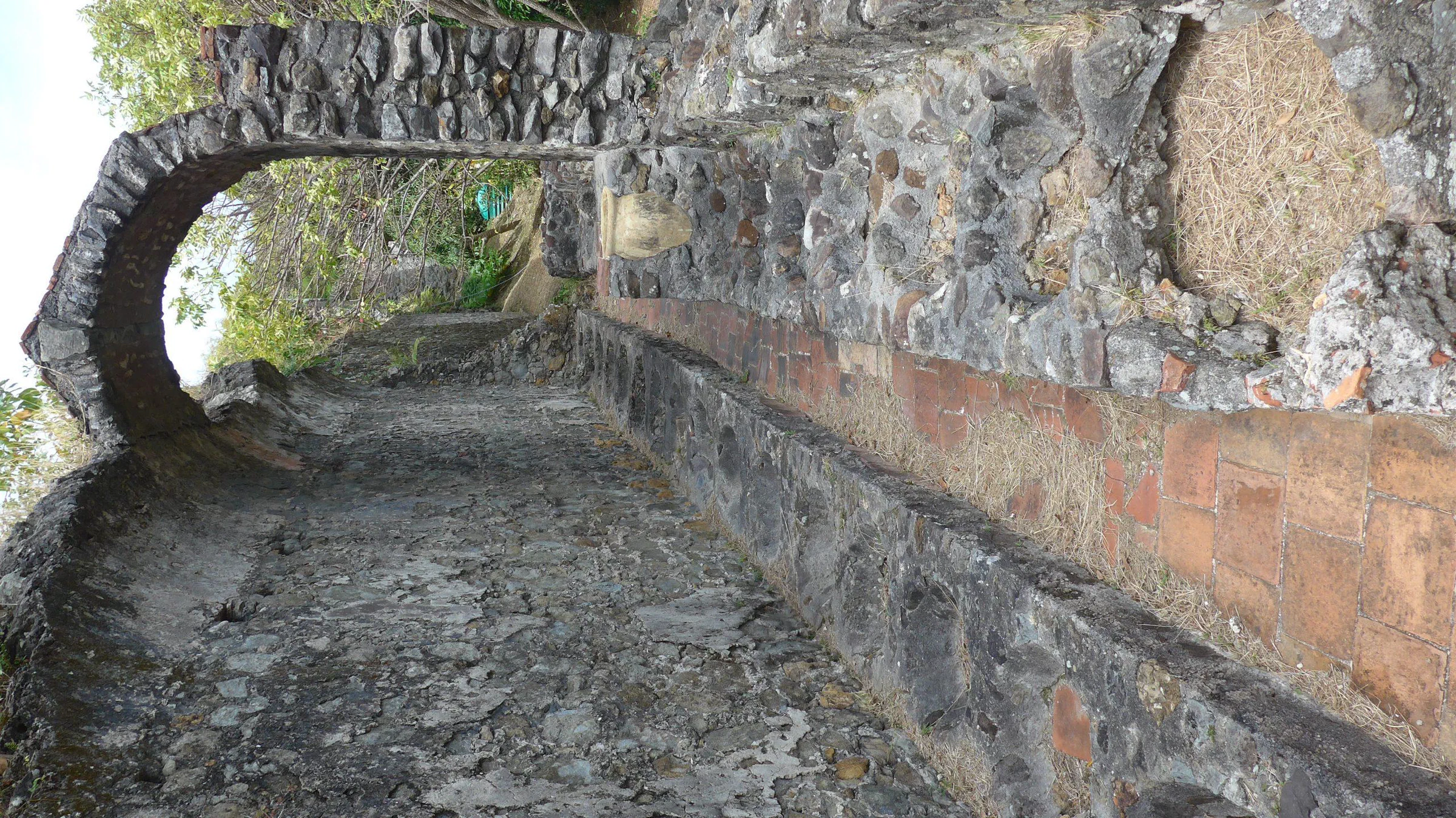
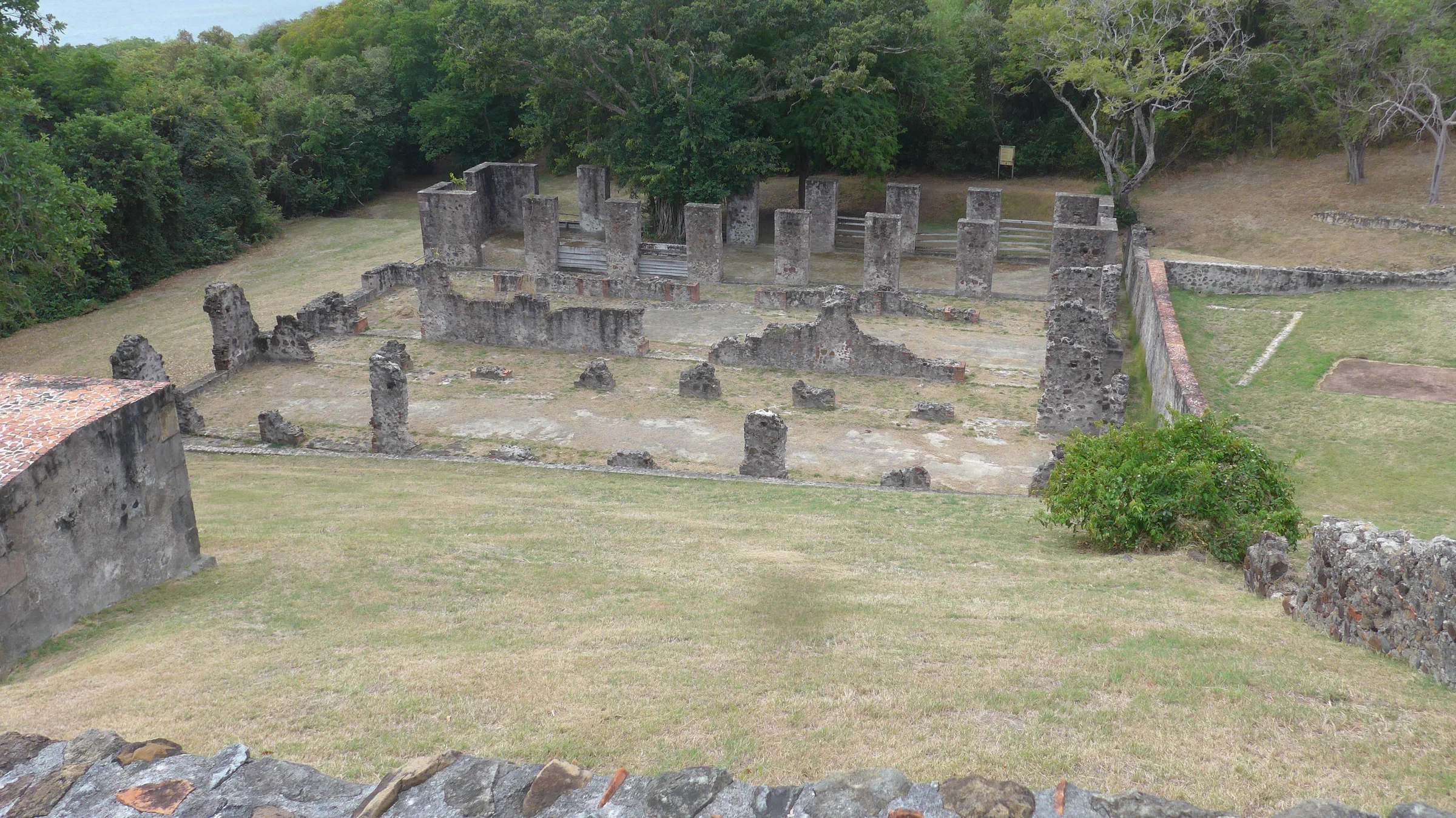
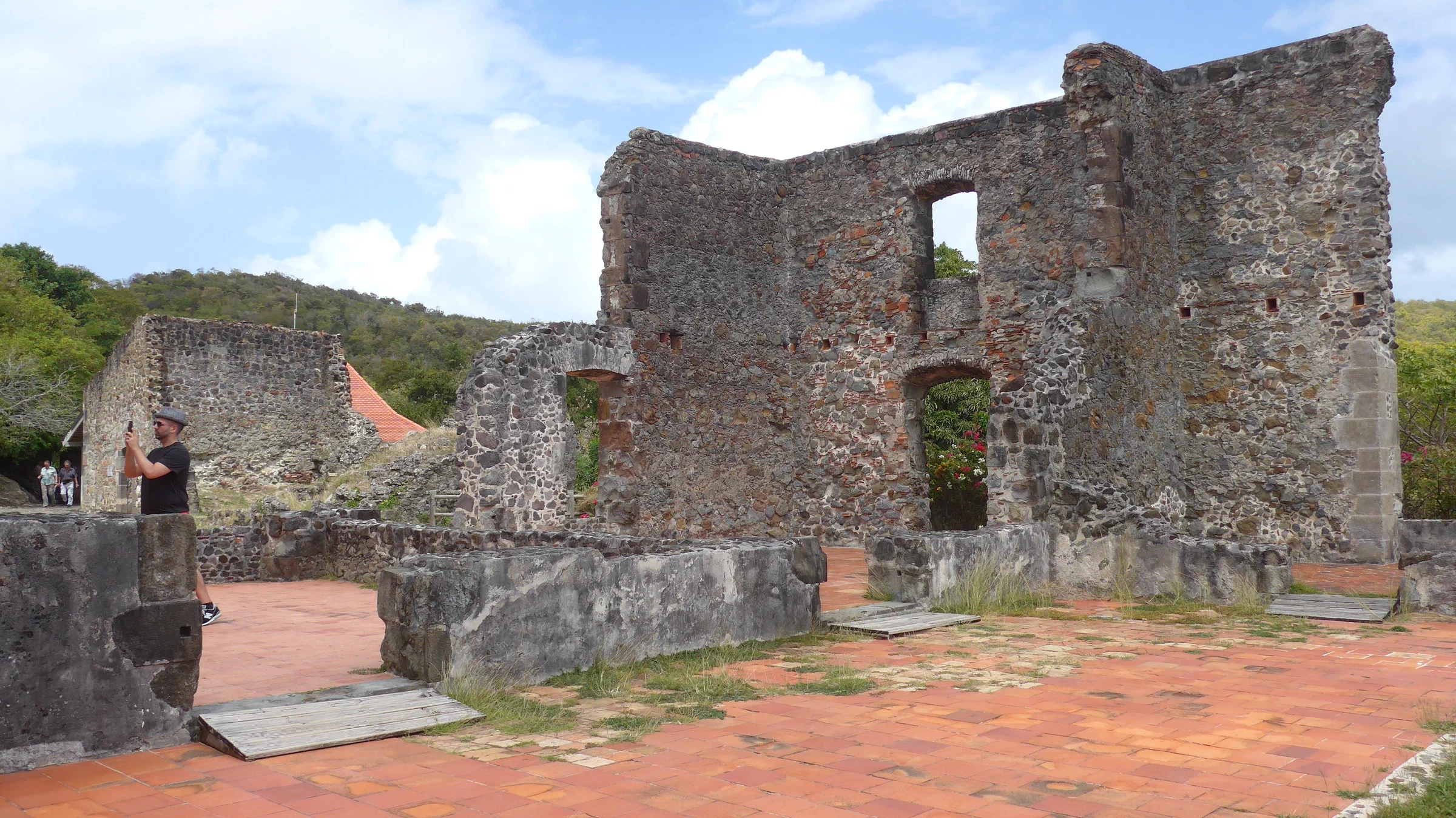
An audio tour guides us through all the different parts of the plantation. The weather on this side is glorious, it’s warm, the surroundings are lovely and the view likewise. There’s a bit of climbing up and down, but it’s definitely worth it. Fun fact: the daughter of the family, Aimée Dubuc de Rivery, was kidnapped and became Sultana Valide, mother of the Turkish Sultan Mahmud II.
A few days later, down south, we visit the birthplace of another famous daughter: Marie-Josèphe-Rose Tascher de la Pagerie, later known as Joséphine Bonaparte de Beauharnais. In other words, Napoleon’s wife. The site, once a sugar plantation, is a bit of a letdown: there’s a stone rectangle no more than 30 cm high that used to be the outer walls. Apart from that, the old kitchen is still there, housing a tiny museum with a few paintings and relics, nothing very special, but you’re not allowed to take photos. And there’s a ruin of the refinery, but we can’t go inside.
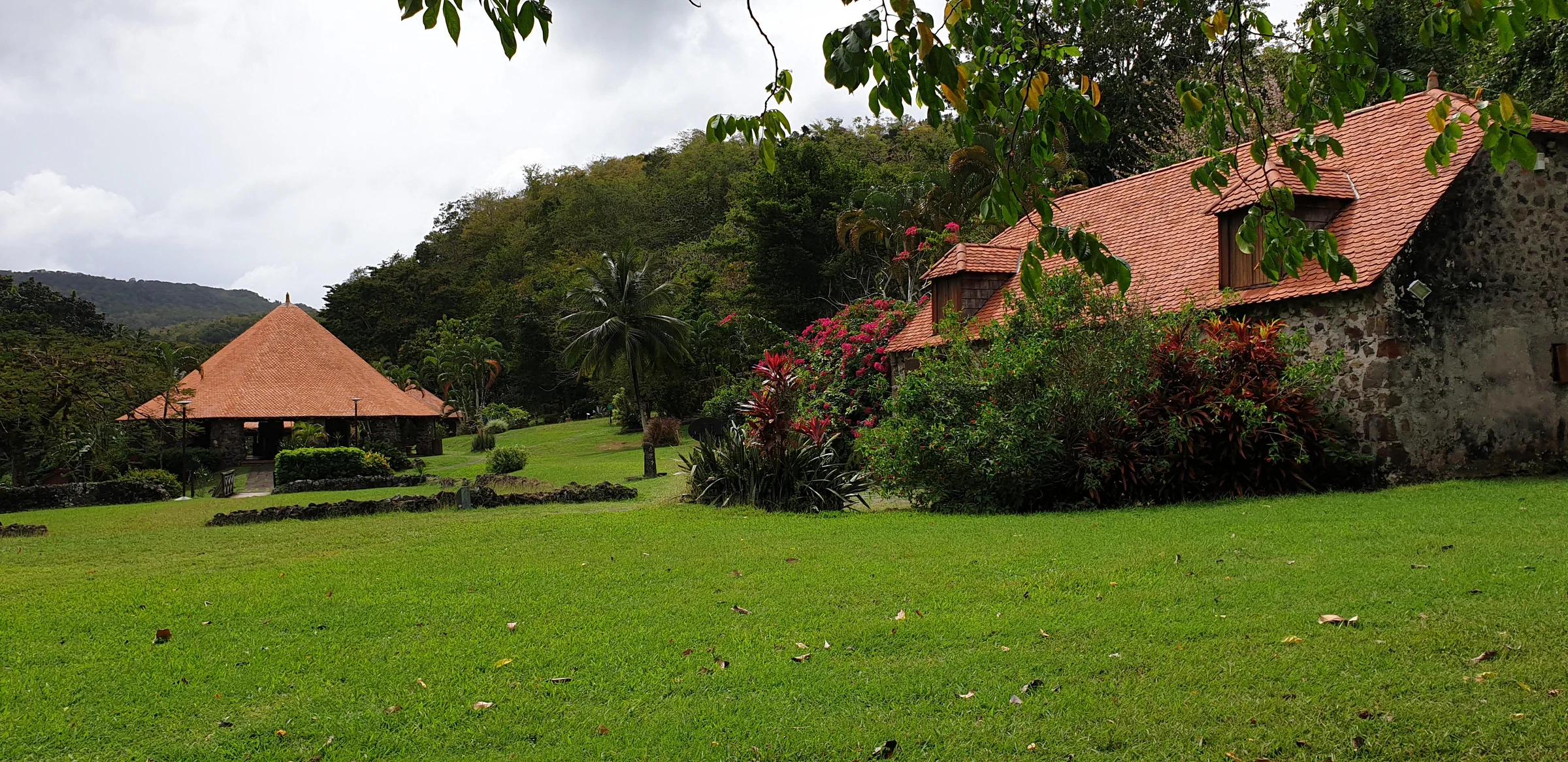
There are stories going around that she may not have been born here at all, but on her parents’ sugar plantation on Saint Lucia. Her parents travelled back and forth regularly, so who’s to say. She was baptised on Martinique, so that’s generally accepted as her place of birth. In those days the island changed hands between England and France, and if she’d been born three months earlier, she would have been English.
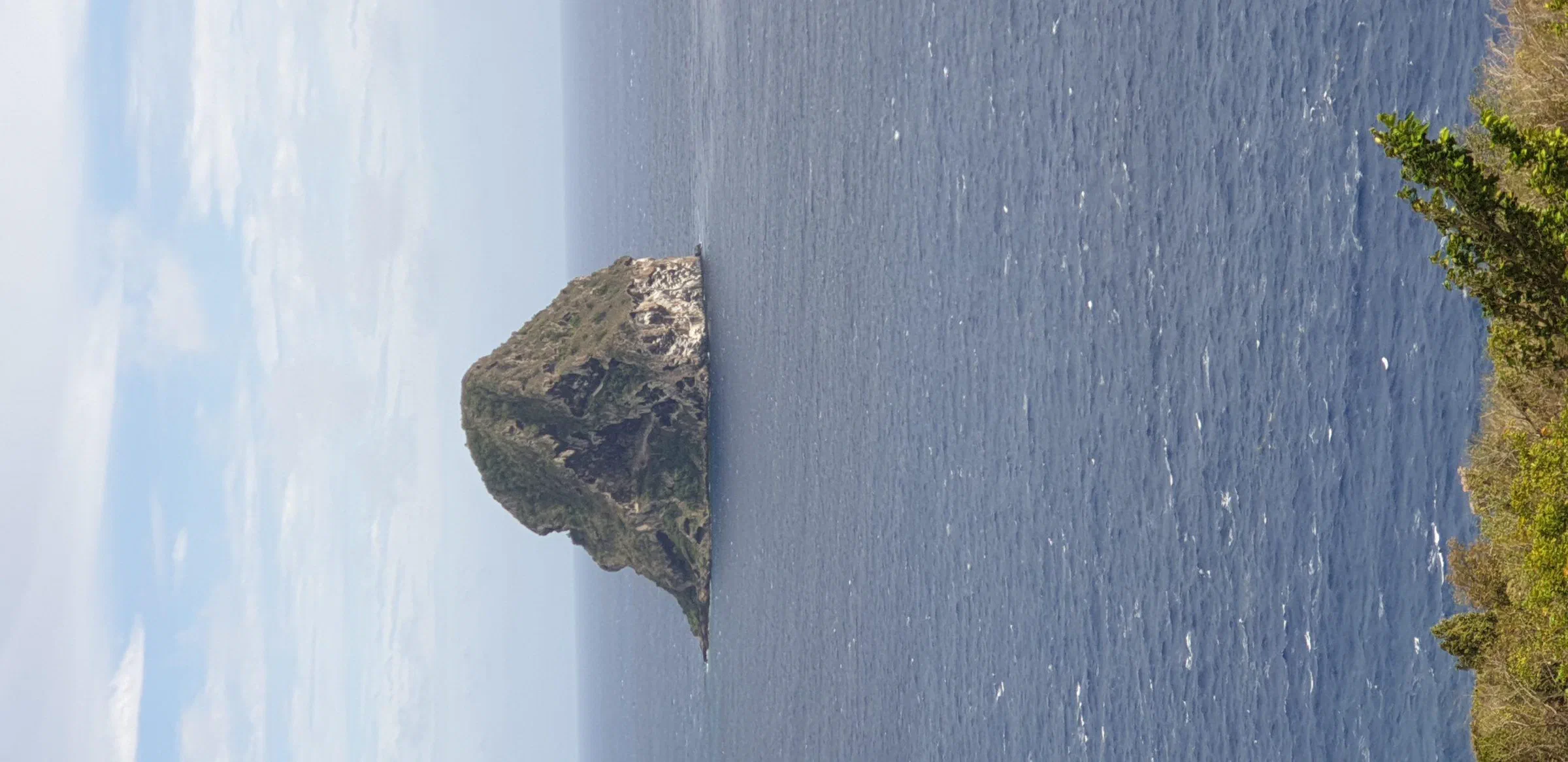
In the south, just off the coast, lies a rock called Diamond Rock. That’s all it is: a rock shaped like a diamond. The English once used it to stop the French from putting to sea. The fort was manned by a garrison of 200. The English even commissioned it as a warship: HMS Diamond Rock. After many attempts, the French finally recaptured the rock by cunning: they let a boat full of rum barrels run aground on it. Once the English were drunk enough on all that rum, the French chased them off.
In the north lies St. Pierre, which used to be the capital of Martinique. In 1902, on Ascension Day, the town was buried Pompeii-style by an eruption of Mont Pelée. Almost the entire population of 30,000 was killed, many of them in the cathedral for early Mass. There were 2 survivors. One of them was Auguste Ciparis. He was locked up in a cell with thick walls and a tiny window, on death row. He was eventually pardoned and went on to tour with a circus as ‘The Survivor of a Volcanic Eruption’.
At the end of the week we return the car. We’re still waiting for parts that have been shipped from the Netherlands, and then we’ll be on our way again. On Saturday we move the boat to the next bay, right in front of Fort de France. We hadn’t visited the capital yet and I fancied a wander around the centre. Just as I get there, at 1 pm, the first shops are already pulling down their shutters, even though it’s nice and busy with lots of tourists ashore from the cruise ship. I’m looking for a bookshop, and there’s one in a small mall in the middle of town. I have a cup of tea there, and when I step outside the mall a little later, the rest of the centre has been hermetically sealed with roller shutters, as if war could break out at any moment.
The only thing still open on the waterfront is a shop selling carnival costumes, blasting the matching music into the street through its speakers at full volume. In the evening we head to a quiet bay in the south-west, so we can sail to the east of the island the next day.
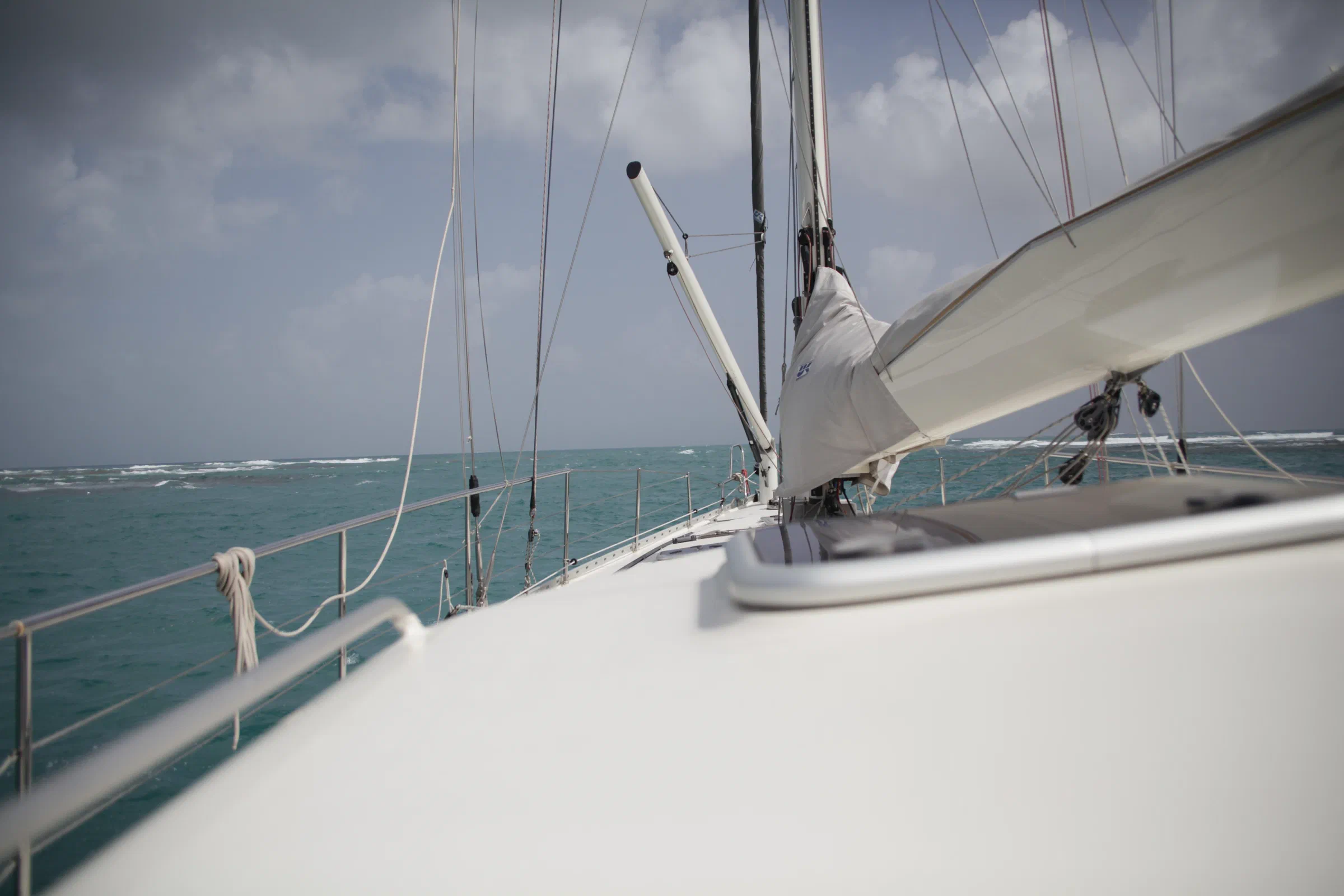
I missed the passage to the east entirely; I was flat on my back, sick as a dog. Kees has some tense moments navigating between the reefs into the bay, with surf breaking on the reef all around him and only a narrow stretch deep enough to get through, but once inside it’s much calmer. We anchor in a bay with just one other boat. It looks deserted, but a little further along there’s a village from which a boatload of tourists sets off at regular intervals, only to roar past our boat at full speed. Even so, it’s lovely and peaceful.
A few days later, with the parcel by now delivered somewhere (DHL has it marked as completed, at any rate), we sail back west. Since the marina doesn’t have the parcel yet, we decide to anchor in the bay of Le Marin and Sainte-Anne. It’s a very busy anchorage, but we drop the hook right on the outer edge, where it’s actually very quiet. And that’s where we still are. Every day we call the marina and DHL, but they were closed for carnival. So now we don’t know where the parcel is. But life here is good. Looking aft, we’re in a little cove where we can imagine we’re alone in the world; looking forward, there are hundreds of boats at anchor, but far enough away not to bother us.
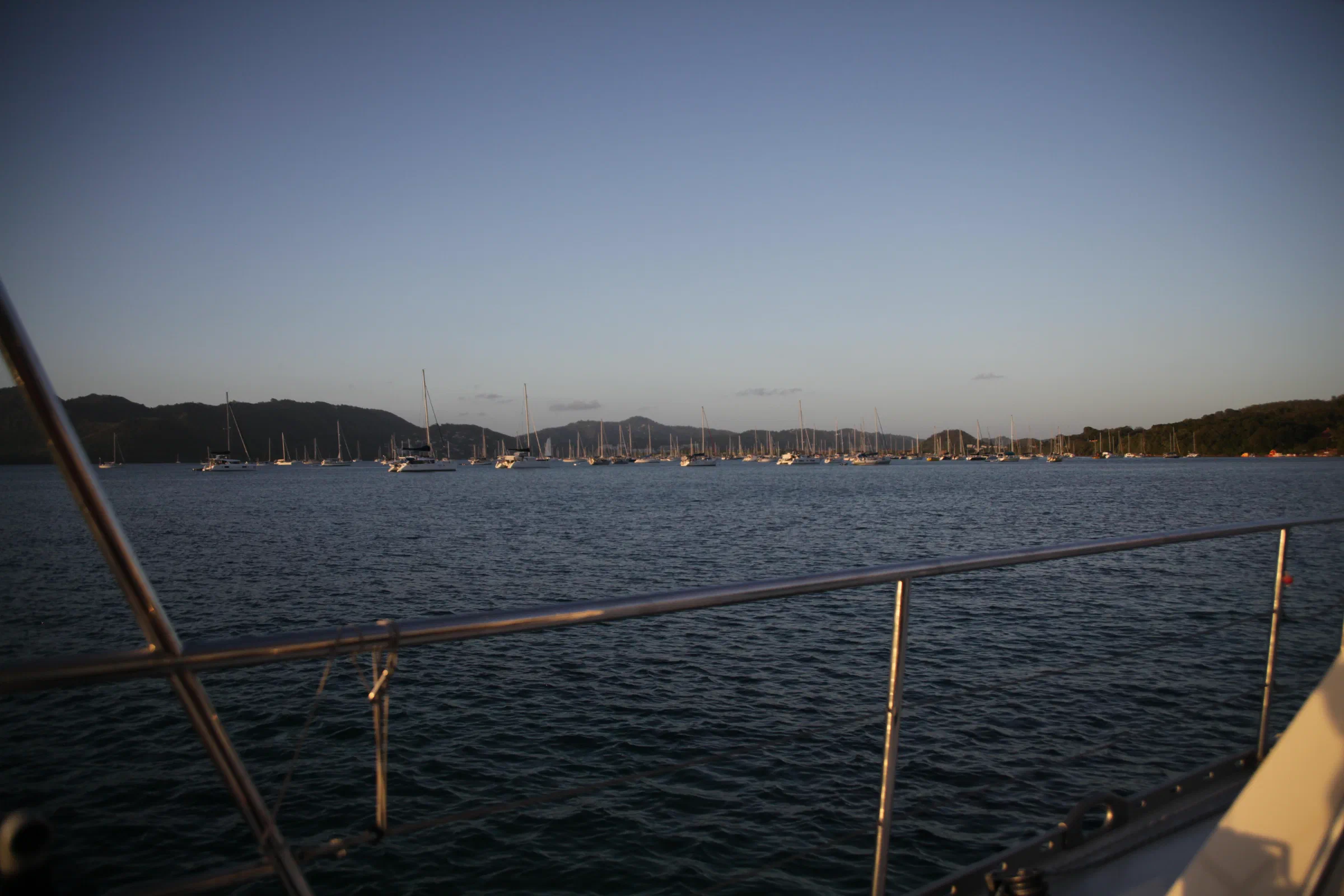
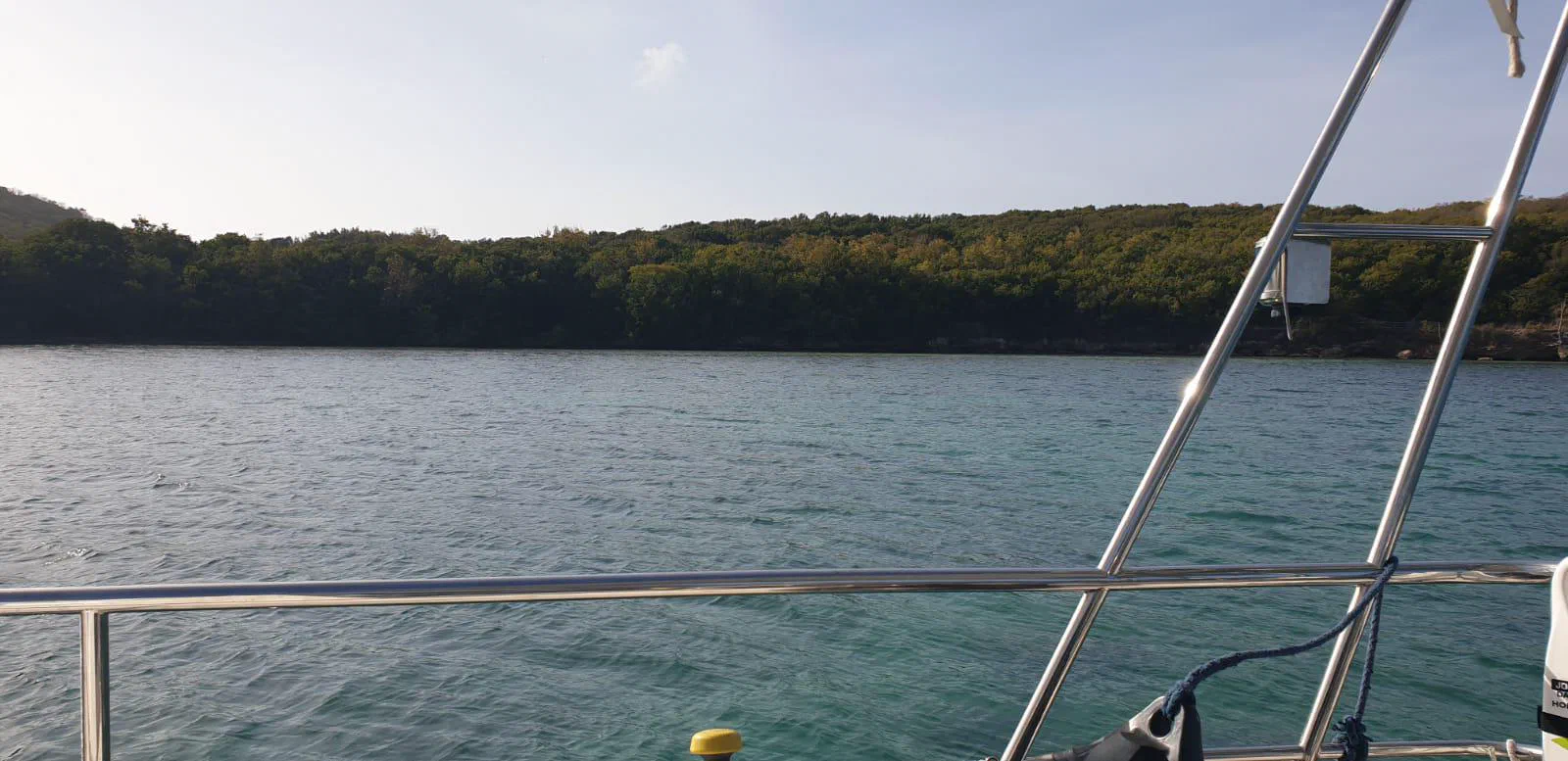
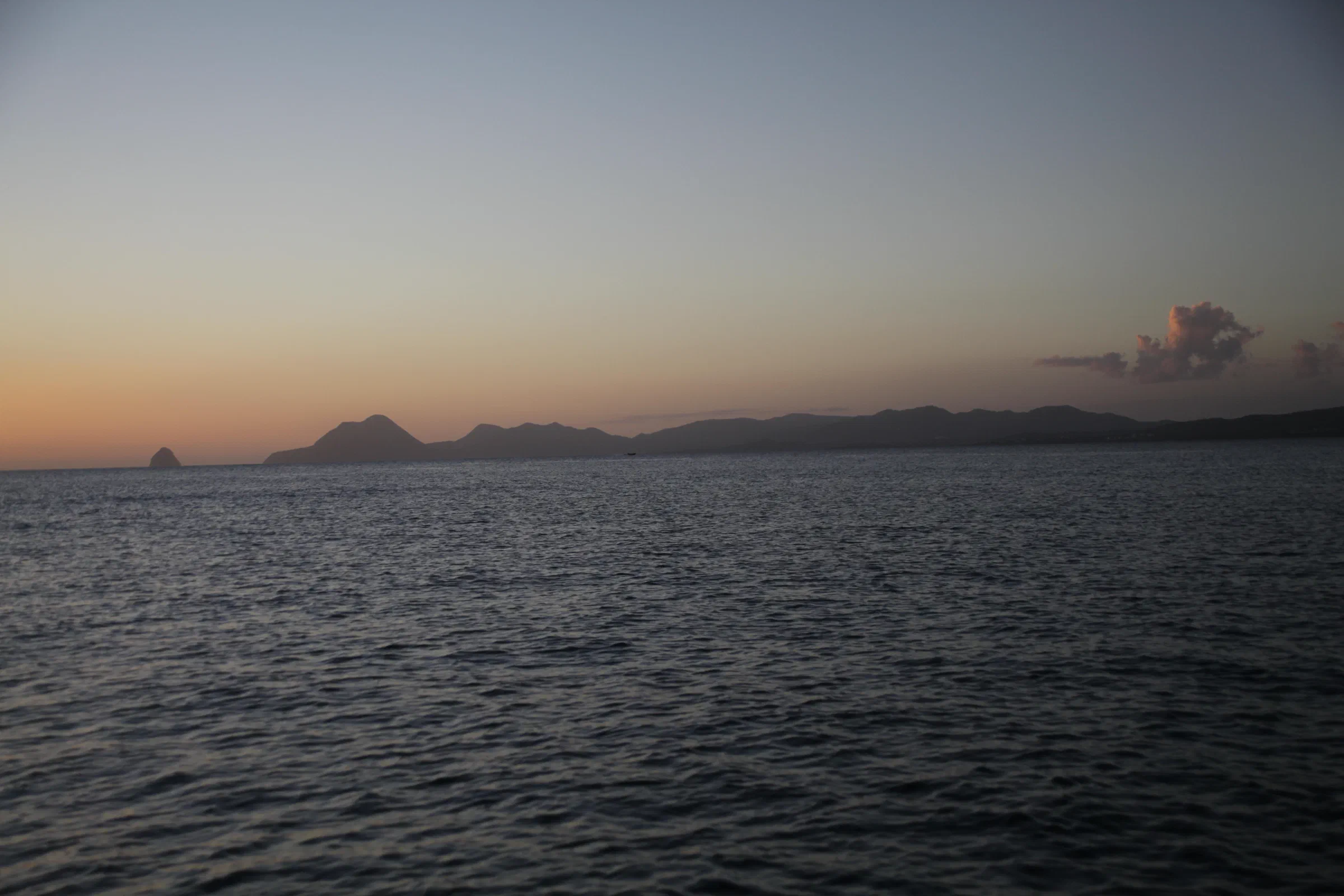
The swimming is wonderful; every day I swim some way to or towards the beach. The water is a perfect temperature and so clear you could spot a pin lying on the bottom. There are lots of fish and the odd stray turtle. We can hear the carnival racket ashore, and every now and then we pop over to Le Marin or Sainte-Anne for fresh bread, other groceries, or just a drink. Otherwise we keep ourselves perfectly entertained with Redwood (mainly Kees, that is), books, games (yes, I even managed to talk Kees into playing Gin Rummy with me), odd jobs on the boat, the Dutch TV show Wie is de Mol, or simply lazing in the hammock. The weather is changeable, but mostly fine. Now and then a hefty downpour. One morning the water in the dinghy was over our ankles, that’s how much it had rained.
While I’m sorting through photos for this post, I get a call saying the parcel has turned up; the customs duty needs to be paid and then it should all be fine. Before I’ve even hung up, Kees has weighed anchor and we’re heading for Le Lamentin.
Comments