Grenada
This page was machine-translated. Read the original (Nederlands)
According to PredictWind it’s going to take us 2.5 days to reach Prickly Bay on Grenada, but we’re rather sceptical about that. It turned out to be true after all, so on 9 January at 19:00 (OK, there’s an hour’s time difference, but still, pretty much 2.5 days) we drop the anchor at our destination. It has just got dark and it’s a bit nerve-racking, because there are some rocks off the coast and there’s a heavy sea running. Once we’re in the lee and our eyes have adjusted to the lights of the many boats anchored in the bay, we pick the first decent spot we see. It turned out to be a good one: there was a bit of chop, but that was nothing compared to the passage. The next day, first things first: off to the marina to clear in. Officially you’re supposed to do this within two hours of arrival, but since the office doesn’t open before 8 that seemed impossible to us. Elsewhere we read that the official often doesn’t turn up until 10 anyway, so we head over around 9:15. And indeed, he’s not there yet. Since we’ve already filled in the forms online thanks to sailclear.com (thank you for existing), we wait outside. We don’t have any cash yet and there’s no ATM nearby, so there’s nothing for it but to wait, because to pay by credit card you have to spend a certain minimum amount. At a quarter past ten the official walks in and we can get going. By now an American, Brad from the Moonbear, is sitting there writing on the form until his fingers cramp, so we tip him off that this can be done online too. When it’s time to pay we can use a credit card, but we also have to pay 10 Caribbean dollars in cash (??, that’s about 3 euros). Brad kindly lends us the money; we’ll pay him back later once we have cash too.
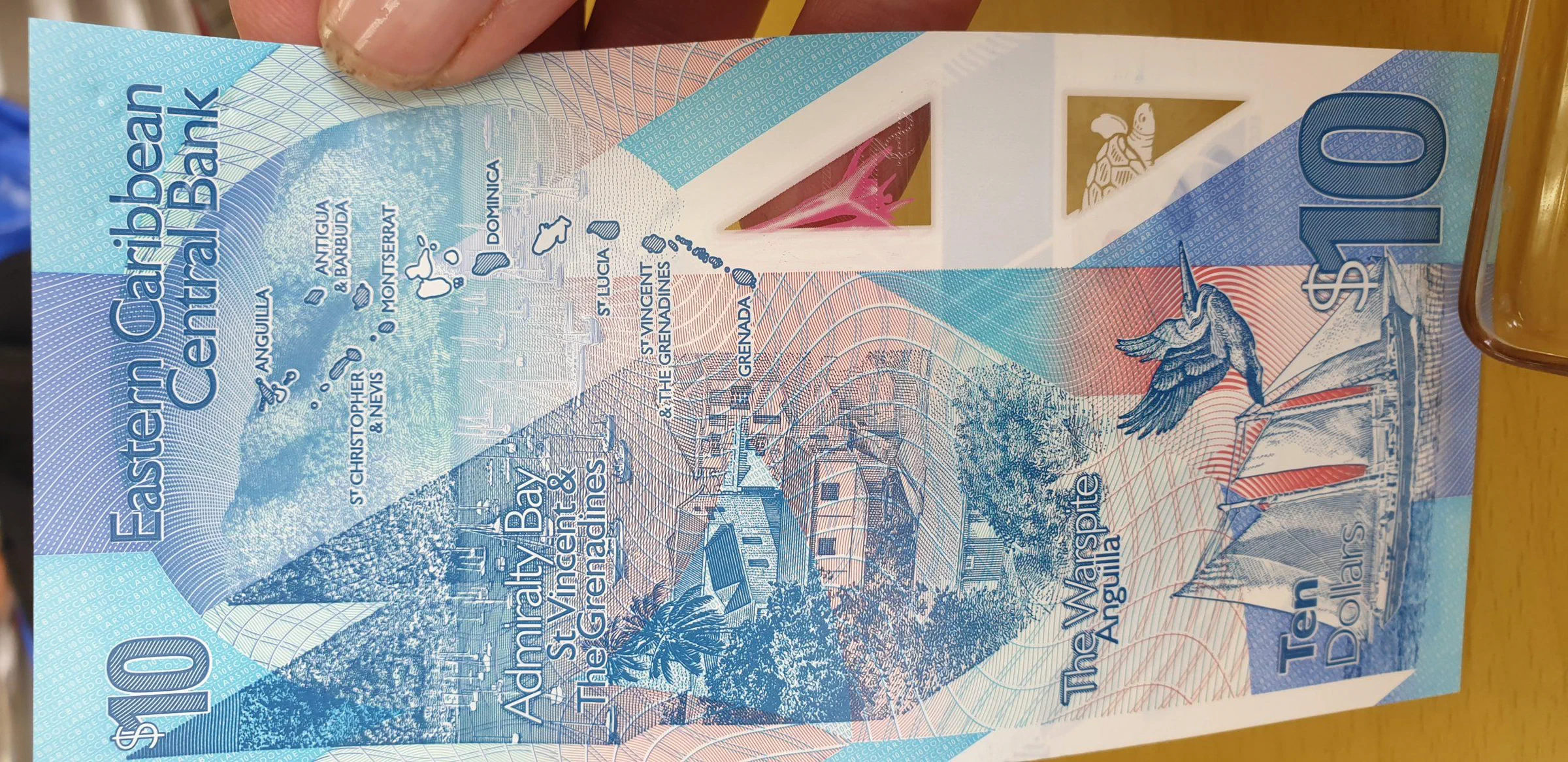
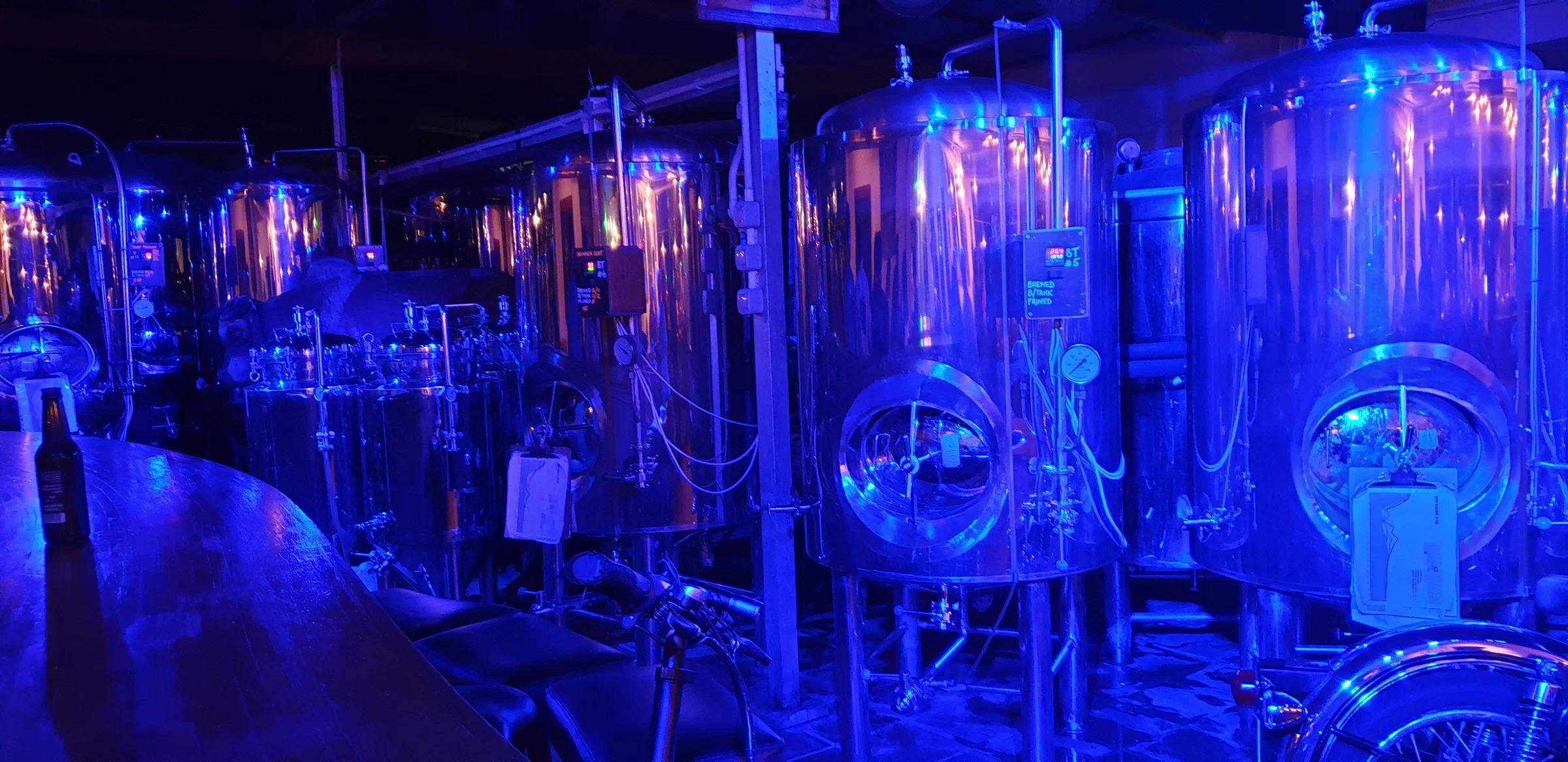
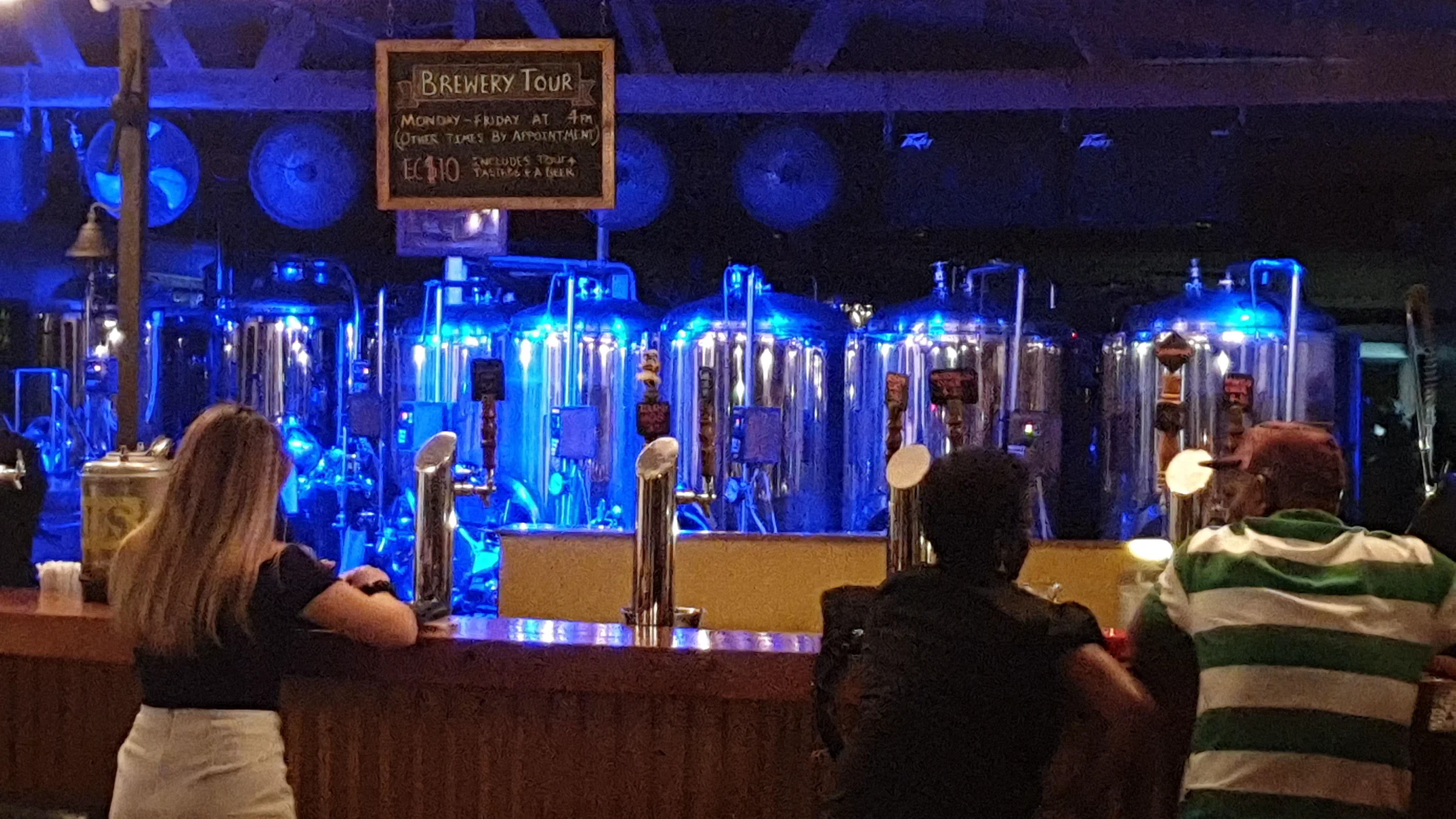
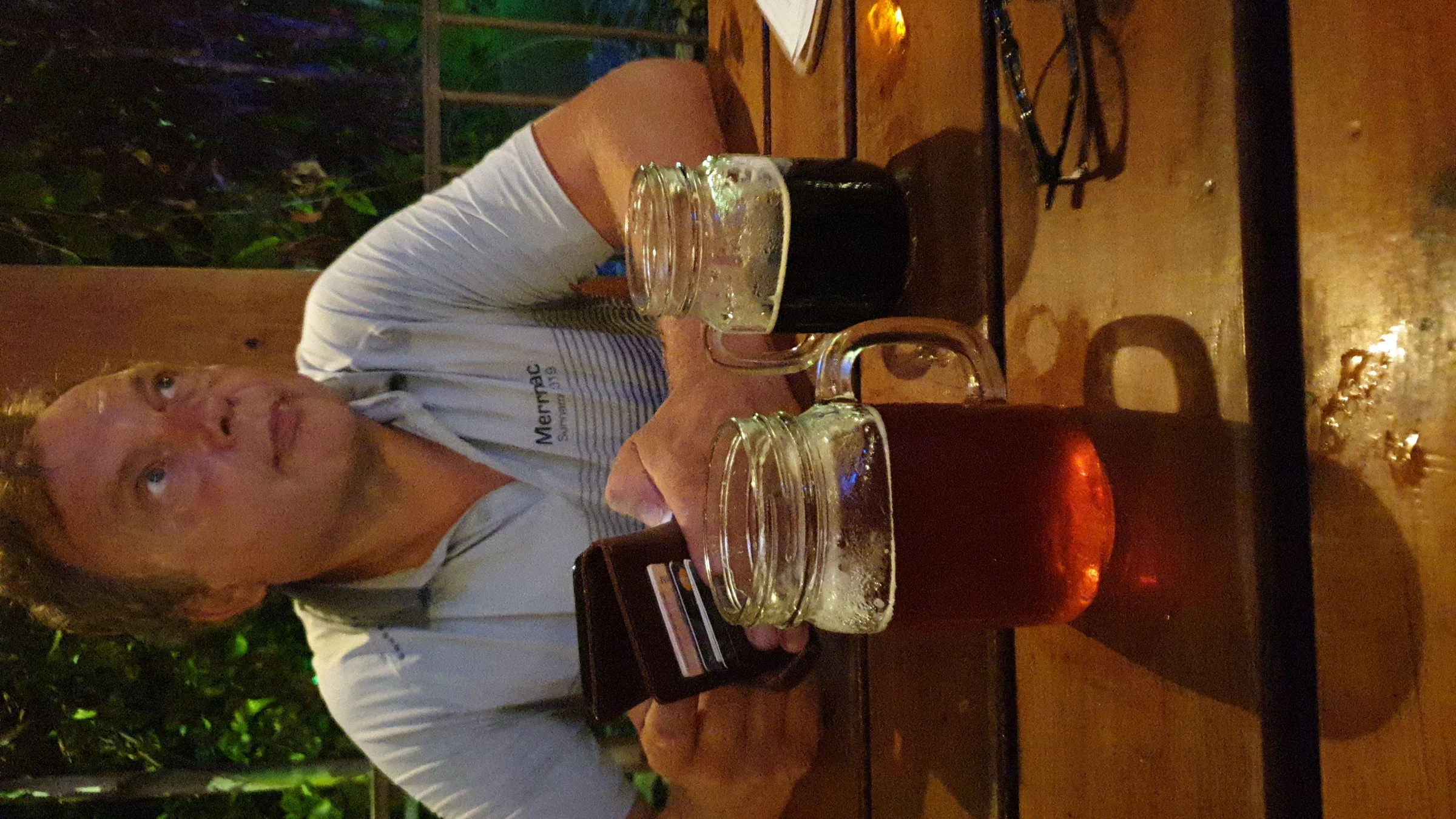
By then the taxi van that ferries people from the marina was back from its previous load, and it takes us to an ATM and the mall, where we can buy SIM cards for our phones. Back at the marina we take the dinghy across to the other side, where there’s a chandlery. We don’t have a Grenada courtesy flag yet, and the yellow (Q) flag, which you need to show that you still have to clear in, has unfortunately been blown out of the hands of one of the crew (whom I won’t name, but it wasn’t Marion ;). There’s also a little restaurant there where we enjoy a lovely lunch. On the way to the mall we’d already spotted a local brewery near the marina, so we paid it a visit in the evening. Lots of the same types of beer as at Brouwdok, but nowhere near as good. It’s pleasantly busy; there’s a university here and lots of students come to the brewery for a bite and a drink. We later hear from the English owner, who gives us a special extended tour, that they arrange transport for these students so they get home safely.
The next day we move to a bay further east. We see loads of boats at anchor everywhere, but when we arrive in the bay we’ve picked, Egmont Harbour, there’s only one other boat. Nice and quiet, then. Kees goes off to do a bit of “Koenen” with the other boat, which is flying a Dutch flag. They turn out to be Russians, though, and even the kids speak only so-so English, while the father speaks hardly any at all. They don’t quite seem to have got the hang of the game yet: their Delta anchor won’t hold. When it turns out they do have a different type of anchor (a Spade) on board, the advice is to give that one a go. And sure enough, they stay put in the same spot for the next few days, so apparently it helped. Over the following days Kees is busy working for Redwood.
One downside of the bay is that while there are jetties to tie the dinghy up to, they’re all private and belong to the enormous houses along the shore. There is a little beach where Kees can drop me off, and from there it’s about 500 metres’ walk to the road where the bus comes by. I step off the beach and a red van pulls up straight away. The man throws the door open and tells me to get in. I do, but I can’t help thinking: “Am I really just getting into a car with a stranger???” He turns out to be a really nice construction worker on his way to the DIY store, and I can ride along that far. He explains the whole public bus system to me, and also how to get back again. All over the island there are minibuses (about 10 people) driving around with a number on the windscreen. You stand somewhere by the side of the road and get picked up there. It turns out to be a highly commercial affair: they don’t quite fight over the passengers, but no opportunity is missed to scoop up as many as possible. Anyone standing or walking by the side of the road gets called over to hop in, whether you’re walking the other way or not, doesn’t matter. I take the first bus heading the right way and get squeezed into the very last seat. There’s always a conductor riding along, who practically ends up on the lap of someone in front of me. When you want to get off you let the conductor know, and you pay him too; every ride is 2.50 Caribbean dollars (about 0.80 euros). I’d decided to go all the way to the bus station in town, so I’d always know where to go to get back. There’s a mall at the bus station, but it’s so touristy, it’s where the cruise ship passengers come out, so it’s nothing but souvenirs. I walk a bit of the way around the harbour and decide to take another bus towards a different shopping area. This turned out to be the mall we’d already been to, but that was fine by me, because there was a hairdresser there. Well, a beauty salon with a hairdresser. This English lady was very friendly and gave up part of her lunch break to squeeze me into her busy schedule, so the scissors went into my hair once again. This time in a somewhat more responsible manner.
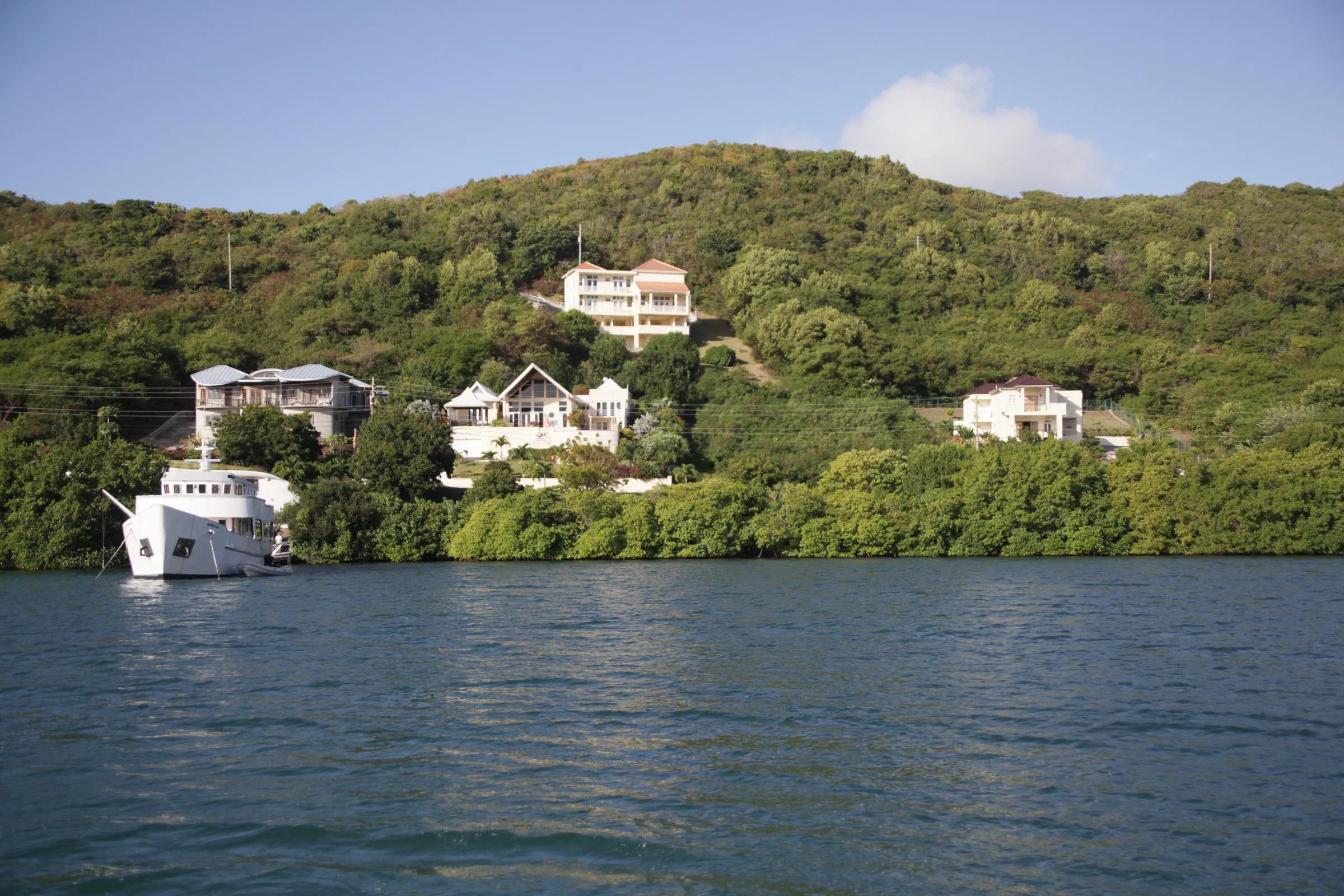
On our last evening in the bay we want to take the dinghy to a restaurant in a bay a little further west. At first it looks fine, but at some point we’re punching into so much chop that we’re soaked to the skin. We head for a small beach nearby, tie the dinghy to a tree and plan to walk the rest of the way. Unfortunately it’s not easy to get there: we walk quite a distance along a very long, steep road, but when we check the map we’re nowhere near. We don’t want to come back along this road in the dark, so we head back to the dinghy. That takes a while too, because we think we can take a shortcut, but sadly it turns out to be a dead end.
By now it’s 16 January as we sail towards the island of Carriacou. Once again we go for what we hope will be a quiet bay. In Tyrrell Bay there must be a hundred boats, in L’esterre Bay only 2. We pick up a mooring in the bay there and are immediately approached by some lads in a boat from a restaurant, asking whether we’d like to come and eat there. They pick us up at the agreed time and drop us on the beach, from where we walk straight onto the terrace. No shoes required. It’s great fun, there are other sailors too, and we have a lovely evening with slightly too much to drink. The next day we eat there again, but take it a bit easier. It’s called Isle of Reeves and/or Paradise Beach Club, and that’s about right, apart from the odd sandfly nibbling at your shins. The owner, Allison, keeps calling us Merrimac, which is really funny: “Everything ok, Merrimac?”
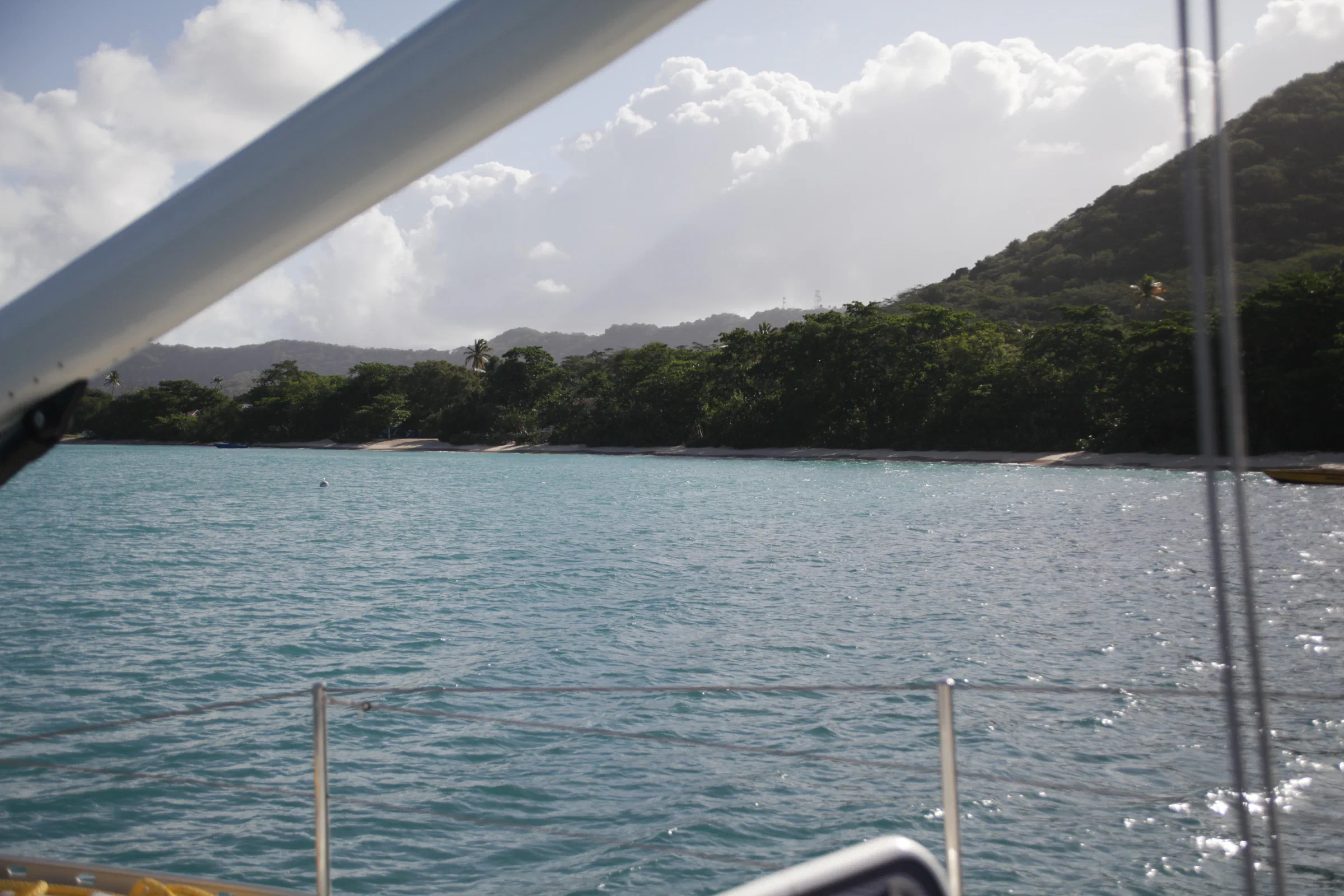
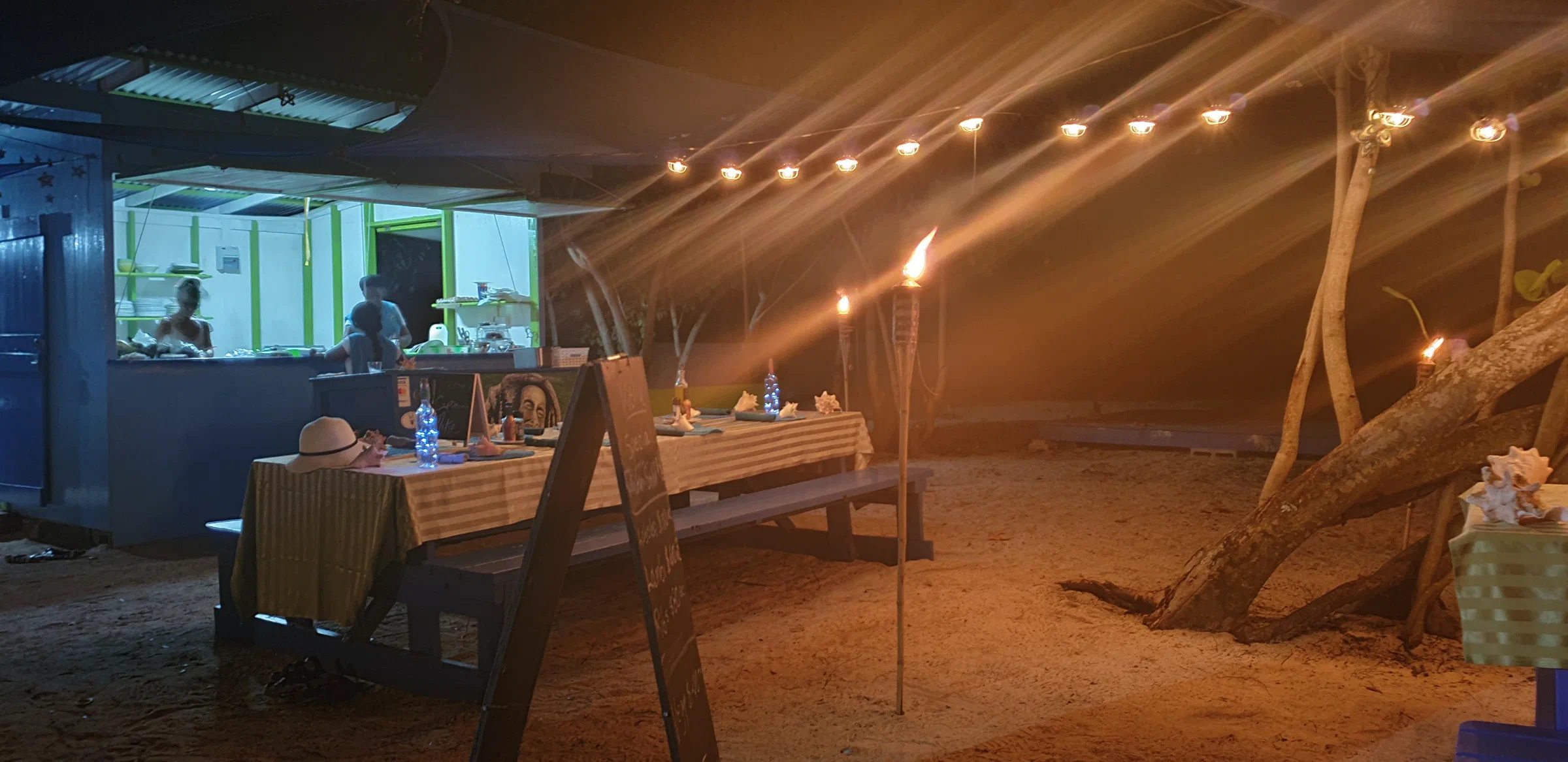
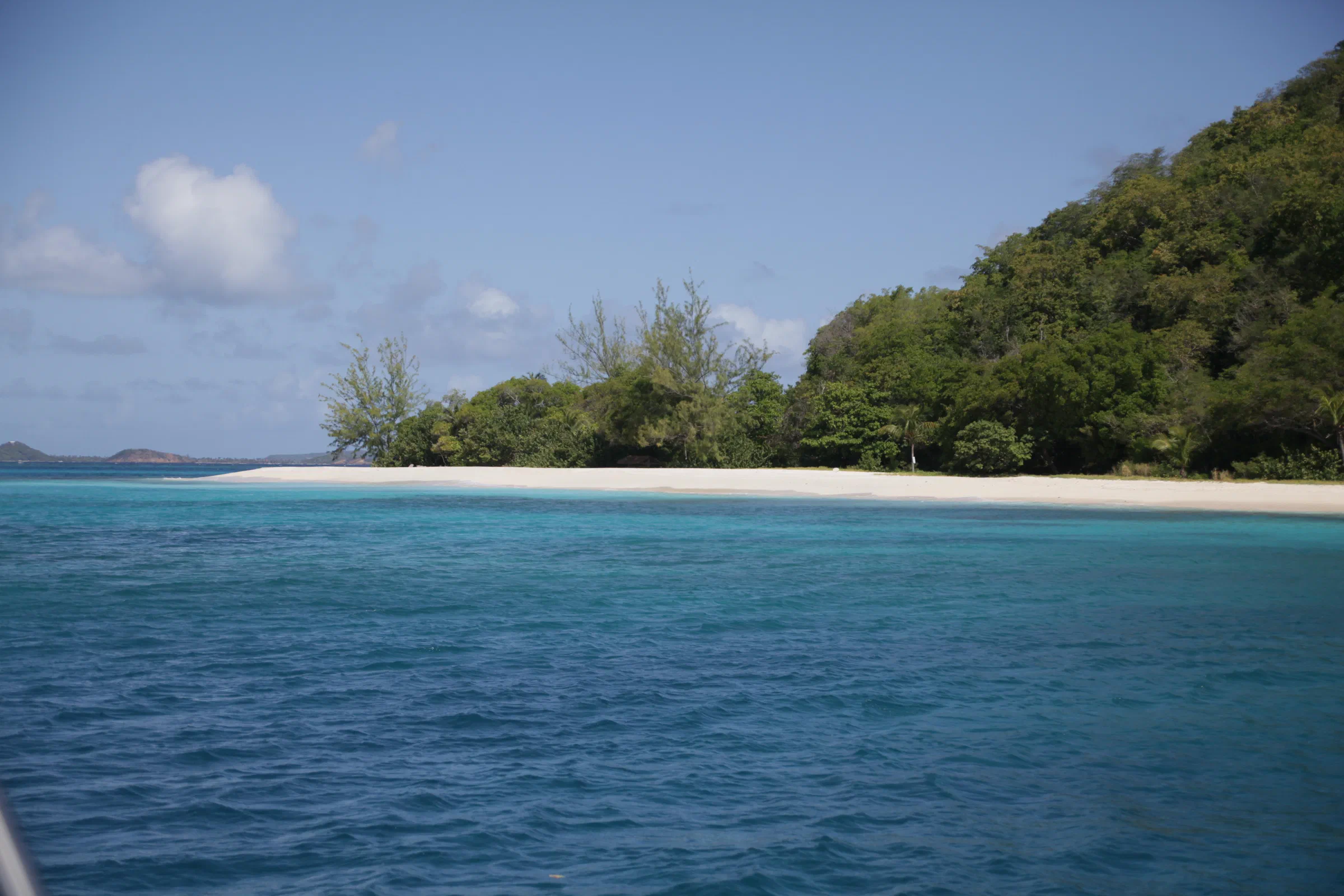
On the second day we do move a bit further along, to Sandy Island. You can see loads of different kinds of fish in the water there, great fun for snorkelling.
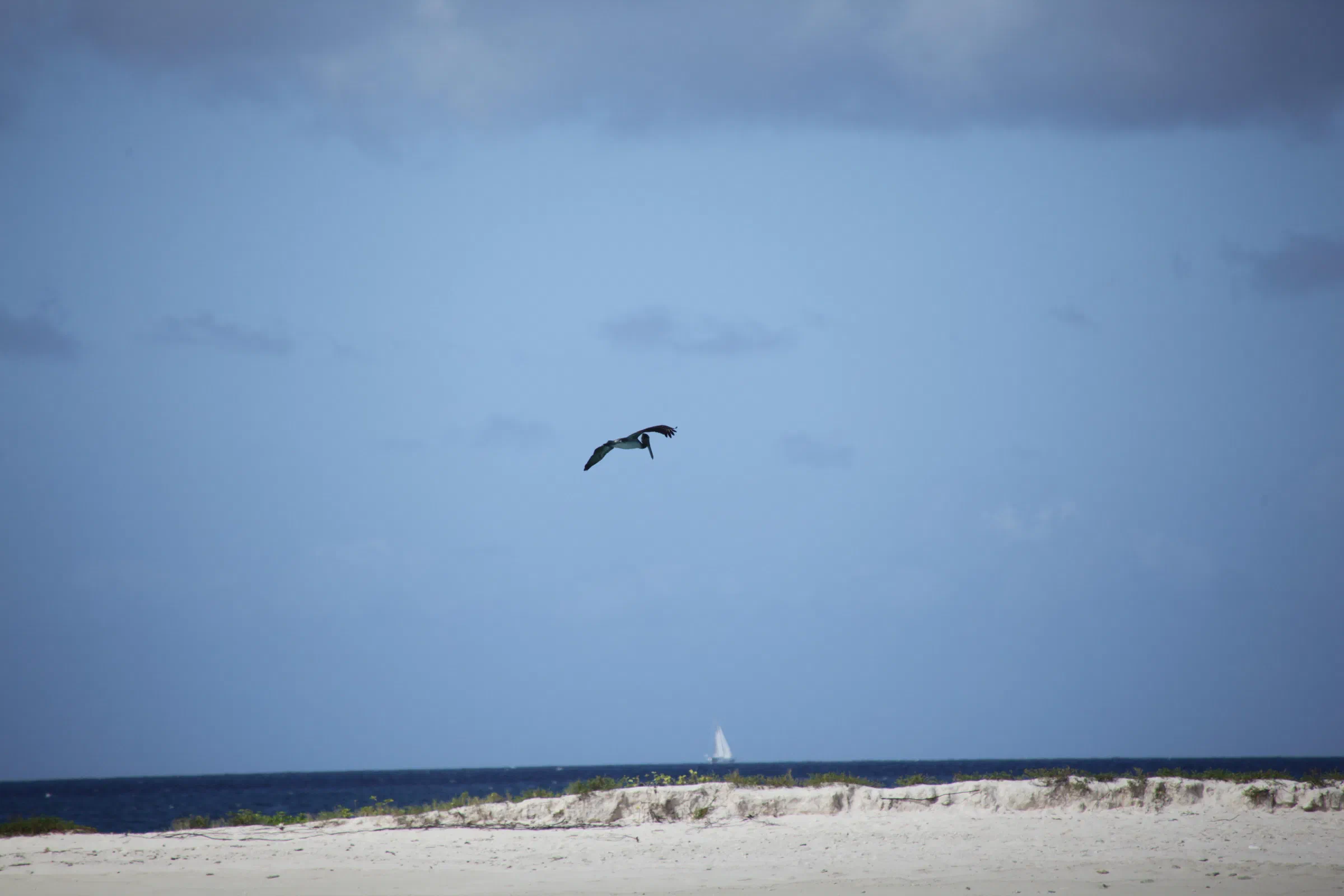
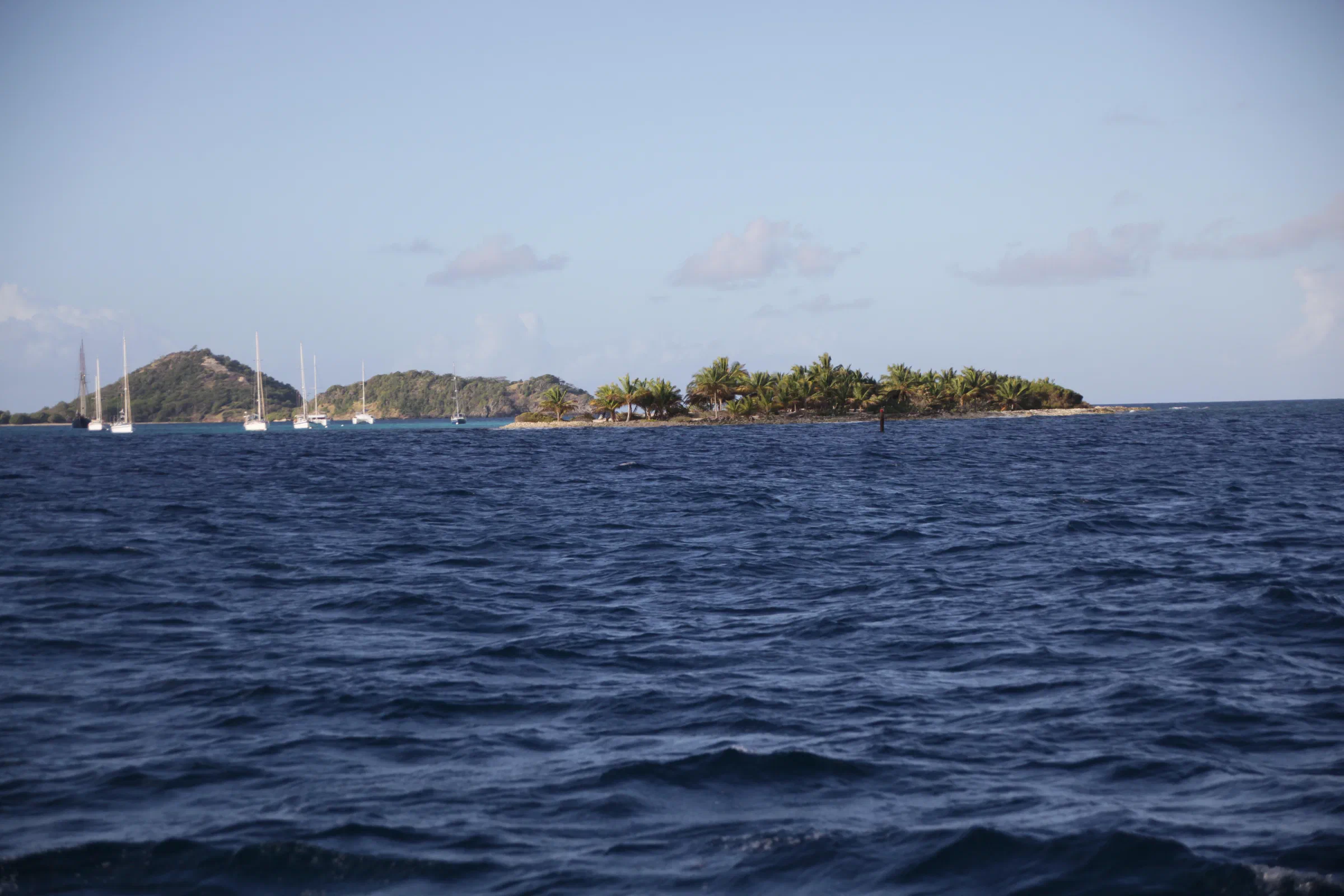
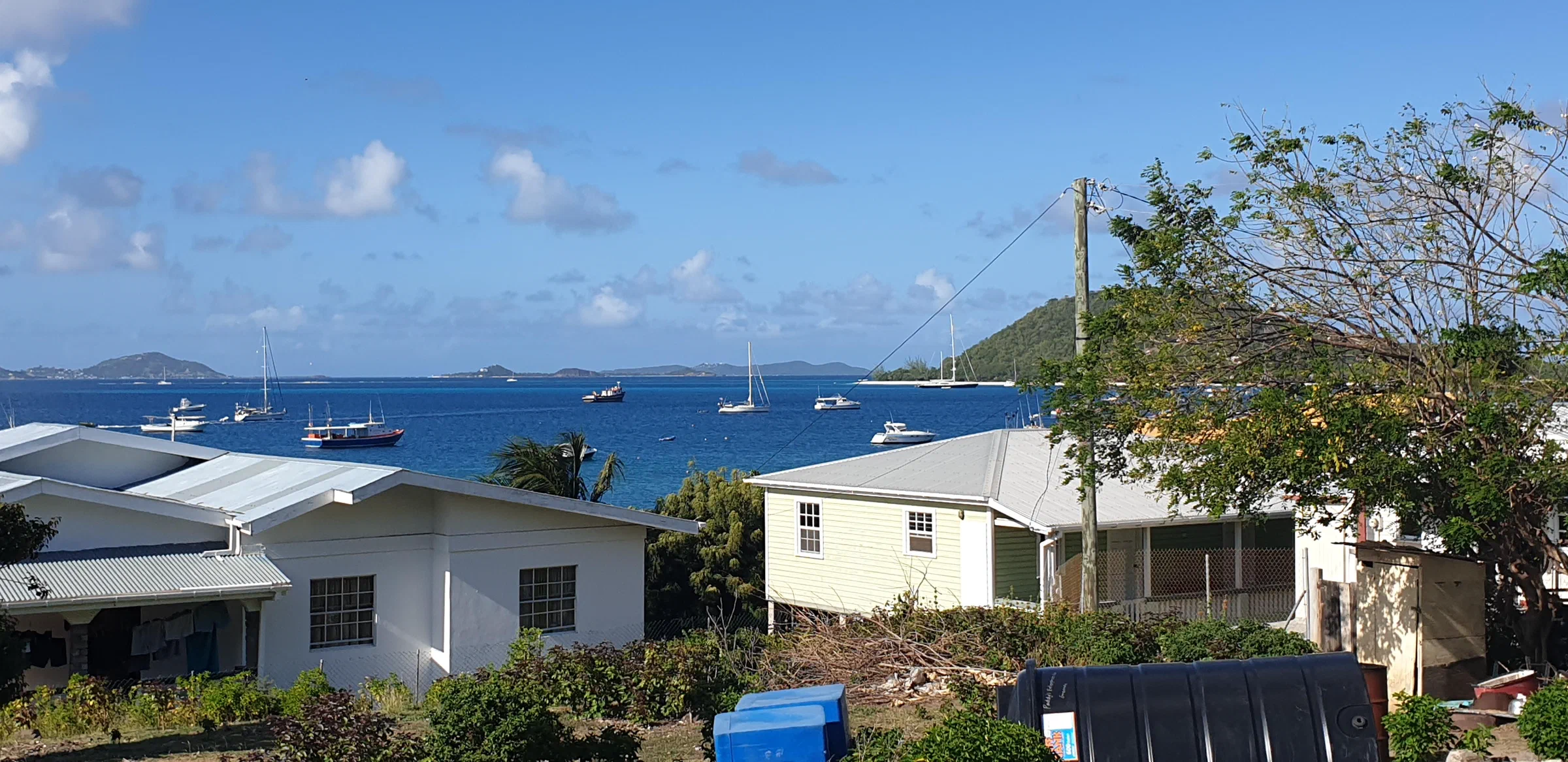
On 18 January we shift to the island of Petite Martinique, or actually Petit Saint Vincent, which strictly speaking we’re not allowed to visit because we haven’t cleared out yet, but we’re lying just that bit more comfortably there than on the other side. We take the dinghy over to Petite Martinique because the supermarket there isn’t open on Sundays. It’s not really worth it, as there isn’t much choice, but it’s very nice to see the island. It has a laid-back feel to it until you come across the guys “liming” on the beach. That takes a bit of getting used to, as if they want something from you, but a “hey man” turns out to be the right thing to say.
Comments