Arnold and Ella in Suriname
This page was machine-translated. Read the original (Nederlands)
On 23 December the day had finally come: we could pick the kids up from the airport. We were there in plenty of time and wandered around the arrivals hall, where deafeningly loud music was playing by way of welcome, specially for the holidays. The area in front of the sliding doors the kids would come through was empty, and it turned out we weren’t supposed to stand there, that was for VIPs. But if we bought something to drink, we were allowed to sit on the little ten-chair terrace next to it. Since the kids were seated near the front of the plane and had no checked luggage, we expected them to be among the first out. After a long wait, passengers finally started trickling out one by one, sometimes five minutes apart. And luckily Arnold and Ella did indeed come out ahead of the big crowd. They’d had a very long wait themselves before they could get through, but at last we could take them with us. We hurried through an arch of waiting people and out the door so we could get away.
It was wonderful to have them with us again.
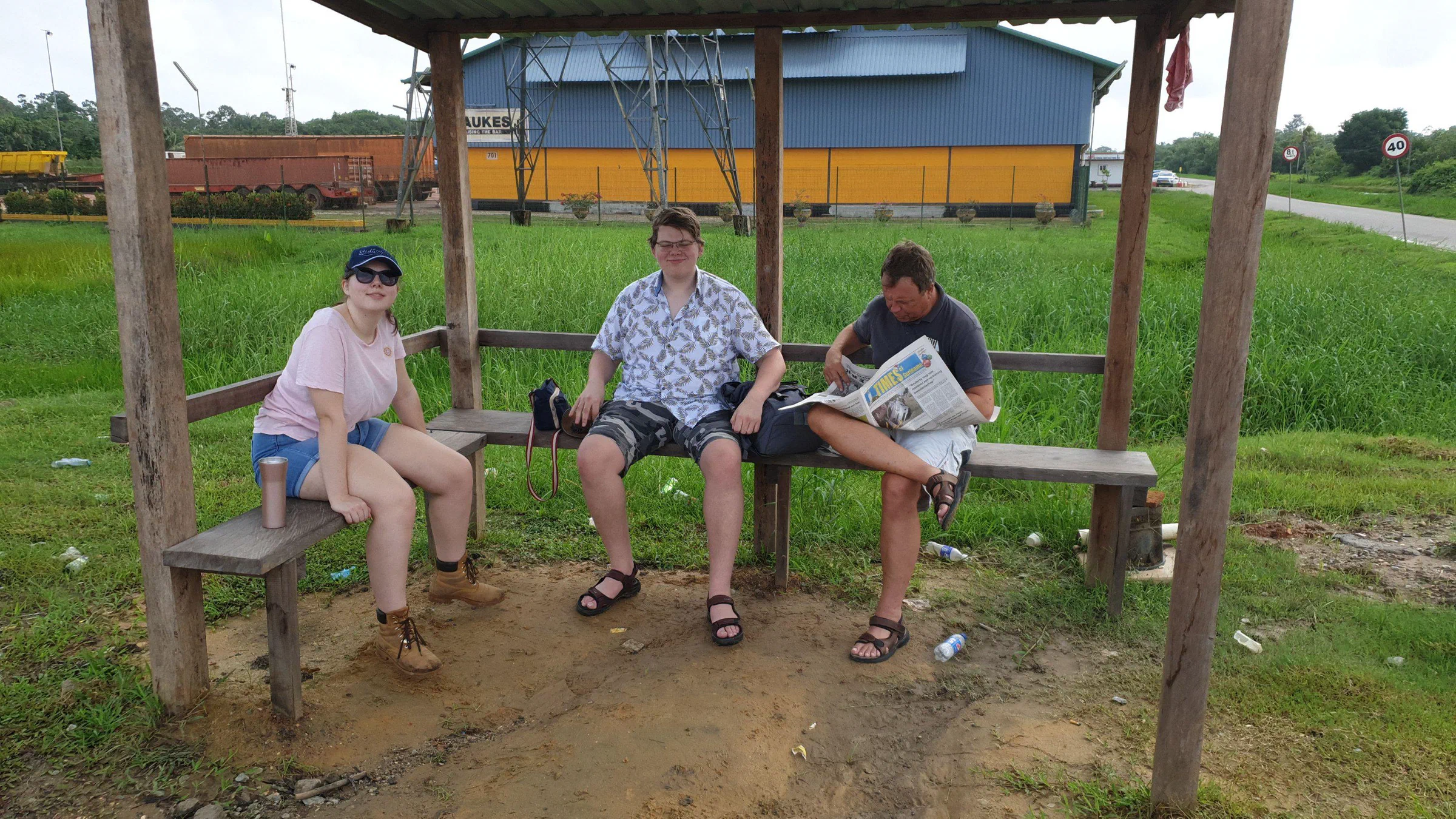
The next day the four of us headed off for a few days to a resort in Upper Suriname, Botopasi, while André minded the boat. We were picked up by a minibus that takes guests to the river at Atjoni, a two-hour drive from Domburg. The driver would call me when he left Paramaribo, and then André would take us to the Highway in two trips, because we didn’t all fit in the little car. The Highway is the main road to Paramaribo, a two-lane road with a two-lane cycle path alongside. When the driver called, he asked exactly where we’d be standing; he wanted to make sure he wouldn’t miss us. I reassured him: “Four big white Dutch people with suitcases, you’re not going to miss them!” We sat waiting in a bus shelter and were the main attraction for everyone who passed by. Mike, the driver, climbed out of his bus howling with laughter: no, he couldn’t possibly have missed us! All four of us got a big hug and we were instantly best friends.
There were no other guests, and apart from us the bus was packed with boxes and stuff that also had to go that way. Two hours in DJ Mike’s bus turned out to be an experience in itself: the entire repertoire of Christmas, Surinamese, Dutch and UB40 music came by. When we sang along loudly to Jingle Bells, he couldn’t resist filming us. Hands-free? Mike even had a special phone just for that.
After an hour heading south, we turned off the Highway for another hour south towards Atjoni, where the road ends at the river. When we get there, the place is teeming with people and minibuses crammed and stacked with luggage, furniture, mattresses and food. Well, it’s the day before Christmas, and everyone from the area who lives in the city and is going home goes this way. Along the riverbank, dozens of brightly coloured korjaals (dugout canoes) lie waiting for their cargo. It’s a constant coming and going. The only other white people we see are groups of students coming back from the river. Our rather young boatman is already waiting for us in an SC Heerenveen shirt. We have to wait a bit longer, because not all the passengers have arrived yet. We find a spot in the shade and eat the lunch Mike brought along for us.
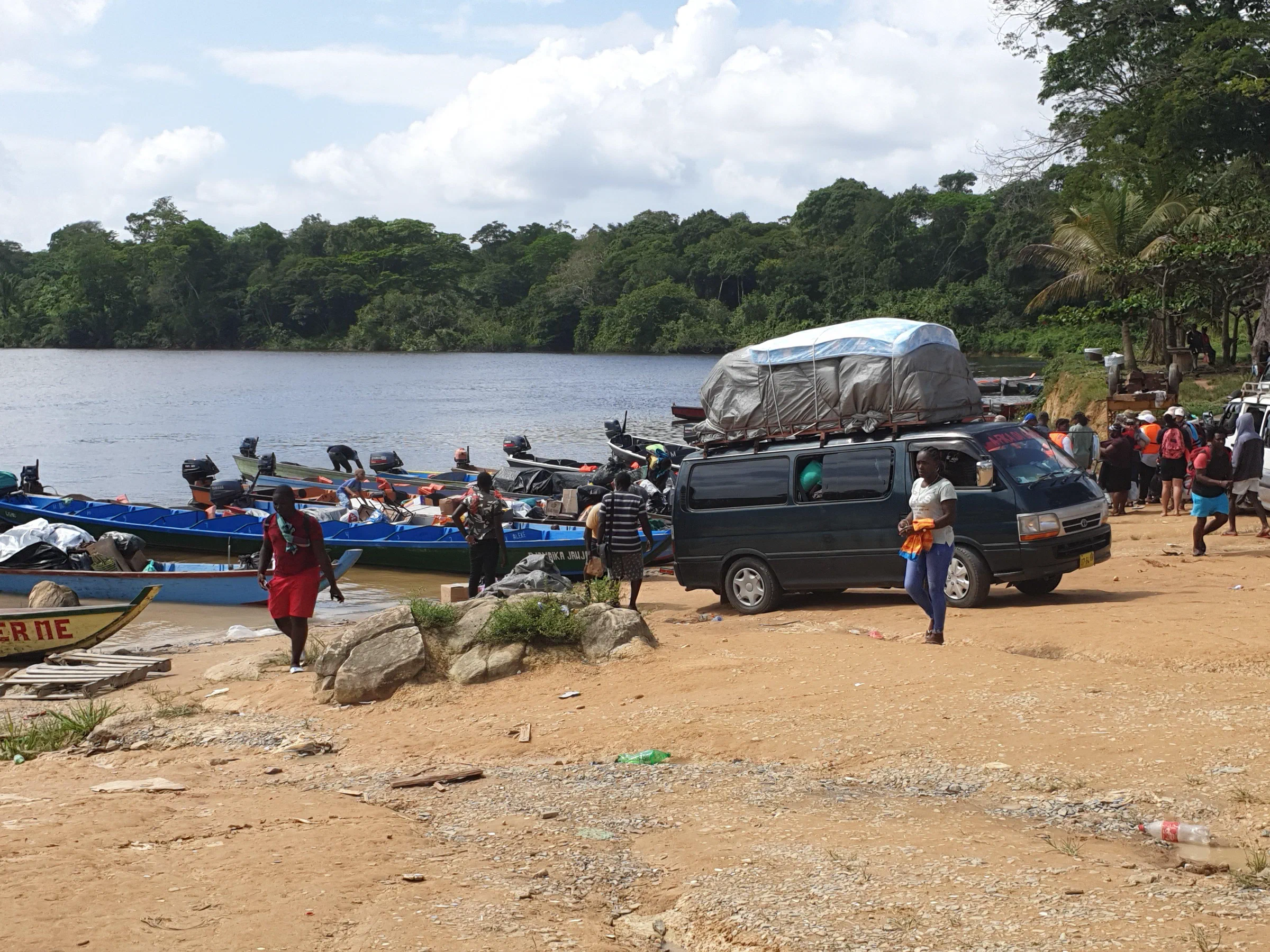
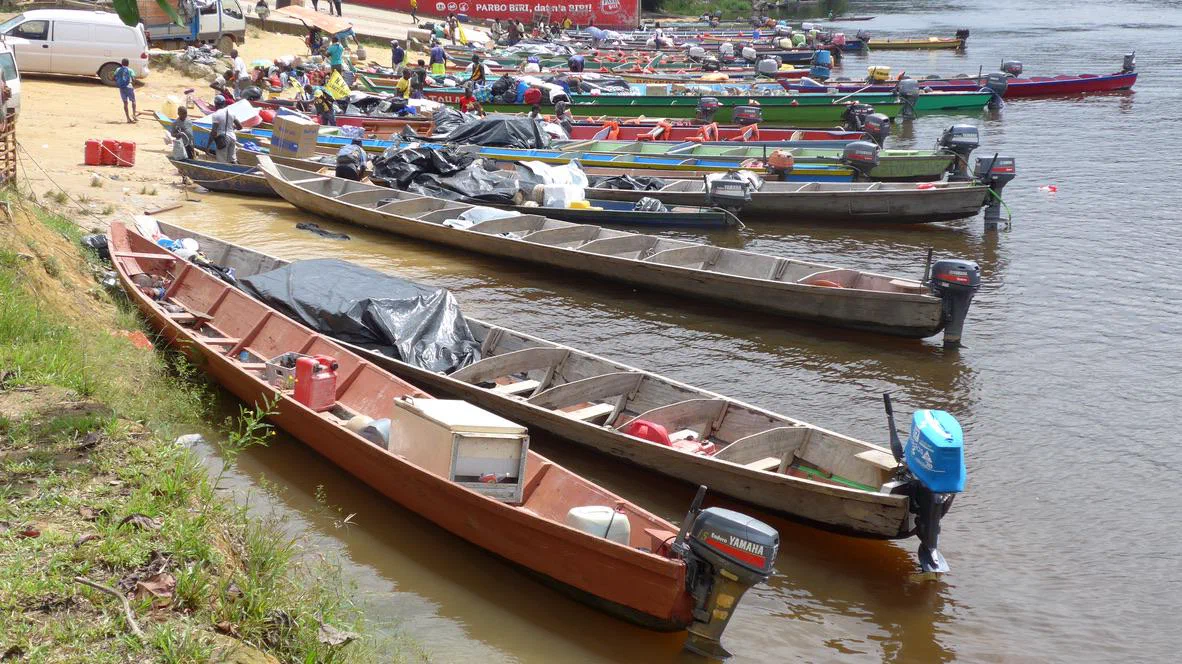
For two hours we watch the contents of the minibuses being loaded into the korjaals and the boats heading off up the river. At one point a hearse even pulls up at the water’s edge. Mourners gather around it and a coffin is carried onto a korjaal amid loud wailing from some of the women. Some of them get in, and within ten minutes everyone has gone and the korjaal is off up the river.
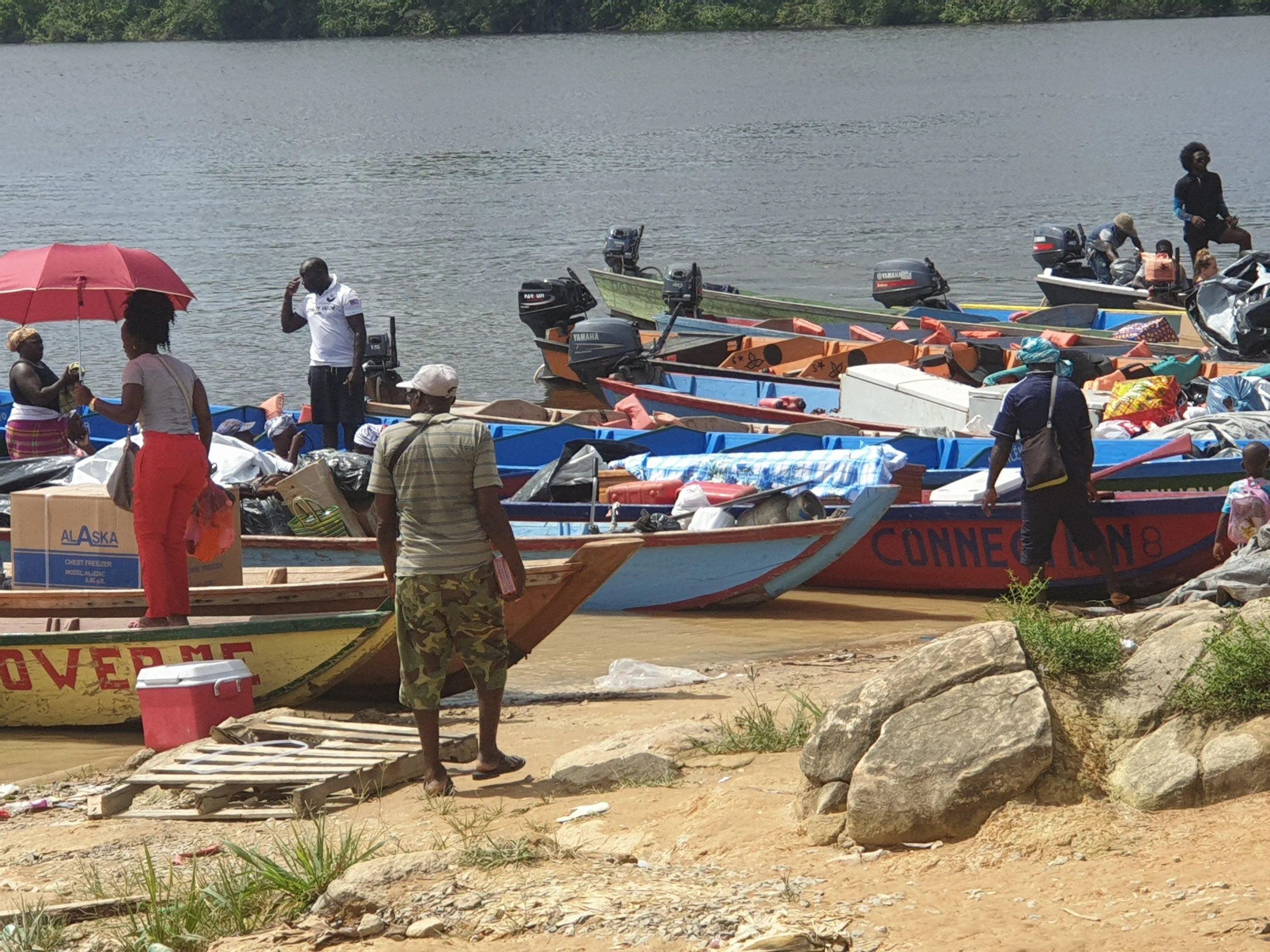
Over the next few days we’d learn that korjaals can only be handled by special boatmen. It’s an honour reserved for male relatives of a boatman. From early childhood they’re taught about the dangers of the river and how to navigate it. That becomes obvious along the way as we weave past the rocks scattered all over the river. It’s a skilful bit of slaloming when we have to go upstream through the rapids. It’s the short rainy season now, and the river level depends on the season. The difference in water level between the long dry season and the long rainy season can be as much as 6 metres, so sometimes you can’t see the rocks at all, and sometimes you have to get out and haul the korjaal over them on a rope because there isn’t enough water. Fortunately everything is navigable right now; the boatman only has to tilt up the leg of the outboard every now and then.
There are a few airstrips, but flying is unaffordable, so everything is transported by river in the korjaals. The korjaal we’re in turns out to belong to the resort, and since we were the only guests, the boatman could fill the rest of the boat with other cargo. So the wait had been for a family he’d drop off after us and some goods to be delivered along the way. It’s nice to see how it works: if the boat’s going anyway, use every bit of its capacity. The mobile phone is indispensable too; whenever we arrive somewhere something needs to be dropped off, the recipient is already standing on the bank ready to take it. There are tall phone masts along the bank at regular intervals, so no shortage of signal. Luckily we don’t stop often, and after two hours on the water we arrive at the resort. After two days of travelling, Arnold and Ella have had about enough too. On the bank next to the resort, the boatman spots a caiman fast asleep.
The resort looks very quiet, and it turns out we’re the only guests. We splash about in the river in front of the resort until the manager, Kenny, comes to fetch us for the welcome.
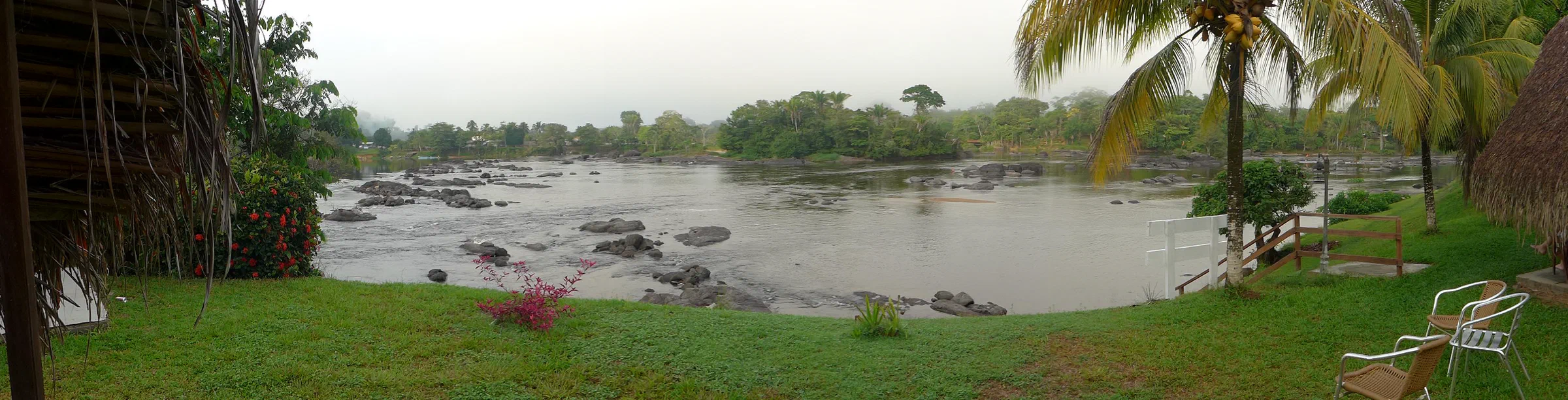
(Botopasi, view from the resort of the village on the other side)
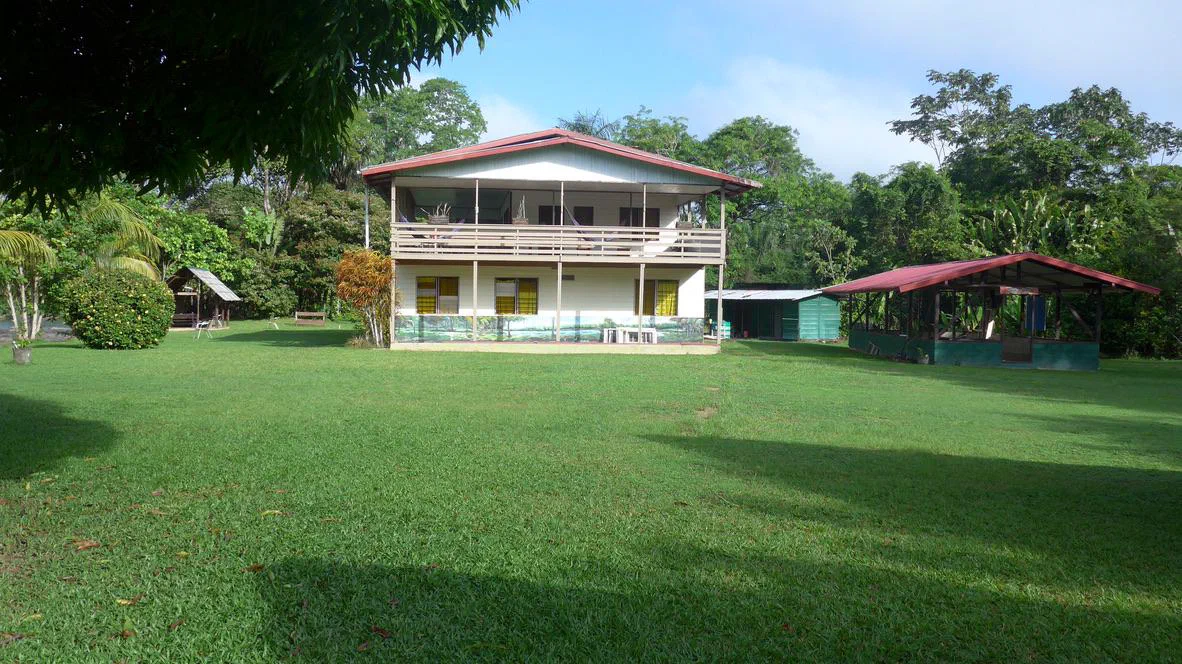
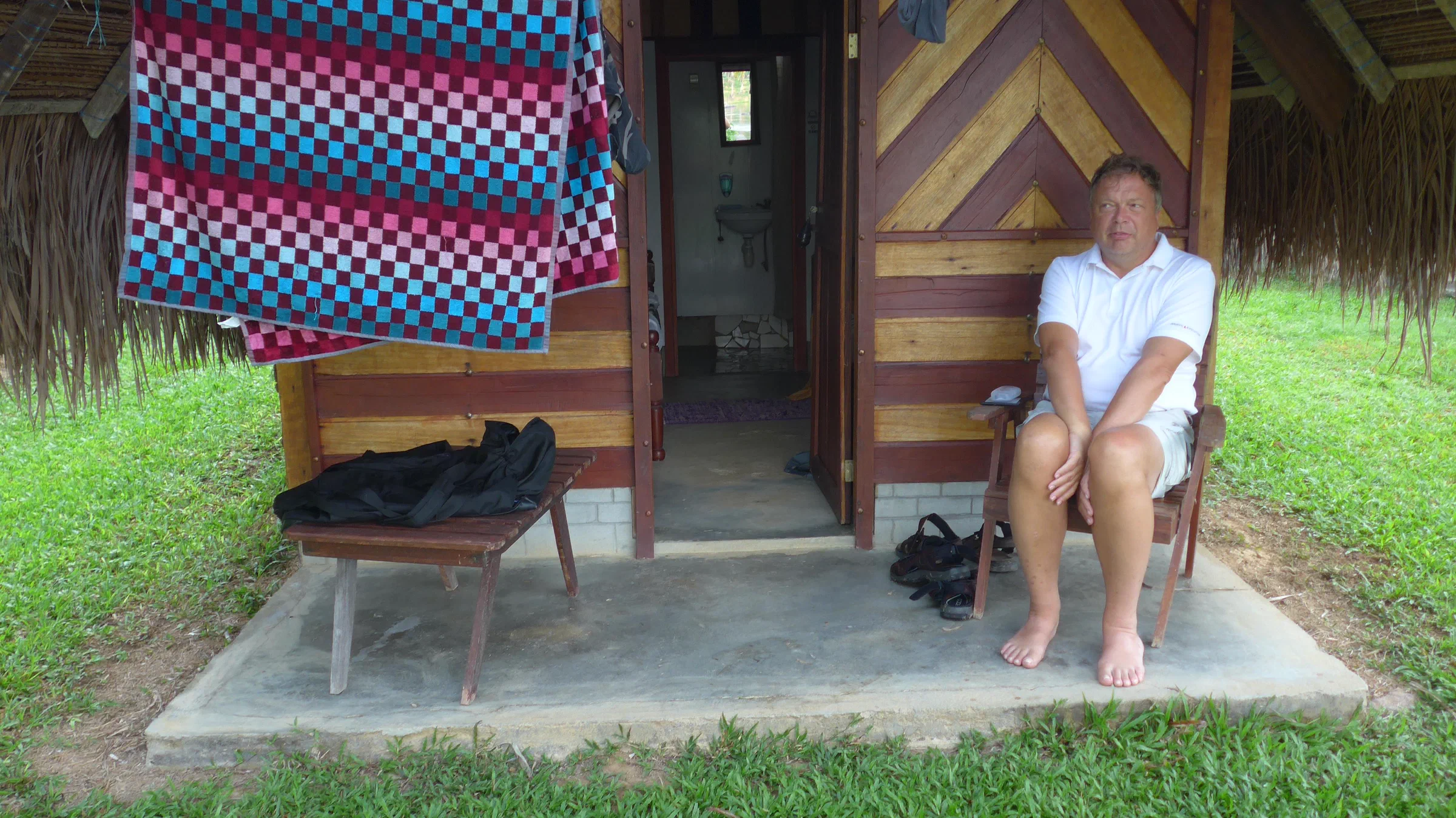
The resort has a house with a veranda upstairs where we eat, play games or lie in the hammock. Then there are huts where we sleep. Not very luxurious, a bit dark, but perfectly fine. Two beds with mosquito nets, a shower and a toilet. At night there’s no power because the generator is switched off. The first night our snoring is accompanied by a frog, and in the morning we find two little frogs have also crept into the hut Ella and I share.
The next day we’re back in the korjaal with the same boatman, Kenny, his assistant Sophie and another boatman who was also there the day before. He sits up front and shows the way through the tricky bits. They know the route to and from Atjoni like the back of their hand, but further south it’s less familiar territory. At another resort a korjaal with a Dutch family is waiting for us; this older boatman is very experienced and leads the way through the difficult spots.
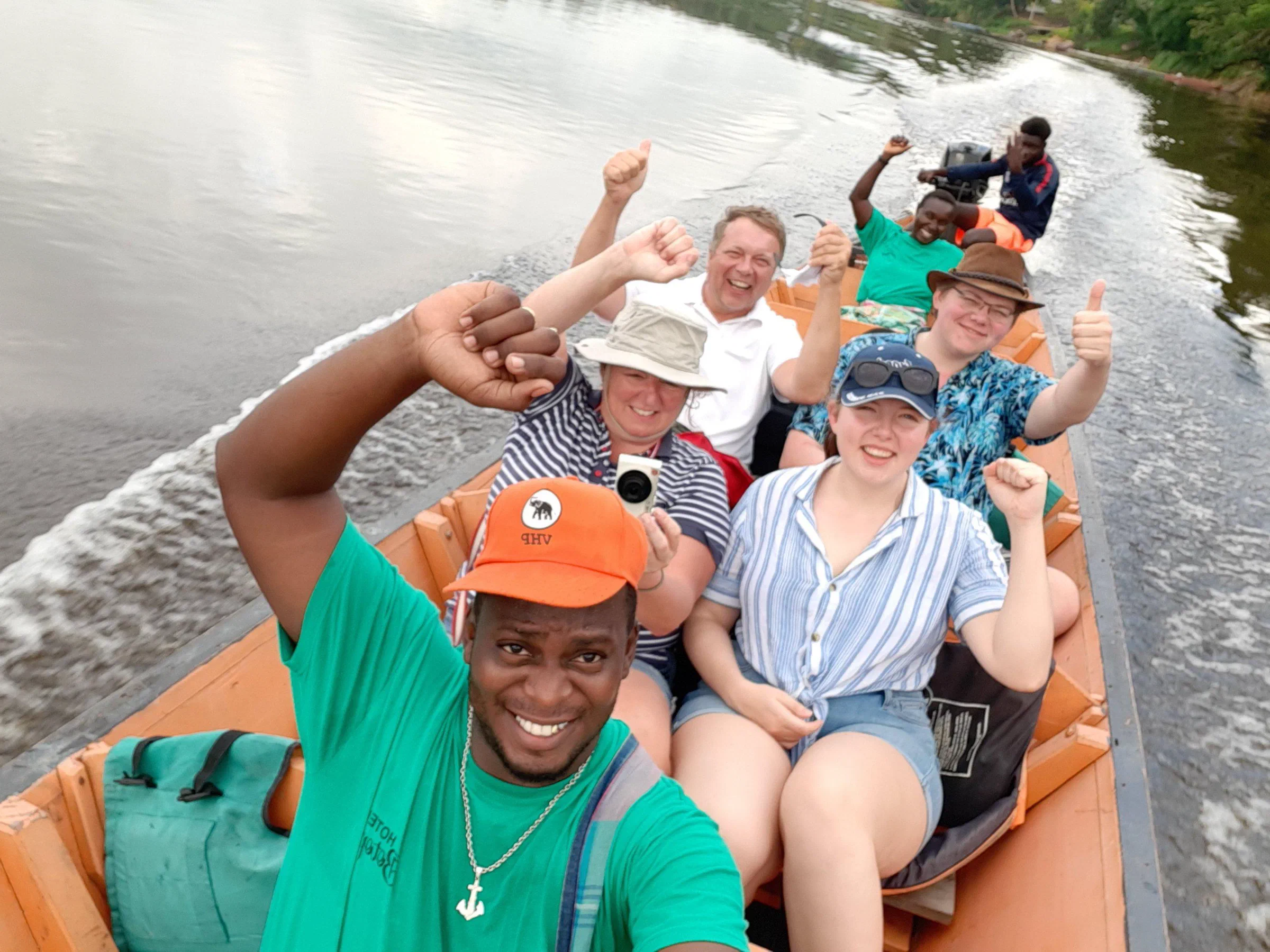
(Up front in the orange cap: Kenny)
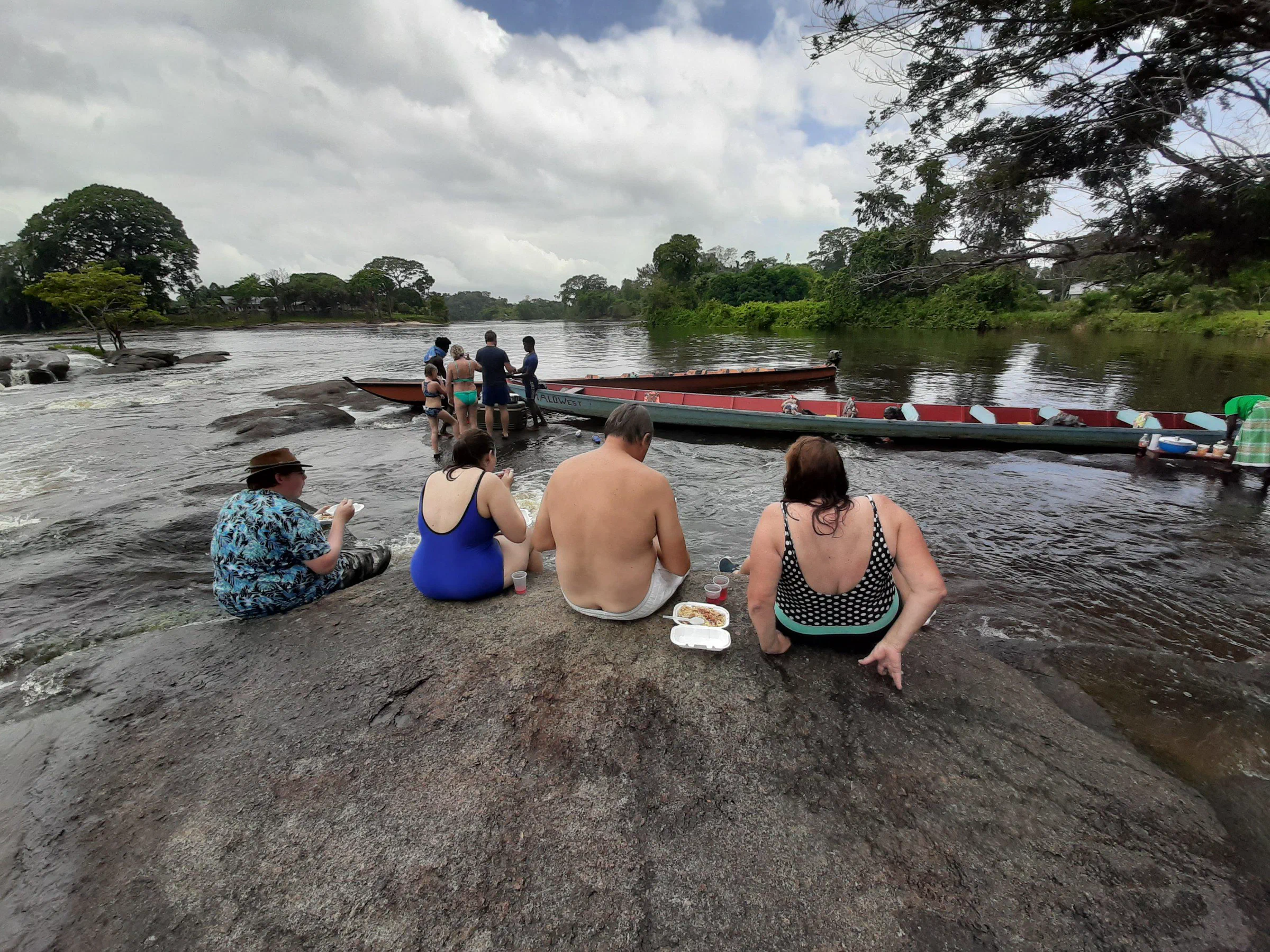
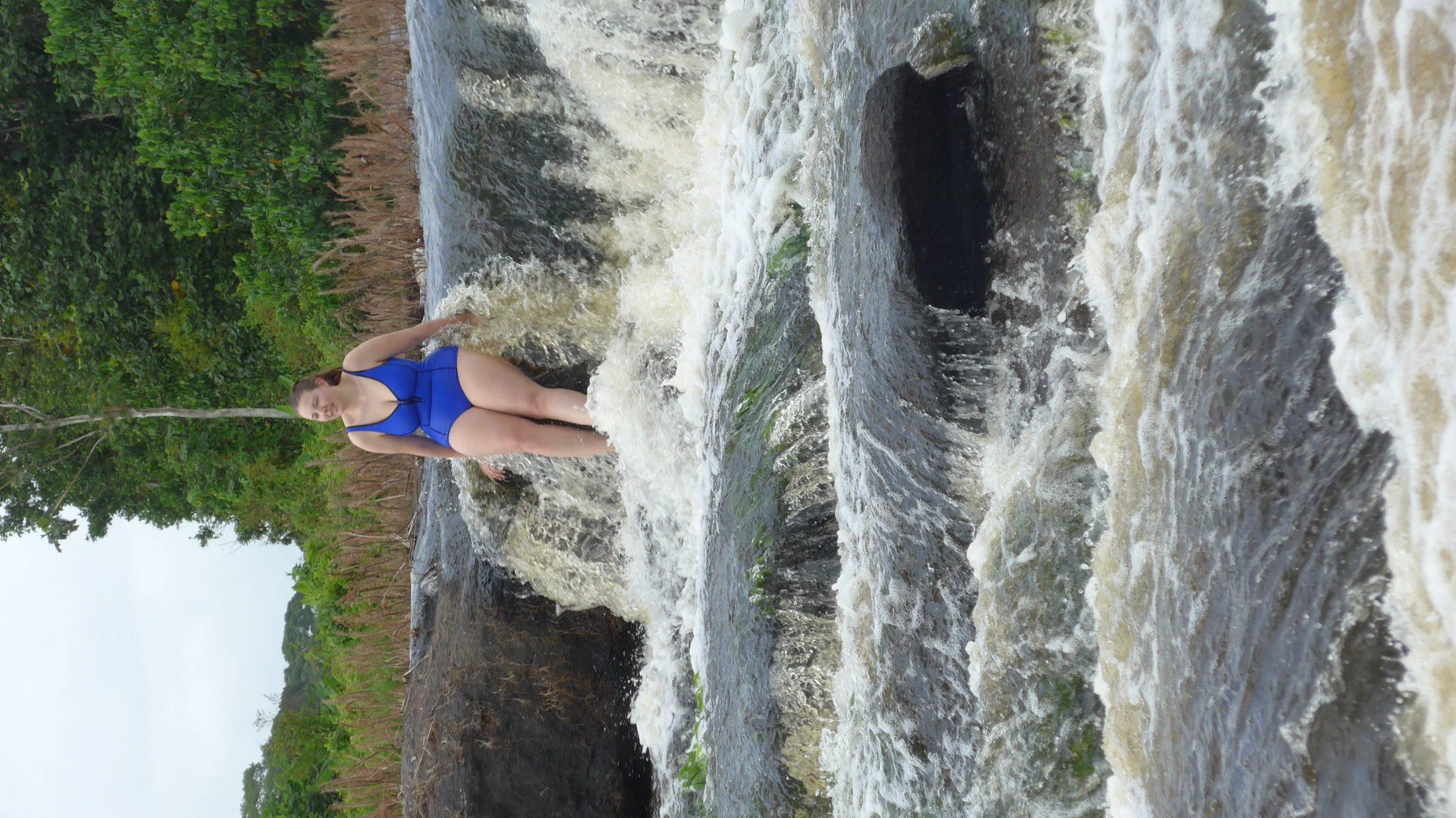
We’re both heading for the Tapa Waka falls, which lie at 4 degrees north, the furthest south I’ve ever been. Probably true for all four of us. It’s a big set of rapids at the point where a tributary flows into the Suriname River. It makes a lovely jacuzzi where we cool off from the heat. And get sunburnt, as it later turns out. After just one day Arnold and Ella have picked up quite a colour, maybe a bit too red. Despite factor 70!
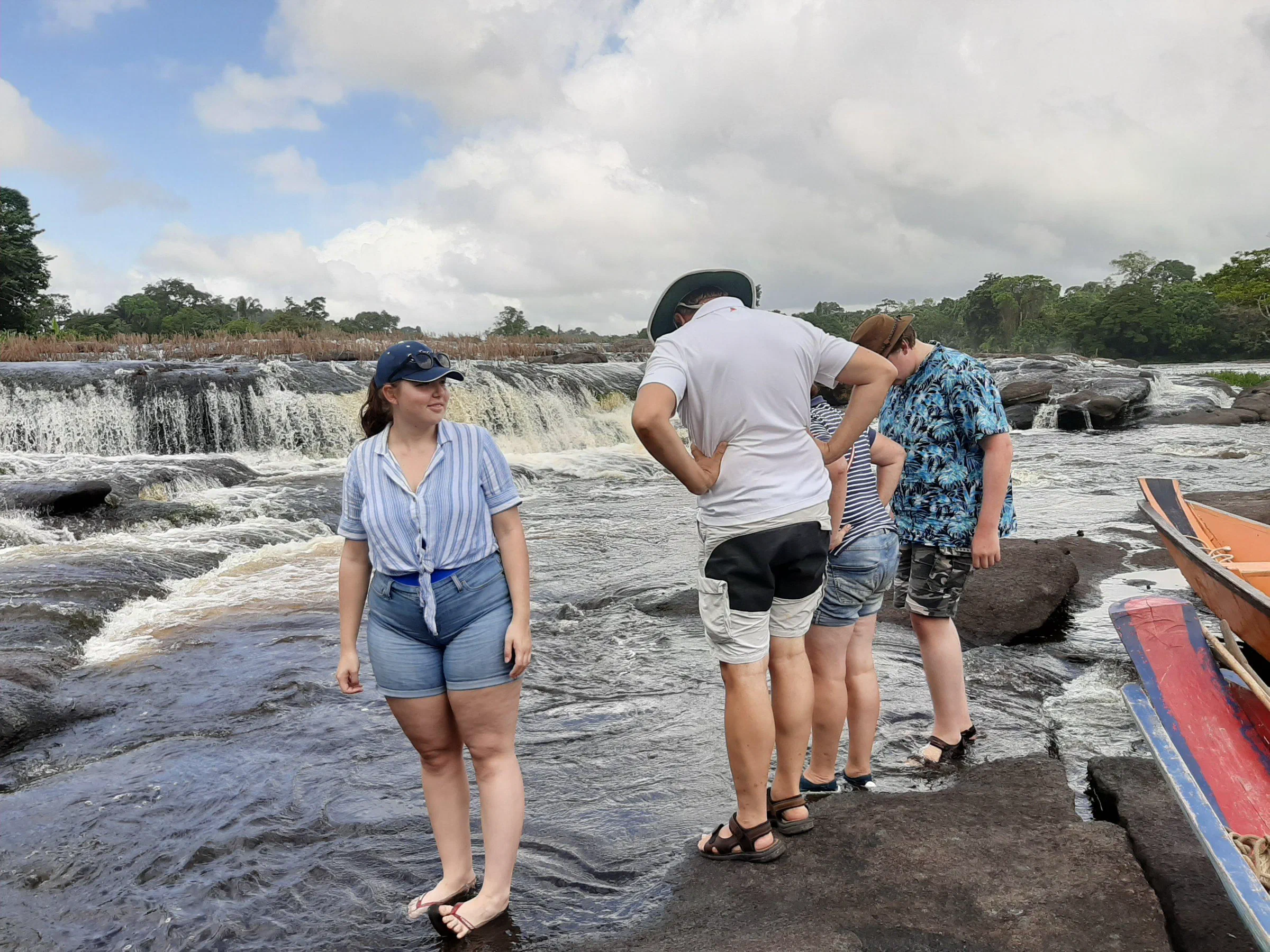
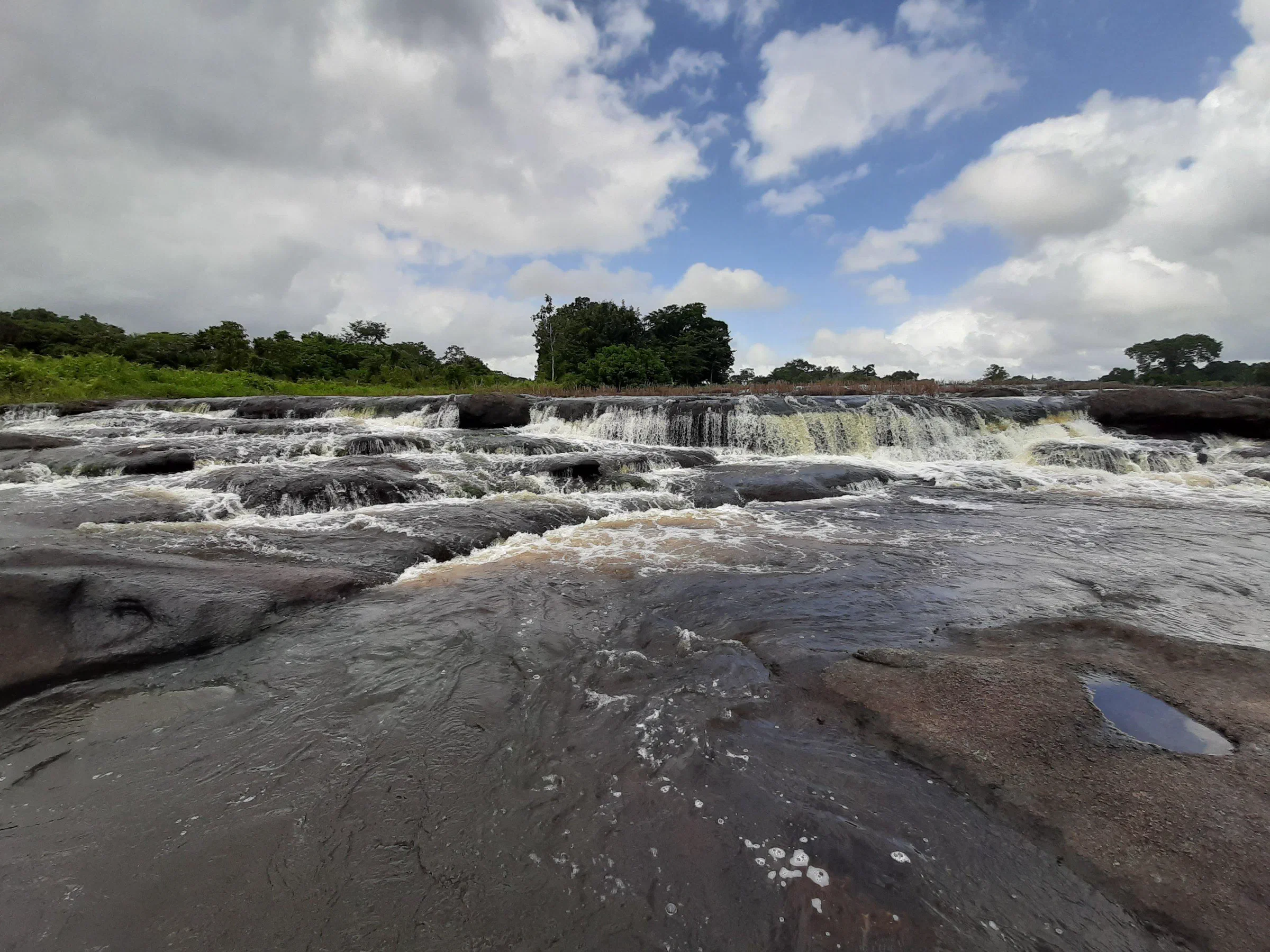
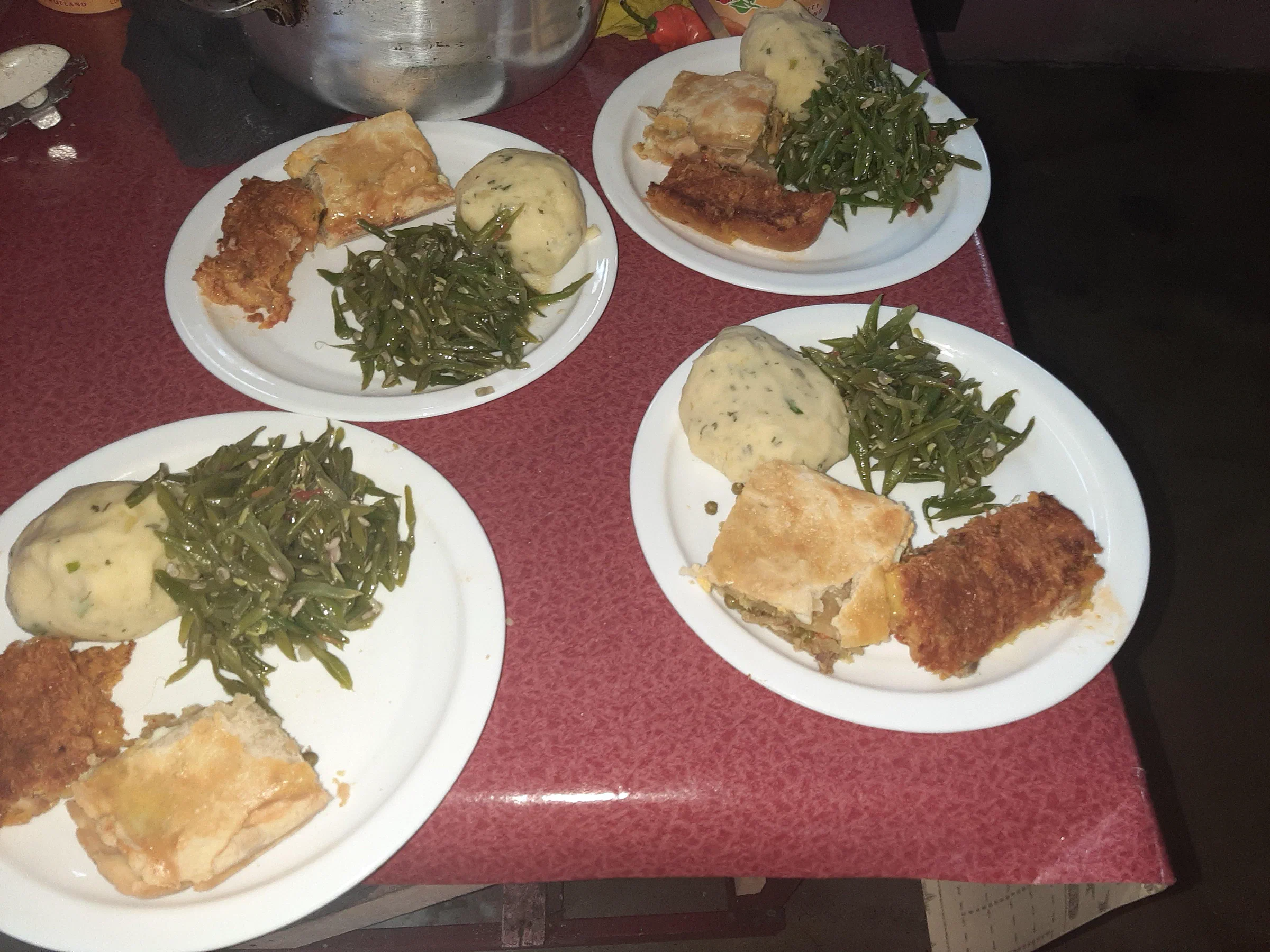
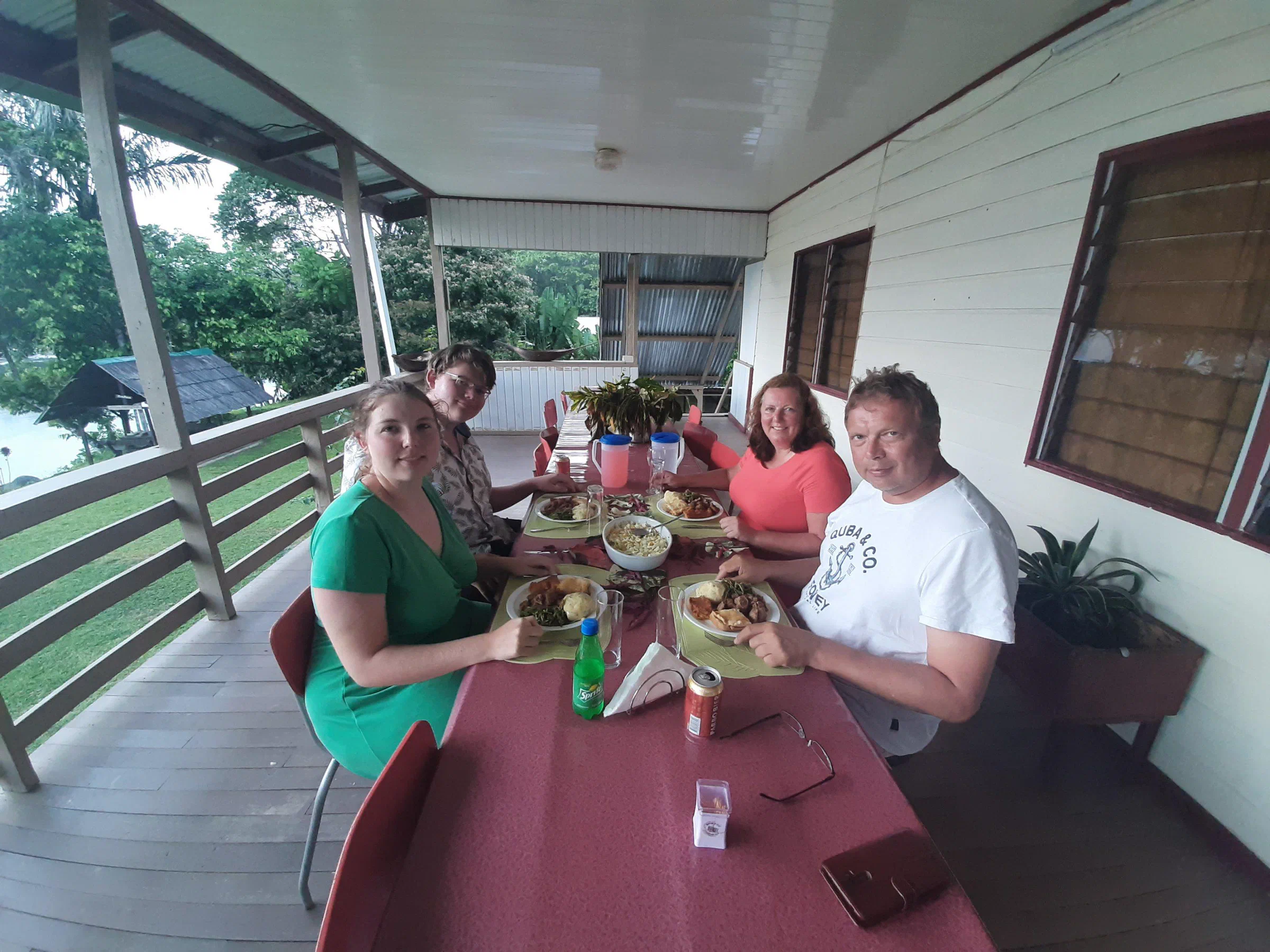
Back at the resort that evening, Kenny cooks us a Christmas dinner, because the ‘real’ cook has gone to the city for a funeral. Fortunately Kenny learnt a bit of cooking at the hotel school in Paramaribo. We tuck into the haunch of venison we’d seen him bring home the day before, along with all kinds of local delicacies such as pom and pie.
After dinner we cross the river in the dark for a walk through the village of the same name on the other side. 800 people live there, so it’s quite a sizeable village. At the shop in the middle of the village some kids are watching Home Alone 3. Kenny picks up bread from the baker, and we have a djogo at the shop and watch along.
The next day we all head back towards Atjoni; going downstream is a bit quicker. We pick up some hitchhikers, and one of them is apparently a very fast boatman, so he takes the helm and tears down the river without easing off the throttle at the tricky spots. He knows the way.
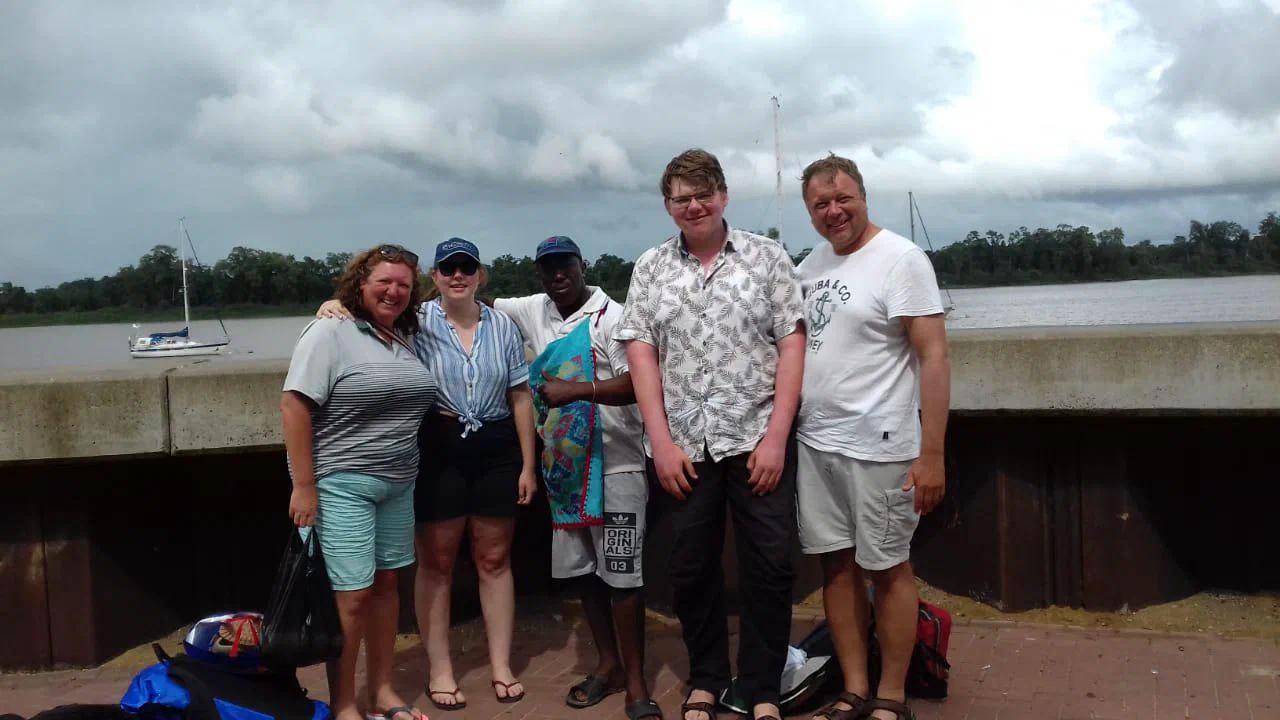
Mike is waiting for us, so we’re hoping to get going straight away, but no spang, first everyone has to be greeted. Mike and Kenny take us to the marina, and when they see the boats lying in the river they let out a cry of amazement; they’d never seen anything like it. One more selfie with Mike, with the boat in the background, which a few days later I discover has become Mike’s WhatsApp profile picture.
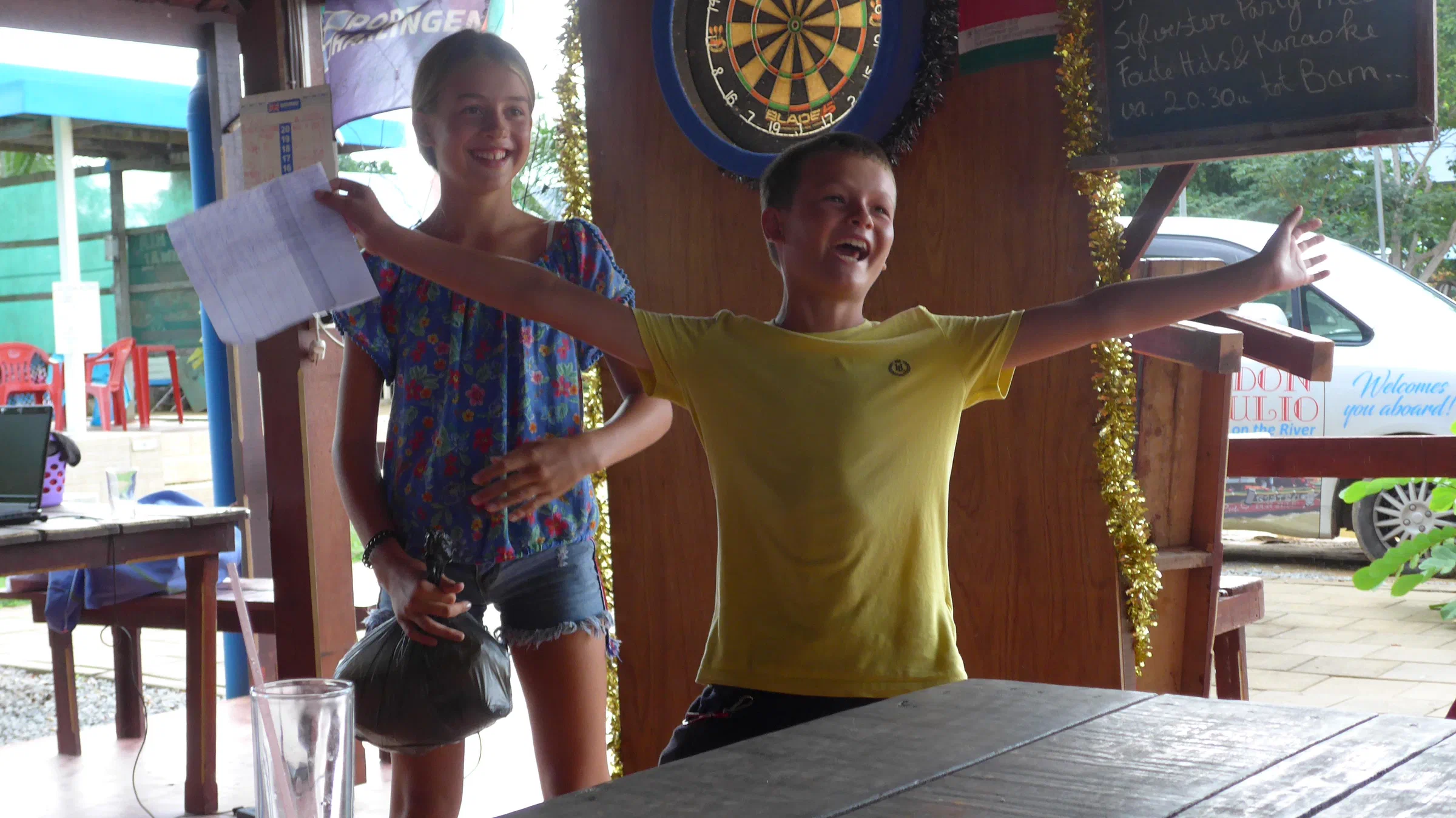
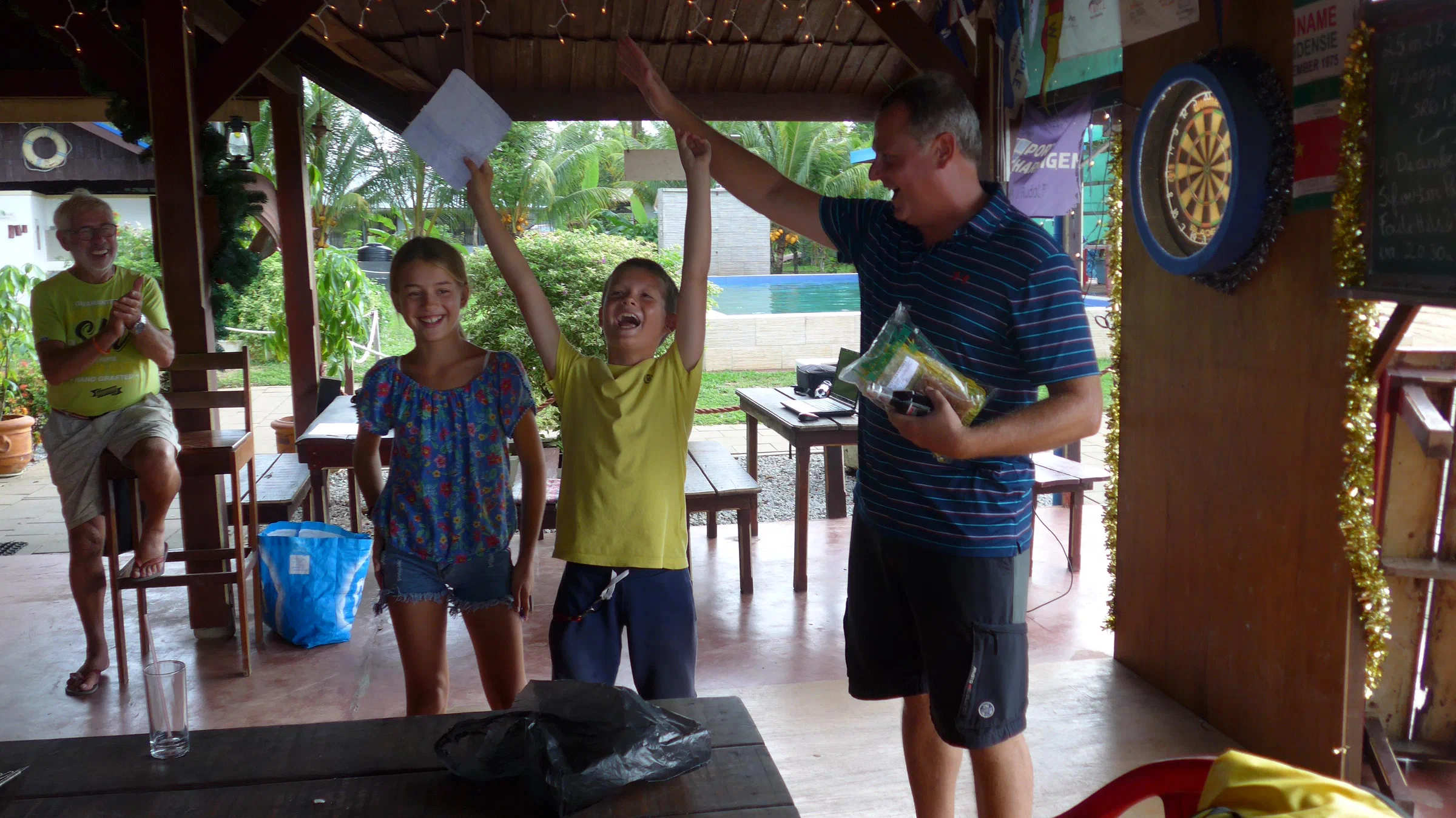
We catch up with André, who has just started a darts tournament organised by Lucas, one of the kids from the boat Ile du Nord, a family doing an Atlantic circuit. André wins first prize: a packet of bami, satay sauce and ketjap. That’ll go down nicely!
The next day, André’s last, we want to visit Fort Zeelandia, so we arrange a different car and head for the city. The traffic is heavy and we reach the fort at 11:05. They’re just locking up; the staff want to get together for a bit, so they’re closing early. Too bad. Back through the traffic over the bridge to Fort Nieuw Amsterdam, then. Crossing the bridge is a great experience. When we get to the fort, that turns out to be closed too. Since we’ve been sitting in the car for ages, we walk down to the waterfront to stretch our legs, where there’s a view of the ocean, the Suriname River and the Commewijne River. Back at the car, a man comes up and says he feels so sorry that we can’t get in, so if we give him 50 SRD, we can go in after all. That way we still get to see a large part of it, the museum.
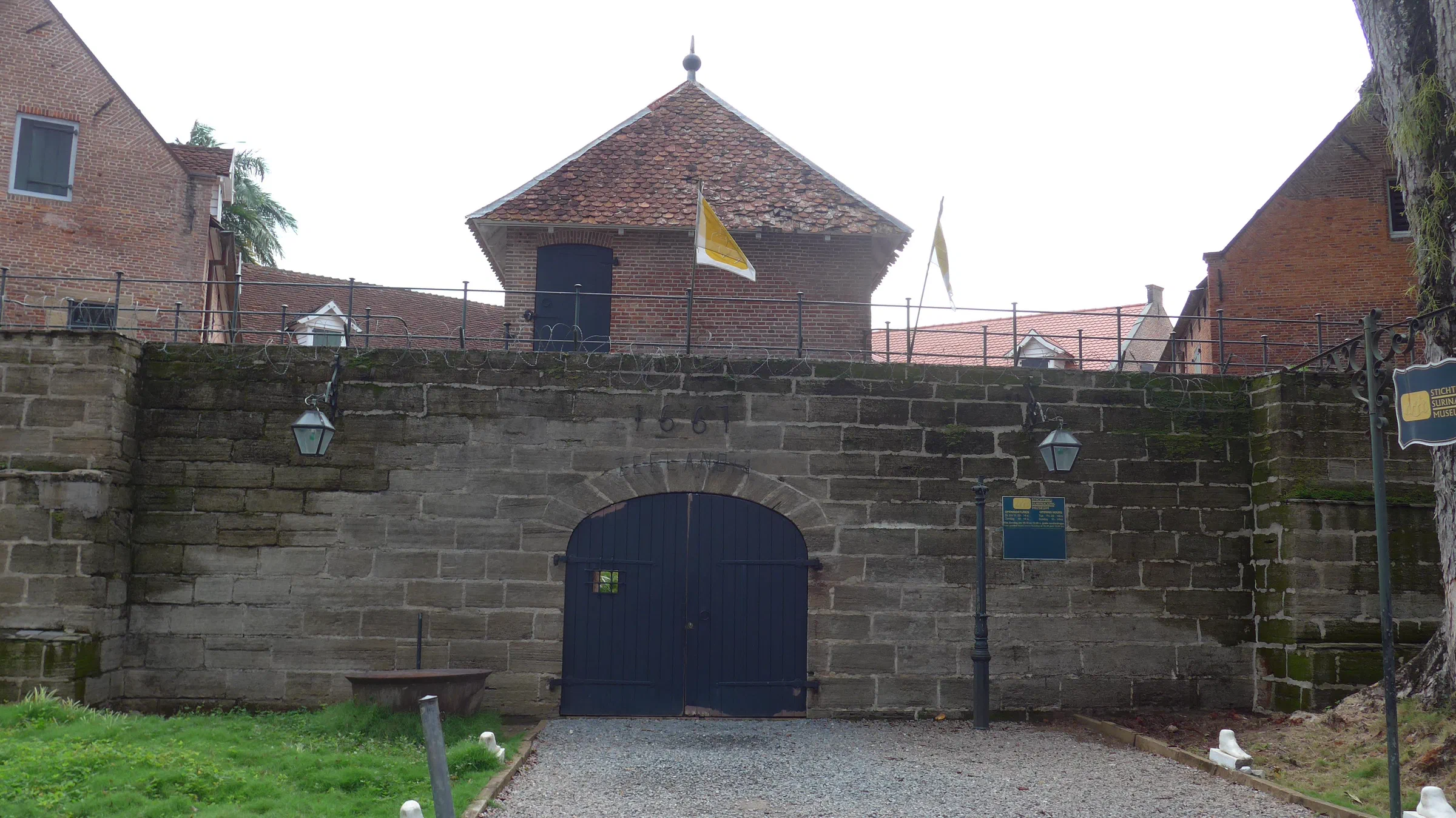
(Fort Zeelandia, just closed)
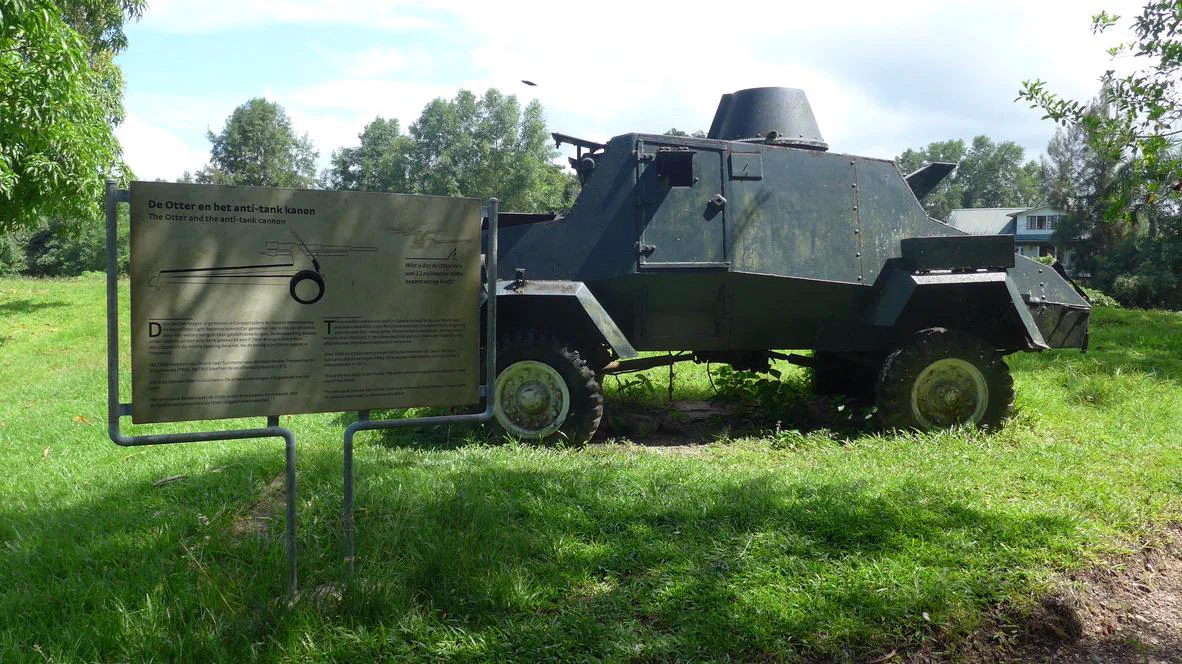
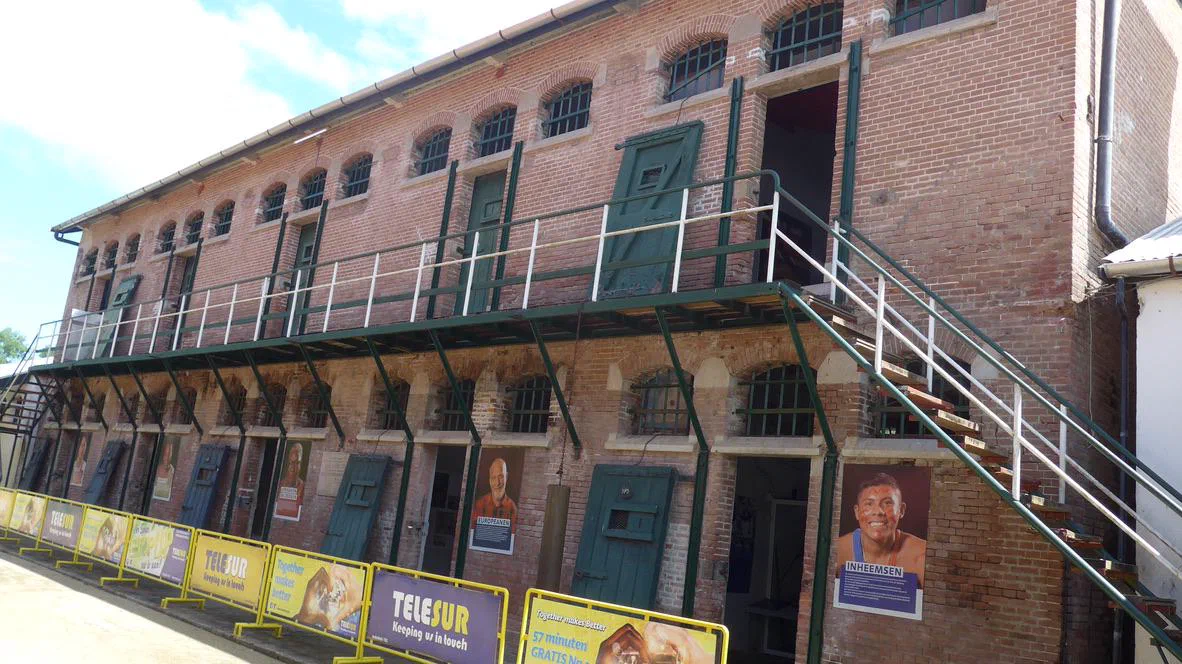
(Fort Nieuw Amsterdam)
By now we’re thirsty and almost drive straight into the first supermarket we see. Another place we wanted to visit was the Peperpot plantation, which was supposed to have good food, so we thought we’d give it a try. The drive there was quite an adventure, with no paved road to speak of, but it’s a beautiful place that has recently been completely renovated. Lunch was fine, though sadly the peanut soup André had been so looking forward to was sold out.
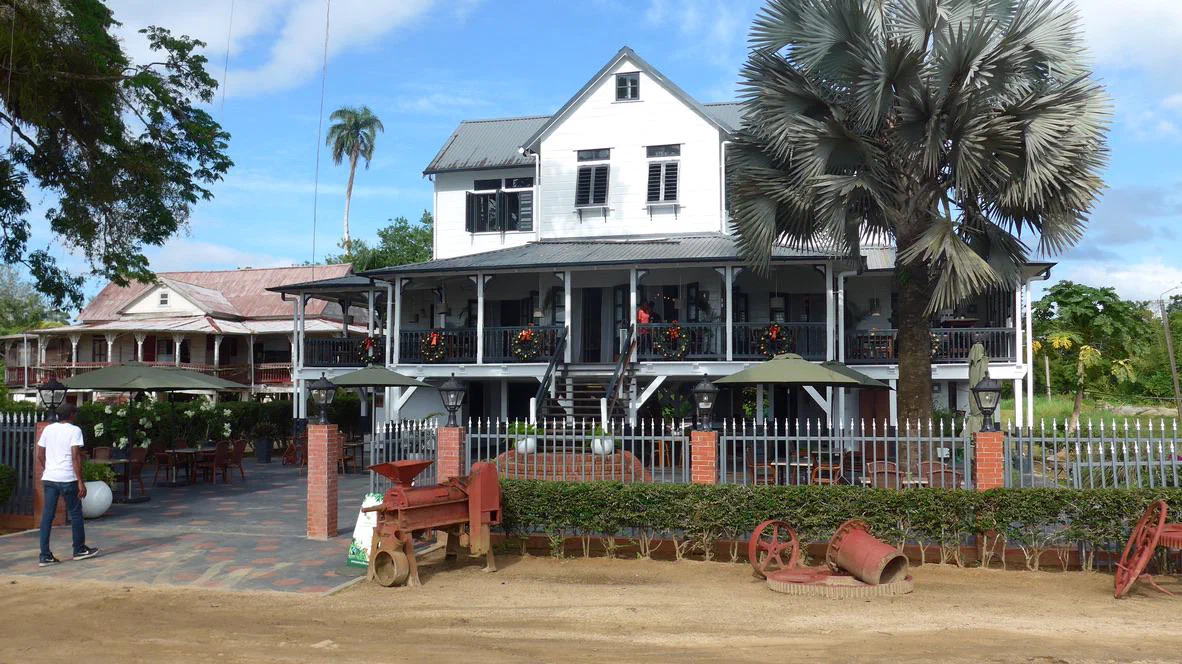
The way back over the bridge once again required a lot of patience, and after a whole day of driving Kees was completely done in.
On Saturday evening we eat at the marina and sing karaoke, which they have there every Saturday. Even Arnold has a go at the hit with the most lyrics: Tequila, haha.
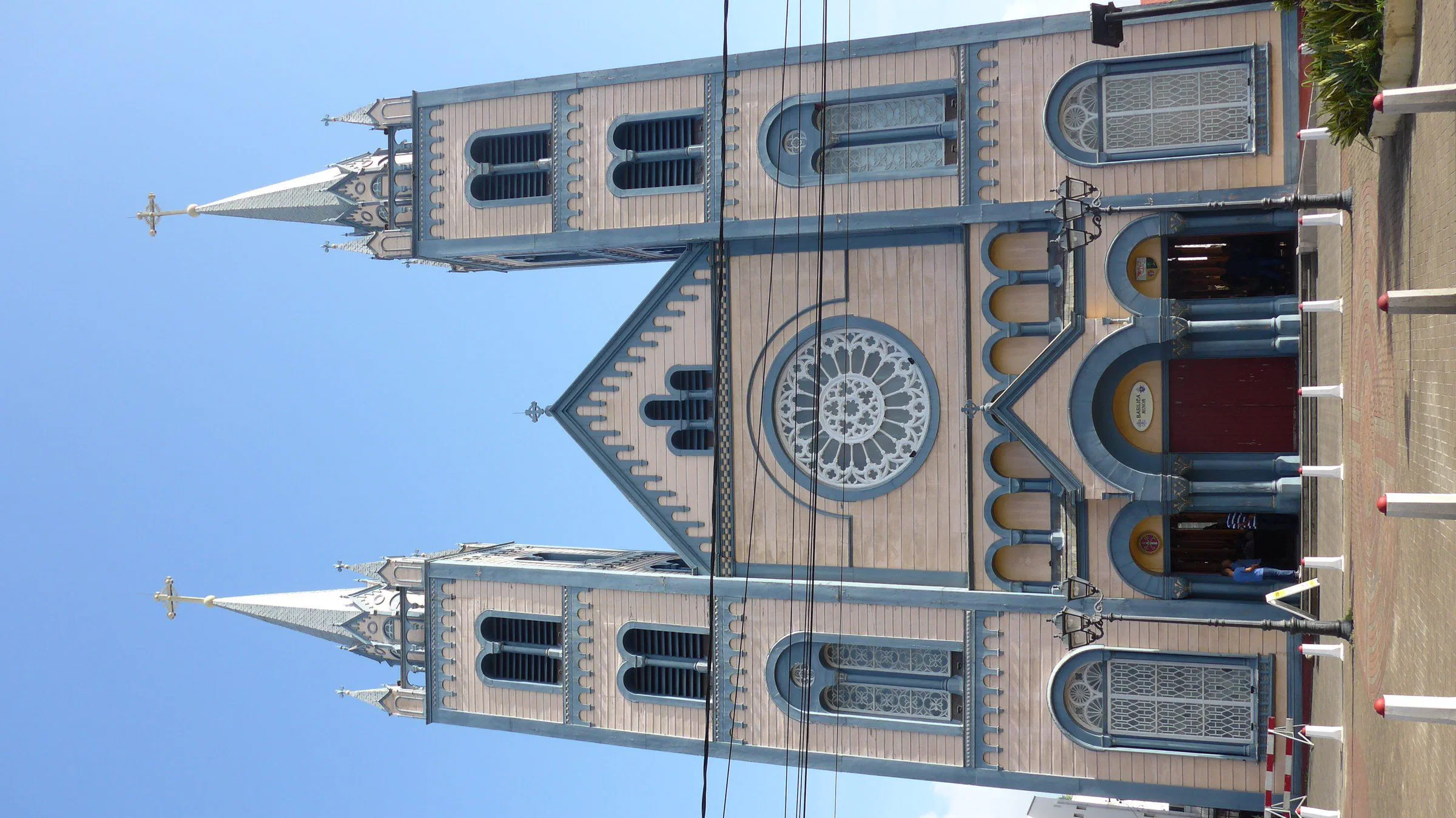
On Sunday, the day after André left, we drive into the city early in the morning: I want to go to High Mass at the cathedral, we finally want to have a look inside Fort Zeelandia, and we’re picking up the glasses I ordered earlier.
We’re far too early at the cathedral, but Kees drops me off and I wait outside. Inside, a baptism Mass is under way; it started at 6:30 but ended up going on until 9:50. After that the priest had his photo taken with all those people, so it was a while before High Mass began. The church was well filled for both services. What struck me was how many different cultures were represented. The Mass lasted two hours and was only disrupted by a lectern that fell apart just after the Gospel, was taken away and brought back in the middle of the sermon, and by a homeless man who wandered in and caused a scene, but was skilfully escorted out by a few people.
In Fort Zeelandia we basically saw the same story we’d seen the previous day in Fort Nieuw Amsterdam, except for Bastion Veere, the place where the December murders took place. That was really impressive.
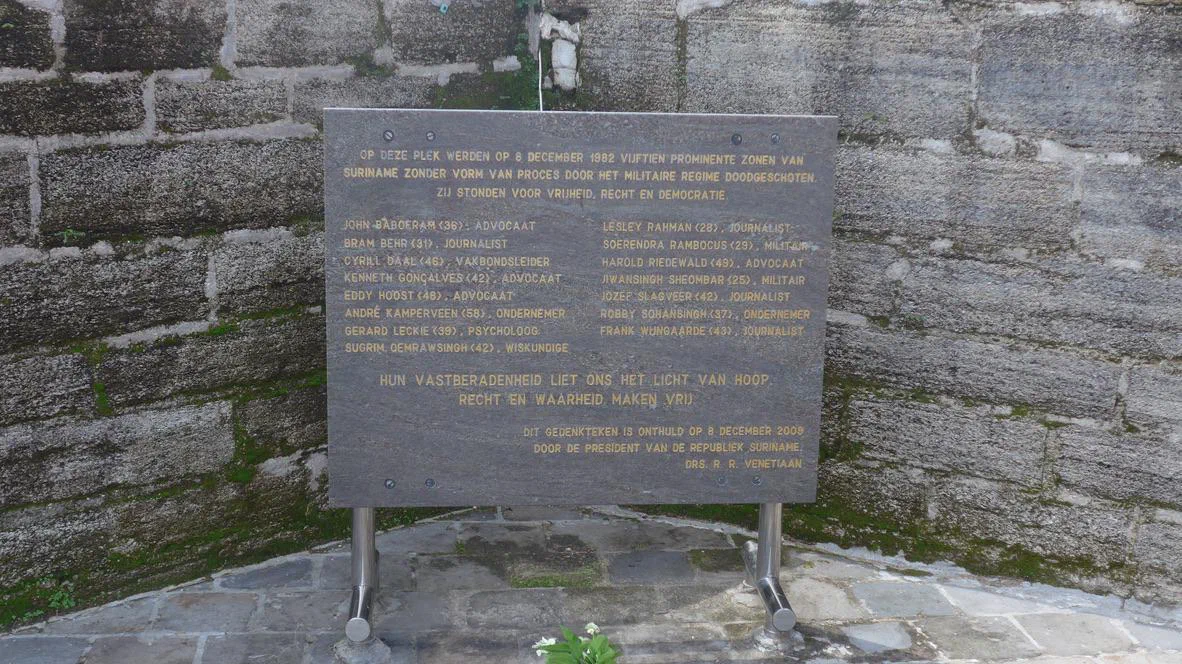
Since the optician doesn’t open until 4 o’clock on Sundays, we drive to north Paramaribo, pass a huge supermarket where we get lunch, and eat it by the roadside on a bench in a market stall that had already been roughed up by some local youths. Quite something, but the filet américain and Dutch cheese rolls taste none the worse for it.
After picking up the glasses, having an ice cream at McDonald’s and buying a few souvenirs, we head back to Domburg.
On Monday, when all the shops are open, Marion and Arnold go into the city to see whether the outboard dealer, which turned out to be closed on Sunday, is open now. They didn’t answer the phone, but since we wanted to go into town anyway for a hammock for Arnold, we’d drive past. After three hours in traffic jams we reach the dealer, which luckily is open. We want a slightly more powerful engine so we can get around faster in the dinghy. They have one in stock, but they don’t have a bank account, so we can only pay cash. That’s a challenge, since we can only withdraw 1000 SRD, 122 euros, at a time. Let’s try the bank, then. At the nearest bank I meet a stoic lady: no, her boss can’t help me get any money either. I ask whether she doesn’t find it strange that I can’t spend my own money, but she looks at me as if I’m mad. Arnold is embarrassed by my behaviour, but I just had to ask.
At the next bank I wait patiently for my number to be called, but after half an hour I decide to approach someone anyway. No, it can’t be done there either. This lady did understand how frustrating it is not to be able to spend your money, so she sends me to a special counter for staff and over-60s. After some back and forth, they offer me the option of withdrawing dollars with my credit card, which does cost a bit, and then they can convert it into SRD. I want to check with Kees whether we accept the charges, but I’m not allowed to make calls inside, so I walk outside. It turns out the bank had closed in the meantime; I was allowed back in, but suddenly there were quite a few staff queuing at the counter. I politely join the back of the queue, and a woman asks me in surprise whether I’m actually 60. “For a few minutes I am,” I reply. When the woman behind the counter finishes with whoever she was serving and sees me, she calls me forward, and the others unfortunately have to wait a bit, so I did feel rather guilty.
After a lot of shuttling from one counter to the other, and more than an hour of effort, I finally receive a wad of cash that makes me feel like I’ve robbed a vault and glad I’ve got my bodyguard with me. Fortunately the dealer has a counting machine, otherwise we’d still be there now.
Once the dealer has been paid and the warranty papers sorted, we’re led to the workshop where the engine is tested. It won’t start. Factory defect. Has all the effort so far been for nothing?
There’s another one in the showroom, so let’s try that one. The papers are redone with the other serial number, and luckily this engine does work. Once we’ve also paid for the necessary oil a quarter of an hour later, we can set off in search of a hammock.
I drive onto the long street where I’d bought a hammock before, and there’s a huge traffic jam. Two roads merge into one several times, it’s absolute chaos and we’re barely moving, if at all. I send Arnold off on foot ahead of me, keep walking straight on and I’ll let him know when I’ve got past, then we’ll meet at the end of the street. At one point I sat in the same spot for a good three quarters of an hour, chatting in the meantime with Senne and Marieke, crew of another sailing boat in Domburg, who happened to walk by. By the time Arnold gets back, I haven’t got much further. Fortunately, halfway along things suddenly start moving better; it turns out several traffic police have been deployed. We can head back to Domburg! It was the second-busiest day of the year in Paramaribo, 30 December. The next day, 31 December, is the busiest.
That day it’s already time to take the kids to the airport. We’re going to miss them! When we’re almost back in Domburg, they call to say they have too much luggage, not enough SRD to check in a bag, and there’s no cash machine. They sound a bit frazzled to us, and it’s only 3 kilos over. We suggest they put on as many layers of clothes as possible and try again. That does the trick, and at 19:25 we watch flight KL714 fly north right over our boat.
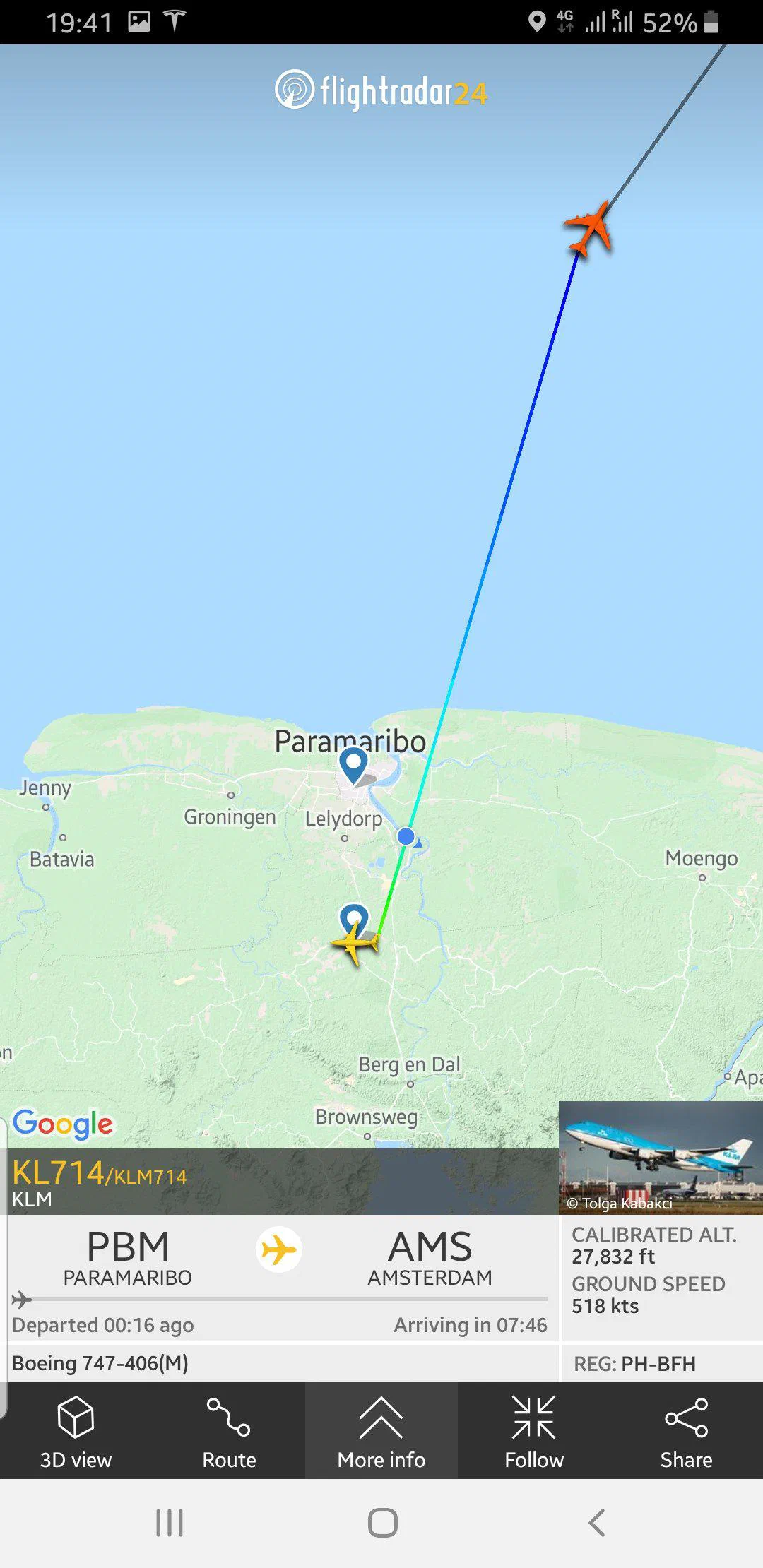
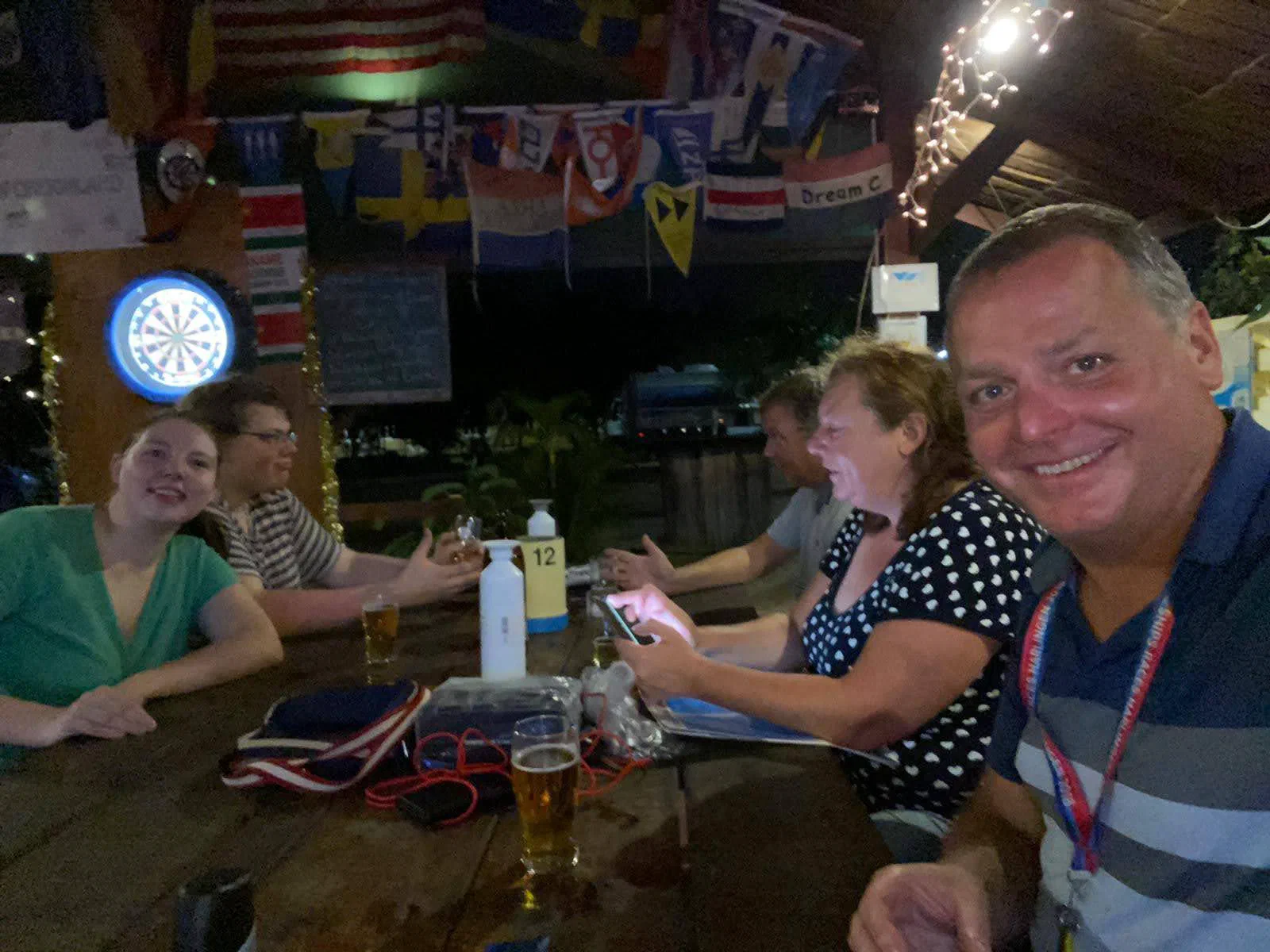
We celebrate New Year’s Eve at the marina with the other sailors still around and sing cheesy hits karaoke. And that was 2019!
Comments